
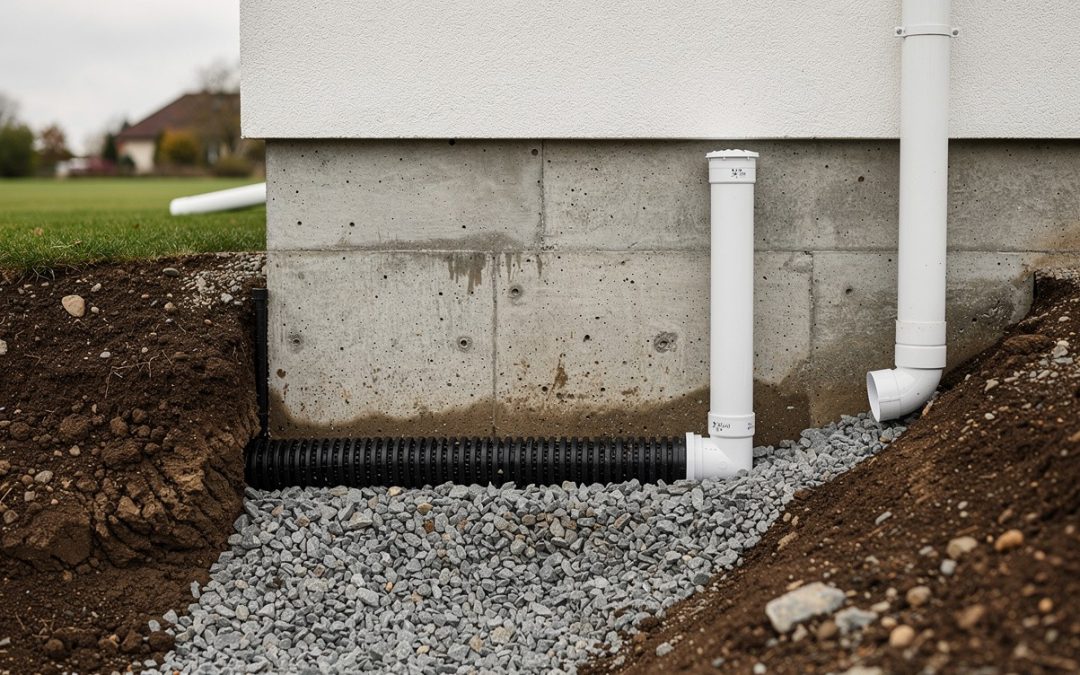
Central Oregon’s high desert climate creates unique challenges for your home’s foundation. Heavy snowmelt, freeze-thaw cycles, and pine needle debris combine to overwhelm drainage systems and push water toward your foundation.
We at Desert Gutters have seen firsthand how foundation drainage problems escalate when homeowners skip maintenance. These foundation drainage tips for Central Oregon will help you stop water damage before it cracks your foundation and floods your basement.
Why Your Central Oregon Foundation Drainage Fails
Central Oregon’s drainage problems stem from three relentless forces that work together to overwhelm your foundation protection system. Pine needles from the dense forest canopy fall year-round and accumulate in gutters, downspouts, and drainage channels at rates that most homeowners underestimate. A single mature ponderosa pine sheds needles annually, and when these needles mix with aspen leaves and Douglas-fir debris, they create dense mats that trap water instead of allowing it to flow away. This debris layer hardens over time, especially after freeze-thaw cycles, turn your drainage system into a dam that forces water directly against your foundation walls rather than directing it safely away.
Pine Needles and Debris Clog Your Drainage System
The dense forest canopy surrounding Central Oregon homes produces a constant stream of debris that settles in gutters and downspouts. A single mature ponderosa pine sheds needles annually, and when these needles mix with aspen leaves and Douglas-fir debris, they create dense mats that trap water instead of allowing it to flow away. This debris layer hardens over time, especially after freeze-thaw cycles, transforming your drainage system into a dam that forces water directly against your foundation walls rather than directing it safely away.
Snowmelt Volume Overwhelms Undersized Systems
Central Oregon receives an average of 20 to 30 inches of snow annually in Bend and Redmond, with higher elevations around Sisters and Sunriver experiencing 40 to 60 inches. When spring temperatures climb above freezing, this accumulated snow melts rapidly over a period of days rather than weeks, creating water volumes that far exceed what a standard drainage system was designed to handle. A single inch of snowmelt across a 2,000-square-foot roof produces approximately 1,250 gallons of water that must flow through your gutters and downspouts simultaneously. Most homes built before 2010 in Central Oregon have drainage systems rated for typical rainfall events, not for the concentrated surge of springtime snowmelt.
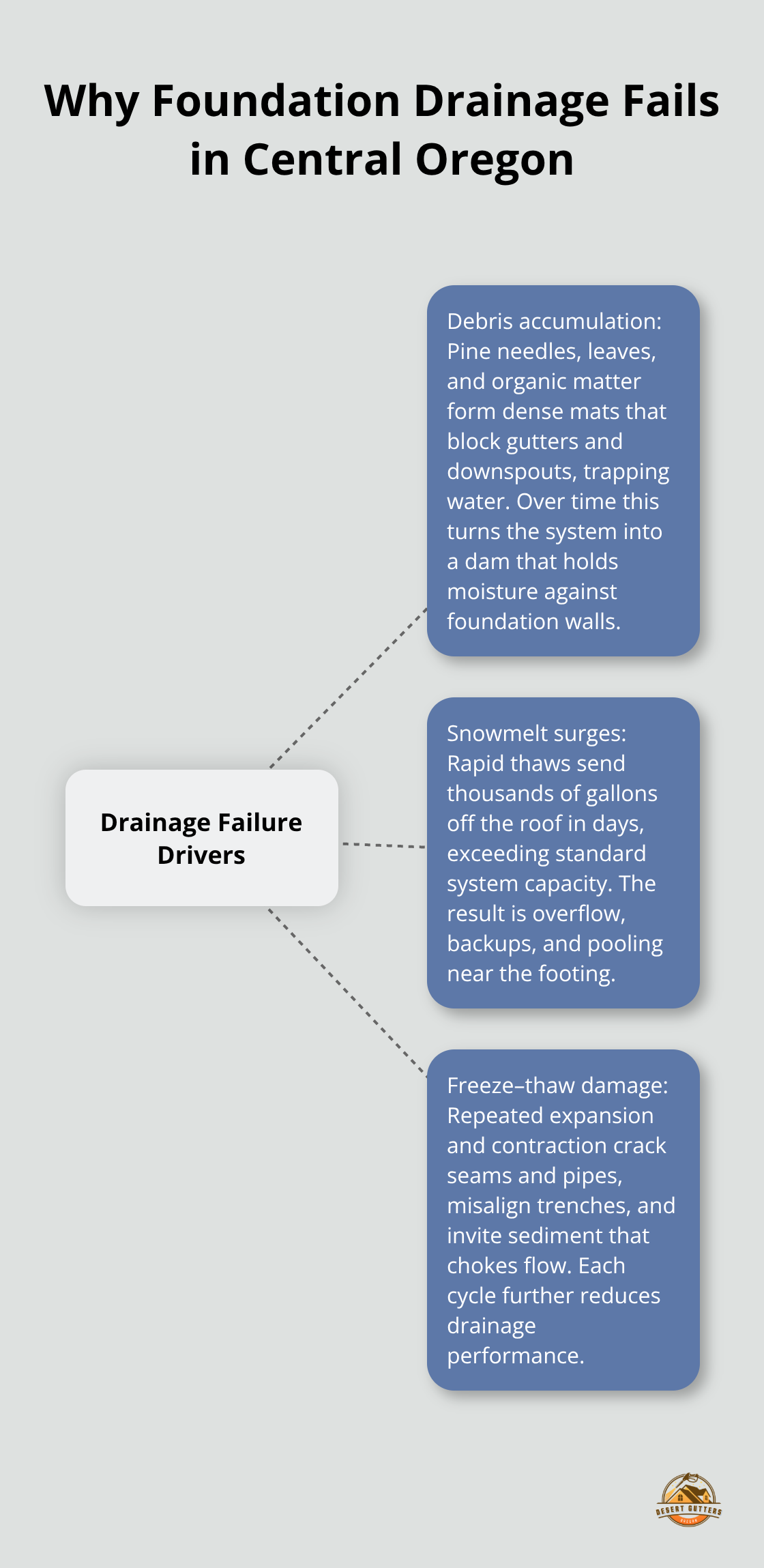
This mismatch between system capacity and actual water volume causes gutters to overflow, downspouts to back up, and water to pool against your foundation within hours of a warm spring day.
Freeze-Thaw Cycles Crack and Separate Drainage Components
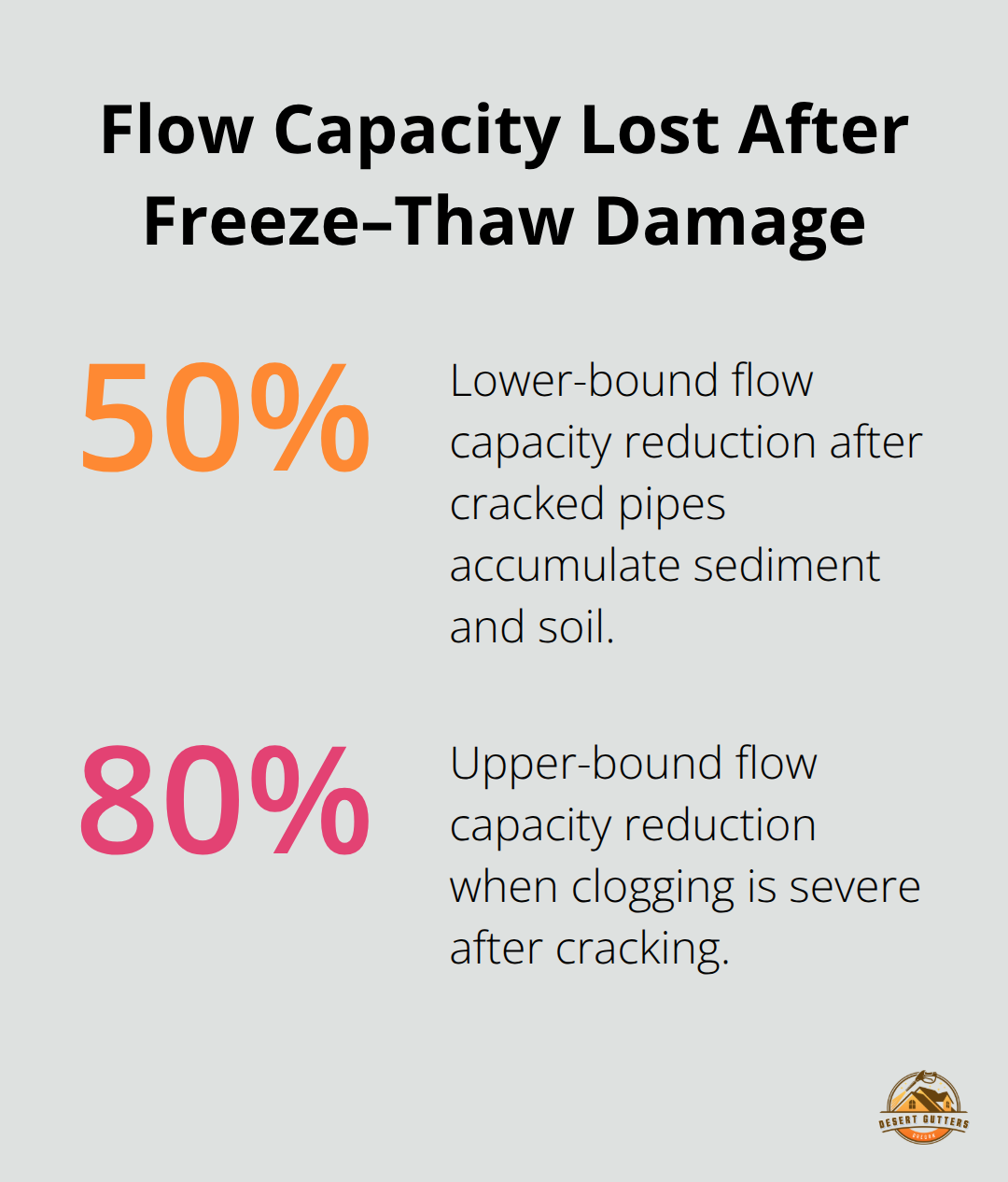
Central Oregon experiences dramatic temperature swings between day and night, with differences of 30 to 40 degrees Fahrenheit common during fall and spring. Water trapped in drainage pipes, gutters, and soil around your foundation freezes at night, expands, and then thaws during the day, repeating this cycle 40 to 80 times each season depending on elevation. This expansion-contraction pattern cracks gutter seams, separates downspout joints, breaks perforated foundation drain pipes, and pushes gravel-lined drainage trenches out of alignment. Once drainage pipes crack, sediment and soil particles clog the remaining openings, reducing flow capacity by 50 to 80 percent even after the ice melts.
These three forces-debris accumulation, snowmelt volume, and freeze-thaw damage-work together to create the foundation moisture problems that plague Central Oregon homes, making regular maintenance and professional inspection essential to catch problems before water reaches your foundation.
What Happens When Foundation Drainage Fails in Central Oregon
Water Pools Against Your Foundation Within Hours
Water pooling around your foundation signals that your drainage system has already failed, and hydrostatic pressure is building against your foundation walls right now. In Central Oregon, standing water near the foundation appears within 24 to 48 hours after snowmelt or heavy spring rain, especially on the north and west sides of homes where shade prevents thawing and drainage remains frozen. This pooling water does not evaporate; instead, it seeps downward into the soil surrounding your footing, increasing pressure against concrete or stone. Homeowners often wait for the water to disappear naturally, but damage starts immediately. The International Residential Code requires foundation drainage systems to slope at least 1/8 inch per foot away from the foundation and extend at least 12 inches beyond the footing edge-most Central Oregon homes built before 2005 fail to meet these standards, which explains why water pools in the first place.
Basement Flooding and Moisture Infiltration Follow Quickly
Basement flooding and moisture infiltration follow shortly after pooling water appears, typically within one to three weeks depending on soil saturation and rainfall patterns. A damp basement smells musty because moisture migrates through concrete and foundation walls, carrying mold spores that settle on framing, insulation, and stored items. Cracked foundations develop from the relentless pressure of saturated soil pushing against your foundation walls; water forces through microscopic cracks and enlarges them over months and years. Foundation repair bills reach 15,000 to 40,000 dollars when homeowners ignore early signs like efflorescence (white, chalky deposits on foundation walls) or small horizontal cracks near the base. Most homeowners fail to connect their clogged gutters and poor grading to foundation cracks-they view the crack as a separate issue requiring expensive concrete work, when the actual solution stops water from reaching the foundation in the first place.
Freeze-Thaw Cycles Accelerate Structural Damage
Central Oregon’s freeze-thaw cycles accelerate foundation damage faster than milder climates experience. Water trapped against your foundation freezes at night, expands, and cracks concrete during the day, repeating this cycle throughout the season. The dramatic temperature swings between day and night (30 to 40 degrees Fahrenheit differences are common during fall and spring) force this expansion-contraction pattern repeatedly. Once concrete cracks, water penetrates deeper into the foundation structure, and the cycle intensifies. If standing water appears after snowmelt, white deposits coat your foundation walls, or a musty smell rises from your basement, your foundation drainage has failed and professional assessment prevents structural damage from advancing further.
Stop Water at the Source
Your foundation drainage fails long before water reaches the footing, and the solution starts with what happens on your roof. Central Oregon’s pine needle problem and rapid snowmelt create a cascade of water that overwhelms undersized systems, but you control the first critical step: keeping gutters clear and downspouts functional so water leaves your property instead of pooling near your foundation. Most homeowners treat gutter maintenance as a spring task, but Central Oregon requires year-round attention. Pine needles accumulate continuously, especially under ponderosa pines and Douglas-firs, and a clogged gutter defeats even the best foundation drainage system downstream.
Clear Gutters Every Eight Weeks During Growing Season
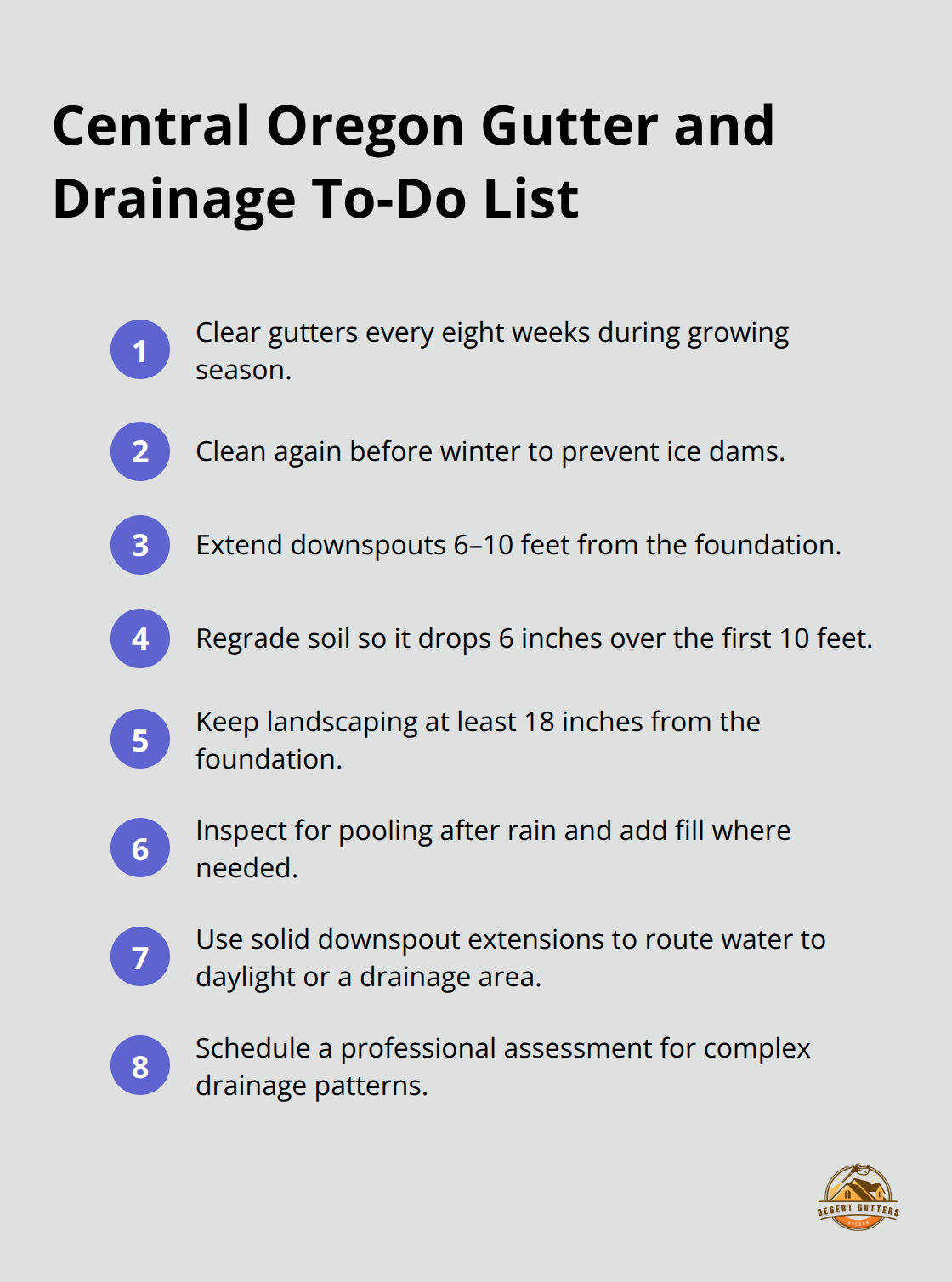
Clear your gutters at minimum every eight weeks during growing season and again before winter to prevent ice dams that trap water against fascia boards and force it behind gutters into your roof structure. A single blockage upstream cascades into foundation problems downstream, so the math is straightforward: invest two to four hours quarterly in gutter cleaning, or spend fifteen thousand to forty thousand dollars on foundation repair later. Pine needle accumulation accelerates during fall and early spring when trees shed most heavily, making these seasons critical for inspection and cleaning.
Extend Downspouts Six to Ten Feet From Foundation
Downspout extensions move water away from your foundation perimeter, but most Central Oregon homes have extensions that terminate only two to four feet from the foundation, leaving water to pool in the most critical zone. Extend downspouts six to ten feet from your foundation minimum, especially on the north and west sides where shade prevents rapid drainage. Solid piping works better than splash blocks because splash blocks disperse water across soil that drains poorly in Central Oregon’s clay-heavy terrain; solid downspout extensions direct water to daylight or to a designated drainage area where it flows away consistently.
Regrade Soil to Slope Away From Foundation
Grading soil away from your foundation requires a slope of at least one-eighth inch per foot for the first ten feet, which means the ground should drop six inches in elevation over that distance. Most Central Oregon homes settle unevenly over decades, and grading that once sloped away now slopes toward the foundation, especially on sides where foot traffic or vehicles have compacted soil. Walk your foundation perimeter after rain and observe where water pools; that pooling spot is precisely where you need to add fill and regrade. Sand and topsoil work in the short term, but clay-based fill compacts better and resists erosion from spring snowmelt.
Keep Landscaping Away From Foundation Perimeter
Avoid placing mulch, bark dust, or landscaping within eighteen inches of your foundation because these materials trap moisture and accelerate wood rot on rim joists and siding. Landscaping placed too close to the foundation also blocks your view of water pooling and foundation cracks, allowing problems to advance undetected. If regrading yourself feels overwhelming or if your property has complex drainage patterns, professional assessment identifies the exact problem and calculates the slope needed for your specific lot.
Final Thoughts
Foundation drainage problems in Central Oregon don’t resolve themselves, and waiting for spring or summer to dry things out costs you thousands in foundation repairs. The foundation drainage tips for Central Oregon outlined in this guide work because they address the actual problem: water reaching your foundation in the first place. Gutters clogged with pine needles, downspouts terminating too close to your home, and grading that slopes the wrong direction all guarantee that snowmelt and spring rain will pool against your foundation walls.
Regular gutter cleaning every eight weeks during growing season, extending downspouts six to ten feet from your foundation, and regrading soil to slope away from your home prevent the cascade of problems that leads to basement flooding, foundation cracks, and structural damage. These maintenance tasks cost nothing compared to the fifteen thousand to forty thousand dollars required for foundation repair after hydrostatic pressure cracks your concrete. Central Oregon’s freeze-thaw cycles and heavy snowmelt make proactive drainage solutions non-negotiable for homeowners in Bend, Redmond, Sisters, and surrounding areas.
If you’ve already spotted pooling water, efflorescence on foundation walls, or a musty basement smell, professional assessment identifies whether your problem stems from clogged gutters, failed downspout extensions, poor grading, or a combination of all three. We at Desert Gutters provide professional gutter cleaning and repair that removes pine needle buildup and restores proper water flow away from your foundation. Contact us today for a free estimate and let our Central Oregon expertise protect your home from moisture problems.