
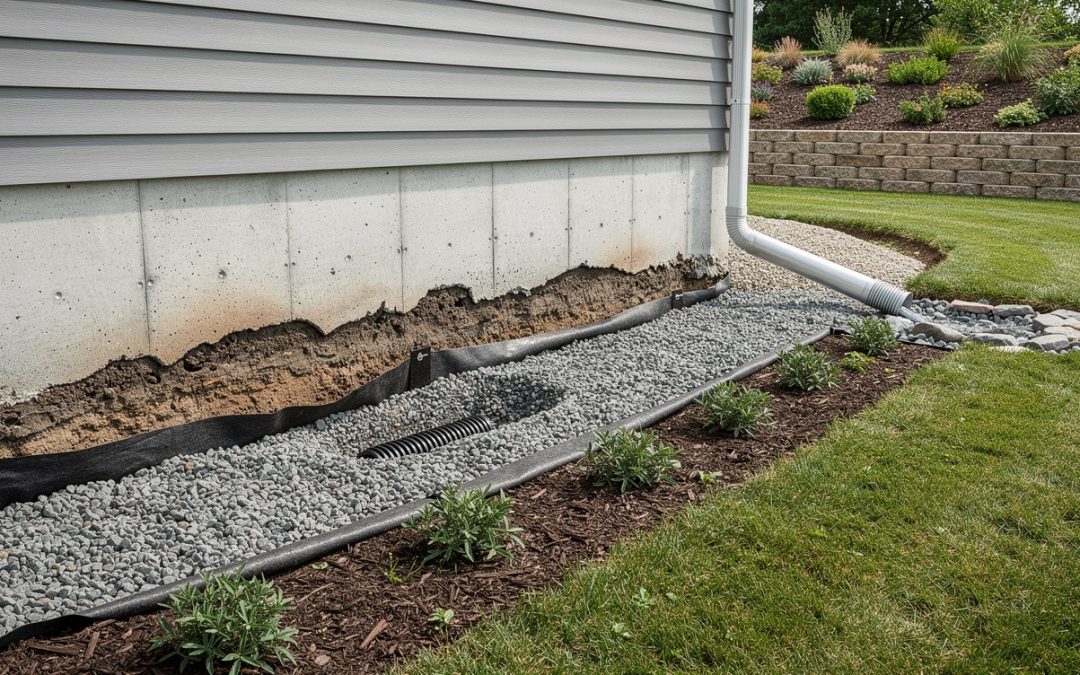
Central Oregon’s freeze-thaw cycles and heavy pine needle debris create a perfect storm for foundation damage. Water that overflows from clogged gutters pools around your home’s base, eroding soil and weakening structural integrity.
We at Desert Gutters know that protecting your foundation from erosion starts with one simple step: keeping your gutters clean and flowing properly. The strategies in this guide will show you how to stop damage before it becomes expensive.
Why Central Oregon Soil Fails When Gutters Overflow
Volcanic Soils and Poor Drainage Create Foundation Risk
Central Oregon’s volcanic pumice and sandy soils drain poorly and shift constantly. When gutters clog with pine needles, water backs up and spills over the edges, pooling directly against your foundation. This standing water saturates the soil around your home’s perimeter, which is exactly where foundation stability depends on proper drainage. The Oregon State University Extension Service confirms that concentrated water near foundations accelerates soil erosion and creates settlement risk.
In Bend’s hillside neighborhoods near the Deschutes River, this problem intensifies because slopes already fight erosion naturally. Seasonal snowmelt and irrigation runoff add even more pressure against below-grade walls, raising hydrostatic pressure that can crack basement walls and push foundations laterally.
How Overflow Water Damages Foundations Faster Than You Expect
Homeowners often ignore gutters during summer, then heavy fall rains and winter snow send water cascading down clogged downspouts, eroding soil and exposing foundation footings. The damage accelerates faster than most people expect because Central Oregon’s freeze-thaw cycles don’t just stress concrete directly; they stress the soil underneath.
Water that pools against your foundation freezes, expands, and thaws repeatedly from November through April. Each cycle pushes soil outward and creates voids beneath your home. Horizontal and diagonal cracks in basement walls, uneven floors, and doors that stick are the visible signs that this process is already underway. Cracked or sunken driveways also indicate soil movement around the foundation perimeter, meaning erosion has progressed beyond the surface.
Warning Signs That Erosion Has Already Started
Many Bend homes were built before modern drainage standards existed, so their foundations sit directly on soil with minimal protection. Once water infiltration begins, it doesn’t stop on its own. Efflorescence and moisture staining on basement walls signal ongoing hydrostatic pressure and water intrusion that will worsen each season. Tilted chimneys with cracks at the foundation interface are another warning sign that structural movement is happening.
Interior basement dampness and wet crawl spaces are common in Bend specifically because of drainage dynamics and seasonal moisture patterns that persist even in a dry climate. These conditions won’t resolve themselves without intervention.
The Cost of Waiting Versus Acting Now
Foundation repairs in Central Oregon often require helical piers and wall stabilization. The cost difference between preventing overflow damage and repairing a settled foundation is substantial. A foundation evaluation identifies early movement signs before major damage occurs, and preventing water overflow is the most cost-effective way to stop erosion at its source. The next section covers the practical steps that address overflow at its source: your gutters.
How to Clean and Maintain Gutters in Central Oregon
Why Gutter Cleaning Stops Erosion Before It Starts
Gutter cleaning in Central Oregon isn’t optional maintenance-it’s the foundation protection strategy that stops erosion before it starts. Pine needles fall year-round here, and they accumulate faster than most homeowners realize. A single gutter filled with debris redirects water directly onto soil around your foundation within weeks of the last cleaning. Oregon State University Extension Service research confirms that gutters clogged with debris cause concentrated water discharge that erodes soil faster than properly flowing systems.
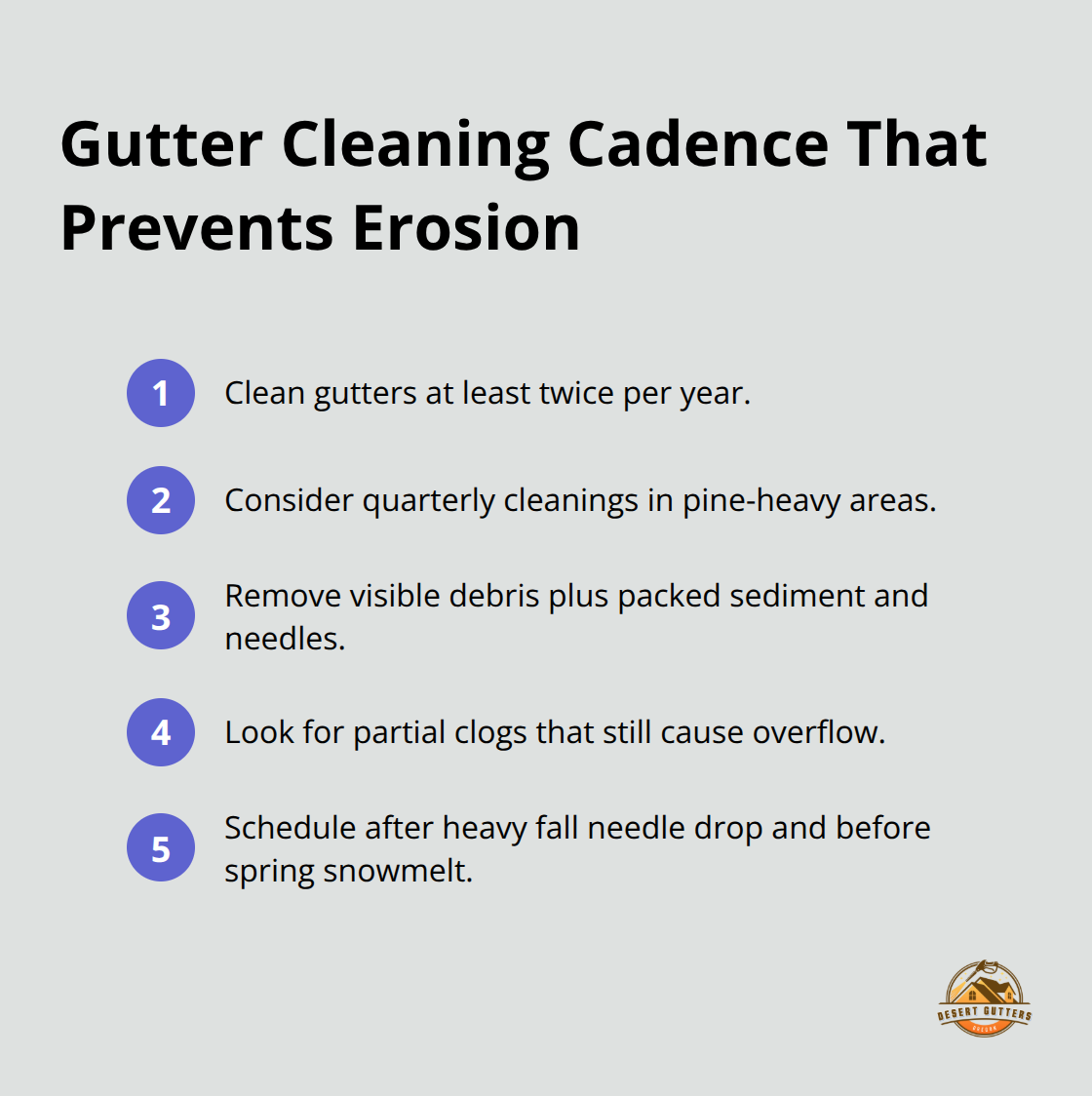
You need to clean gutters at minimum twice per year: once in late fall after pine needles drop heavily, and again in spring before snowmelt arrives. Many Central Oregon homes benefit from quarterly cleaning because the combination of pine trees and seasonal weather patterns creates constant debris accumulation. Professional gutter cleaning removes not just visible debris but also packed sediment and pine needles that partially block water flow even when gutters appear mostly clear. Partially clogged gutters still cause water to pool and overflow at weak points along the gutter line, saturating soil directly beneath.
How Downspout Placement Protects Your Foundation
Downspout placement and slope matter more than most homeowners understand. Water exiting a downspout should travel at least 4 to 6 feet away from your foundation perimeter, with 8 to 10 feet preferred in wet climates or homes with basements. Many Bend homes have downspouts that discharge water only 1 to 2 feet from the foundation because original construction didn’t account for Central Oregon’s specific erosion dynamics.
Downspout extensions and splash blocks redirect water away from foundation footings, but they only work if they remain clear and properly positioned. Winter snow and ice shift extensions, and spring melt buries splash blocks in debris, rendering them ineffective. Seasonal inspection after major weather events catches these problems before they allow water to pool against your home. Gutter slope toward downspouts should reach at least 1/8 inch per 10 feet of run-anything less and water moves too slowly, allowing debris to settle and create low spots where standing water forms.
What Happens When You Neglect Seasonal Maintenance
Central Oregon’s freeze-thaw cycles demand that gutters remain functional through winter precipitation and spring snowmelt. Snow removal from gutters and roofs prevents ice dams that force water under shingles and into your home. Ice dams also block downspouts, trapping water on your roof and against your foundation walls. Professional seasonal maintenance addresses these specific threats, keeping gutters clear through the months when water damage accelerates most rapidly.
The next section covers additional strategies that work alongside gutter maintenance to create a complete foundation protection system.
Beyond Gutters: The Complete Foundation Protection System
Downspout Extensions and Splash Blocks Direct Water Away From Your Foundation
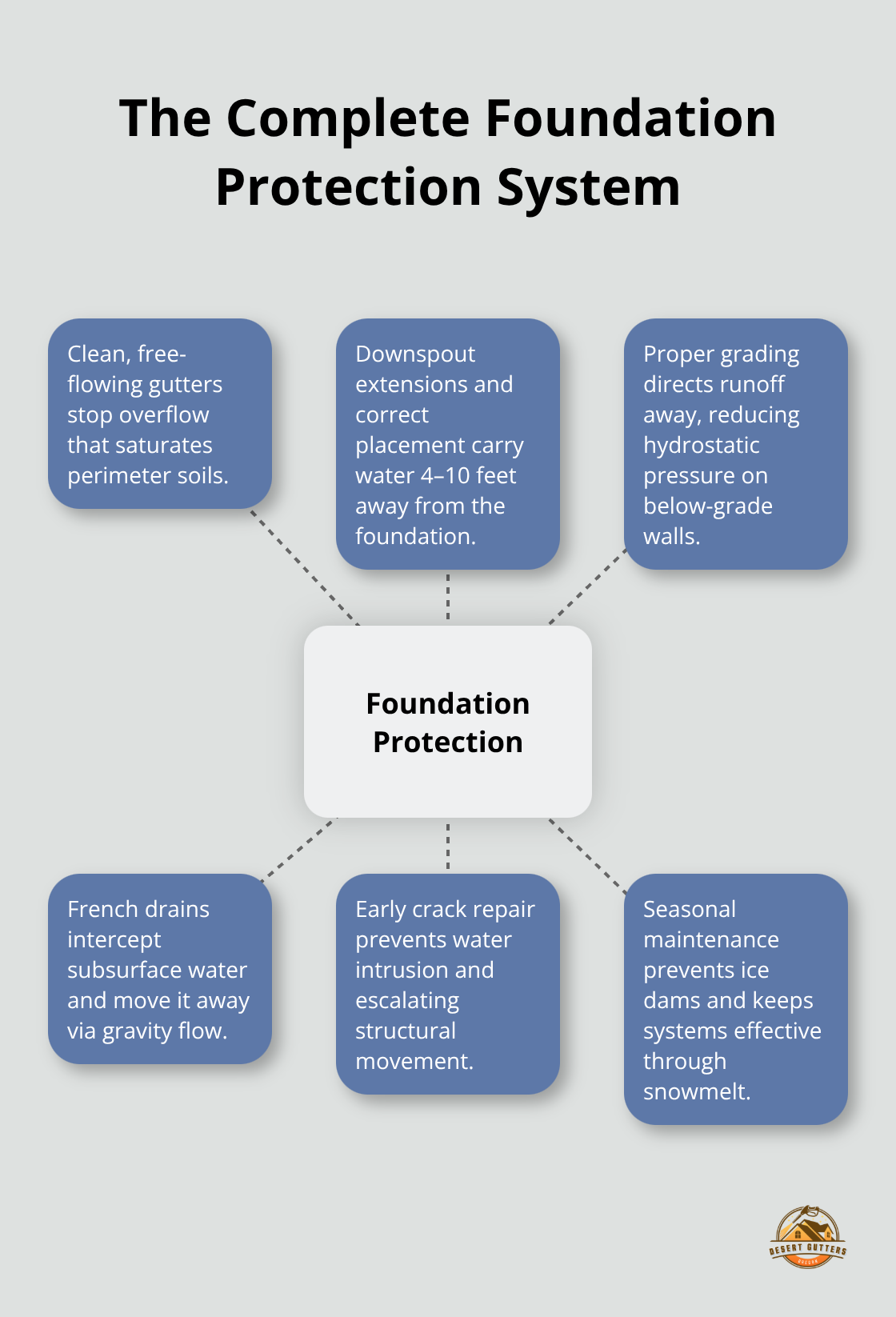
Gutter maintenance stops water from overflowing, but it’s only the first step. Central Oregon’s volcanic soils, freeze-thaw cycles, and hillside terrain demand a layered approach that addresses water movement both above and below ground. Downspout extensions and splash blocks redirect overflow away from your foundation, but they fail without proper grading and regular inspection. Water exiting a downspout should travel at least 4 to 6 feet away from your foundation perimeter, with 8 to 10 feet preferred in wet climates or homes with basements. Many Bend homes have downspouts that discharge water only 1 to 2 feet from the foundation because original construction didn’t account for Central Oregon’s specific erosion dynamics.
Winter snow and ice shift extensions, and spring melt buries splash blocks in debris, rendering them ineffective. Seasonal inspection after major weather events catches these problems before they allow water to pool against your home. Gutter slope toward downspouts should reach at least 1/8 inch per 10 feet of run-anything less and water moves too slowly, allowing debris to settle and create low spots where standing water forms.
Proper Grading Prevents Soil Saturation Around Your Home
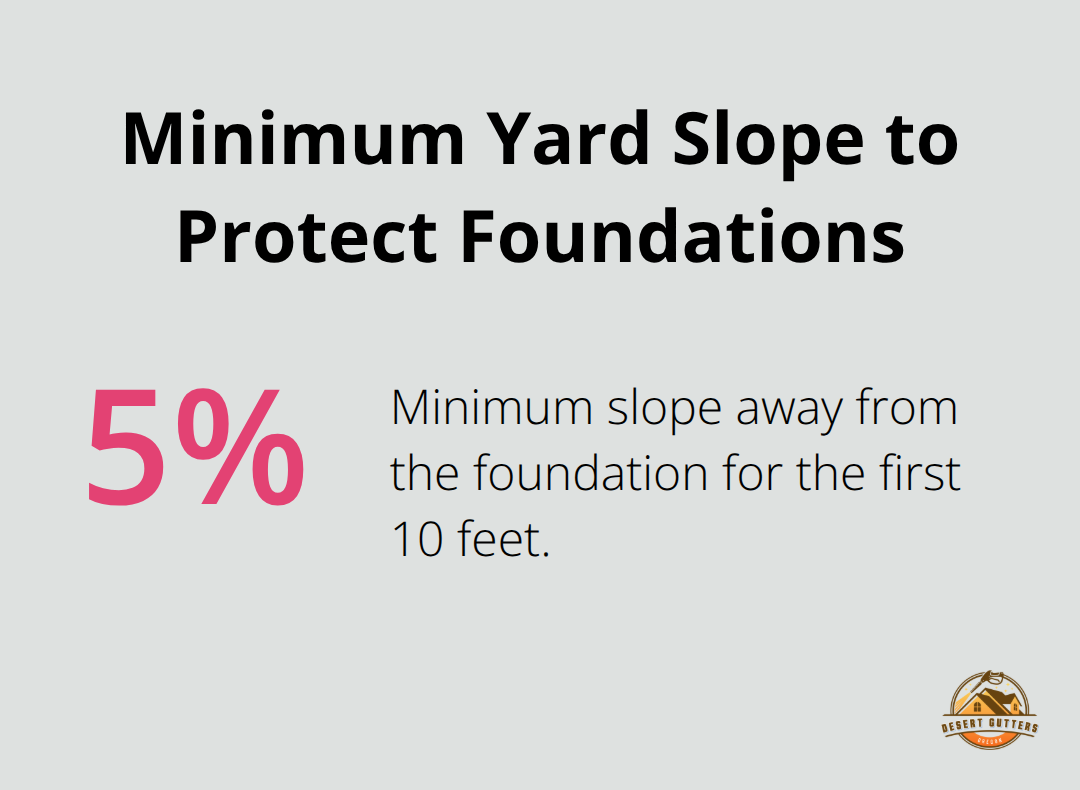
Soil grading away from your home’s perimeter is equally critical because even properly functioning gutters discharge water that must travel safely away from foundation footings. The USDA Natural Resources Conservation Service confirms that properly graded slopes reduce hydrostatic pressure against below-grade walls and prevent soil saturation that triggers settlement. Your home’s perimeter should slope downward at a minimum grade of 5 percent for at least 10 feet from the foundation wall. Many Bend homes have flat or reverse-sloping grades that funnel water directly toward their foundations, undoing the benefits of clean gutters.
If your yard slopes toward your home, you need to regrade, install French drains, or both. French drains intercept subsurface water before it reaches your foundation, collecting it in perforated pipe and directing it away through gravity flow. This system works even when surface grading alone cannot solve the problem, particularly in hillside neighborhoods where slope direction is fixed. Oregon State University Extension Service recommends that homeowners start with a site assessment that maps runoff paths and erosion hotspots to prioritize which areas need immediate attention.
Foundation Cracks Signal That Water Infiltration Has Already Started
Foundation cracks demand early intervention because they signal that water infiltration and soil movement are already underway. Horizontal cracks in basement walls indicate lateral pressure from saturated soil, while diagonal cracks suggest uneven settlement. Efflorescence-the white, yellow, or orange mineral staining on basement walls-proves that water actively moves through your foundation, carrying dissolved minerals from the soil. These conditions worsen with each freeze-thaw cycle and each season of snowmelt.
Small cracks that you can fill with caulk today become structural problems requiring helical piers and wall stabilization within five to ten years if left unaddressed. Central Oregon soils expand and contract with seasonal moisture changes, so cracks that appear minor in summer can widen significantly during winter. Professional foundation evaluations identify early movement before major damage occurs and cost far less than waiting until your home requires structural repairs. Cracked or sunken driveways and sidewalks near your foundation also indicate that soil beneath your home is shifting, meaning erosion control needs to extend beyond the foundation wall itself to include the surrounding landscape.
Final Thoughts
Water management protects your foundation from erosion in Central Oregon, and that protection starts at your gutters and extends through every drainage system around your home. Clean gutters prevent overflow that saturates soil, proper grading directs water away from your foundation, and early crack repair stops structural damage before it becomes expensive. These three strategies work together to address the specific threats that Central Oregon’s volcanic soils, freeze-thaw cycles, and heavy precipitation create.
The cost difference between preventing water damage and repairing a settled foundation is substantial-a foundation requiring helical piers and wall stabilization costs thousands of dollars, while consistent gutter maintenance costs a fraction of that amount. Professional maintenance catches problems early, identifies erosion hotspots before they damage your home, and keeps your gutters functioning through the seasons when water damage accelerates most rapidly. Winter snow removal prevents ice dams that force water into your home, while spring cleaning removes debris before snowmelt arrives.
Desert Gutters specializes in protecting high-desert homes from water damage, ice dams, and erosion through professional gutter cleaning, repair, and seasonal snow removal. Our team understands how pine needles accumulate in Bend’s neighborhoods, how freeze-thaw cycles stress gutters and foundations, and how to address the drainage problems that plague homes built before modern standards existed. Contact us for a free estimate to understand your home’s specific vulnerabilities and plan cost-effective protection before erosion causes structural movement.