
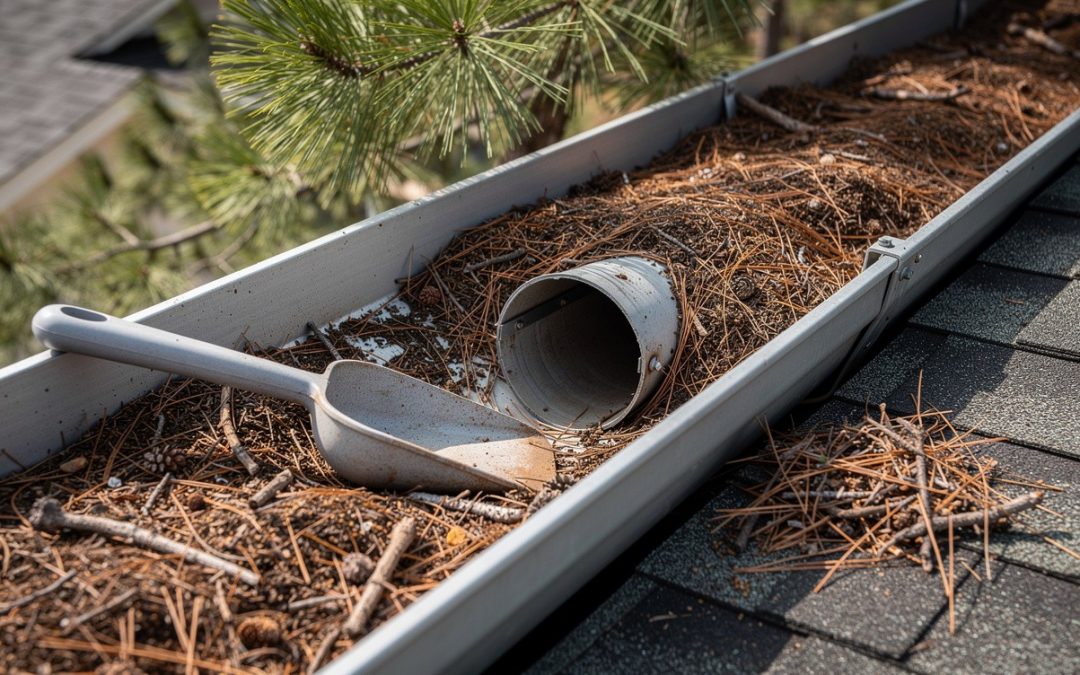
Living in Central Oregon means dealing with pine needle debris in gutters year-round. These needles accumulate faster than you’d expect, creating clogs that damage your home’s foundation, roof, and drainage system.
At Desert Gutters, we’ve seen firsthand how quickly pine needle buildup leads to costly water damage. The good news is that with the right approach, you can keep your gutters clear and protect your property.
Why Pine Needles Clog Central Oregon Gutters Faster
Pine Trees Shed Needles Year-Round in High-Desert Regions
Central Oregon’s high-desert climate creates the perfect conditions for rapid pine needle accumulation rates in Central Oregon gutters. The region’s ponderosa pine, Douglas fir, and lodgepole pine forests shed needles continuously, but the problem intensifies during specific seasons. Pine needles are thin and flexible, allowing them to weave together and pack densely into gutters-far more effectively than bulkier leaves. This characteristic makes them significantly harder to flush out than standard leaf debris. When needles combine with dust and smaller debris common in Central Oregon’s arid environment, they form stubborn clogs that restrict water flow within days rather than weeks.
Seasonal Patterns Drive Predictable Accumulation Cycles
The seasonal pattern in Central Oregon follows a predictable cycle that homeowners need to understand for effective maintenance planning. Spring brings heavy needle drop as trees shed winter damage, typically peaking between April and May. Summer remains relatively quiet, but fall becomes critical again from September through November when trees prepare for winter. Winter itself presents a secondary problem because needles accumulate on roofs during snowfall, then slide into gutters during freeze-thaw cycles.
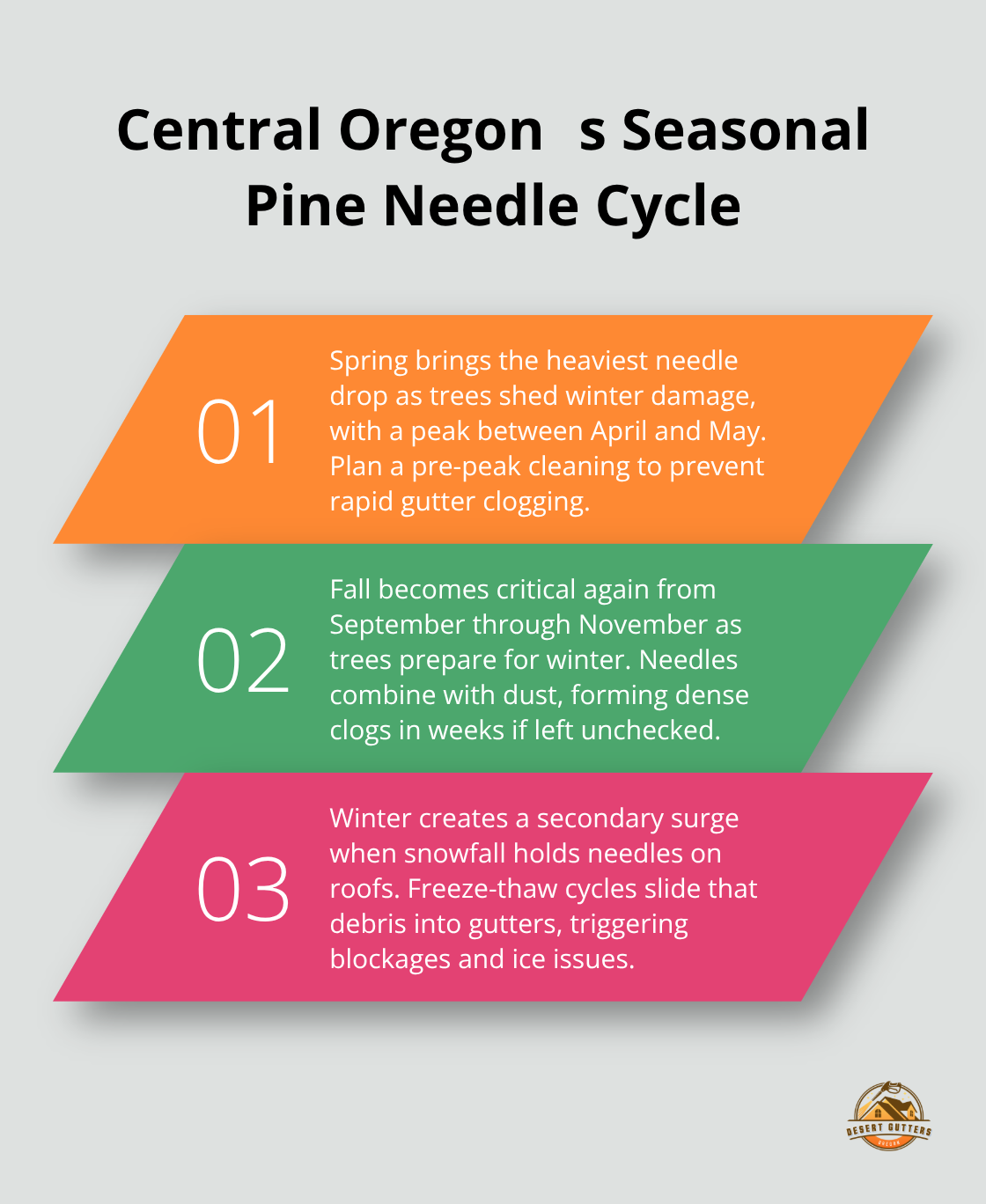
Homes with multiple pine trees within 30 feet of the roof experience gutter clogs within 3 to 4 weeks during peak seasons without regular clearing. The density of Central Oregon’s pine forests means most properties in the region face this challenge. Properties at higher elevations or in areas with dense tree coverage see even faster accumulation due to temperature swings, which causes gutters to expand, contract, and loosen far faster than in lower regions.
Proactive Scheduling Beats Reactive Responses
Understanding these patterns allows you to schedule cleaning before peak periods rather than responding to overflow damage, which often occurs after heavy rains when clogged gutters cannot handle water volume. Seasonal maintenance before peak periods proves far more effective than reactive cleaning after problems develop. This approach protects your home from the water damage that clogged gutters cause-damage that can lead to water seepage, basement flooding, or even structural damage over time.
What Happens When Pine Needles Block Your Gutters
Water overflow saturates your foundation
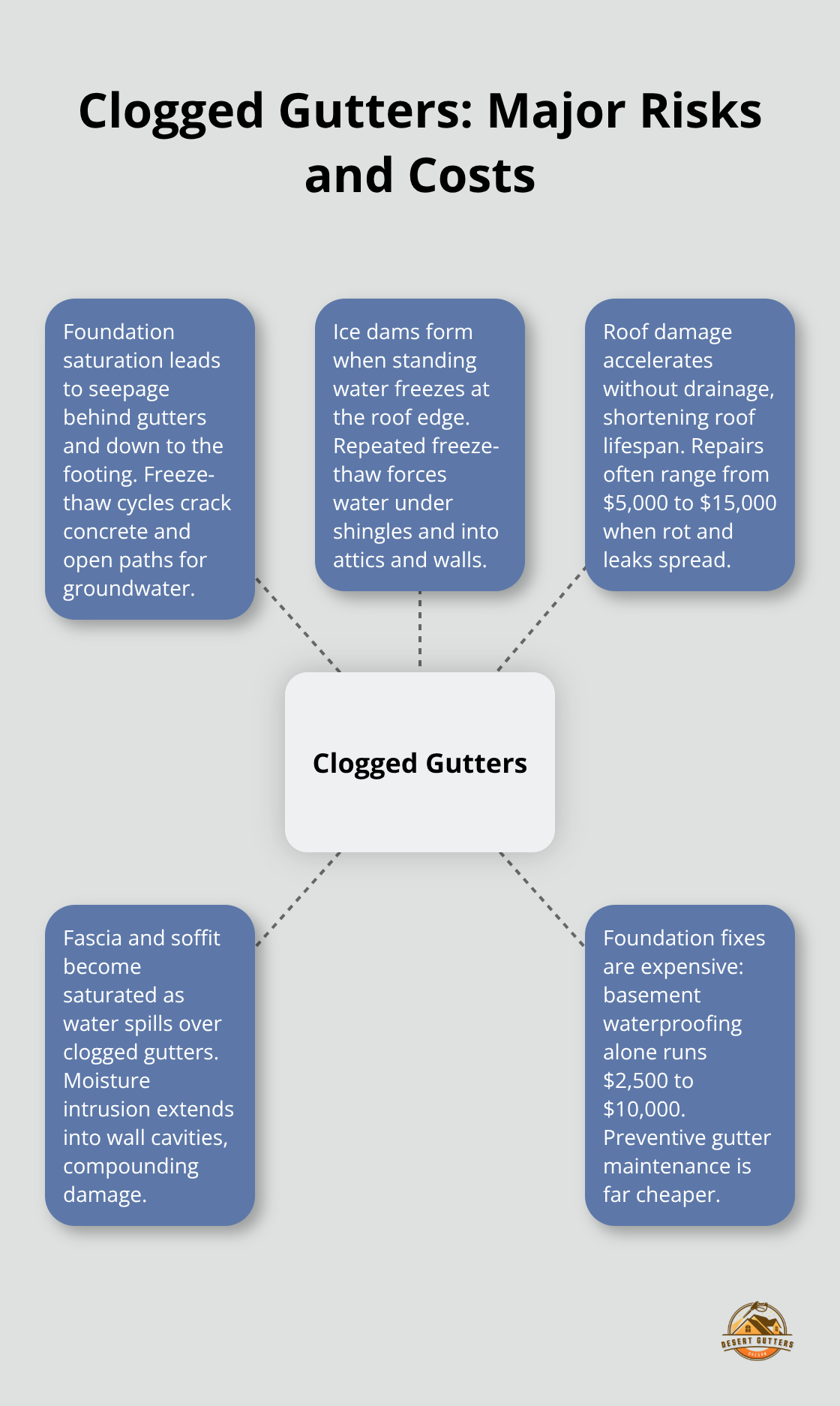
Clogged gutters don’t sit harmlessly collecting needles-water backs up, overflows, and infiltrates places that cause serious structural damage. When gutters fill with pine needles, water spills over the edges instead of flowing through downspouts, saturating the fascia board and soffit directly. Moisture seeps into the walls behind your gutters and eventually reaches the foundation. In Central Oregon’s freeze-thaw cycles, this trapped water expands when it freezes, cracking concrete and creating entry points for groundwater into basements. Homeowners often discover basement water damage months after a heavy rain, only to trace it back to clogged gutters that overflowed weeks earlier. The foundation erosion accelerates in high-desert climates because sandy, porous soil offers minimal resistance to water infiltration. Once water reaches the foundation, repair costs climb quickly-basement waterproofing alone runs $2,500 to $10,000 depending on severity.
Ice dams form in clogged gutters During Winter
Ice dams present a second critical threat that most Central Oregon homeowners underestimate. When gutters clog with pine needles, water cannot drain properly off the roof edge. During winter, standing water freezes into thick ice dams that prevent water from properly draining off the roof, leading to leaks and water damage. The backed-up water then refreezes under your shingles, creating pressure that forces water through the roof deck into the attic and interior walls. Central Oregon experiences temperature fluctuations between freezing and thawing throughout winter, making ice dam formation nearly inevitable in clogged gutters.
Roof Damage Accelerates Without Proper Drainage
Roof damage follows quickly once ice dams form-shingles crack, wood sheathing rots, and mold colonizes attic spaces where moisture accumulates. The combination of ice dam damage and structural rot can cost $5,000 to $15,000 to repair, far exceeding the cost of preventive gutter maintenance. Without proper drainage, your roof’s lifespan shortens by years, and water damage spreads to insulation, electrical systems, and living spaces below. These cascading problems make pine needle clogs far more expensive than simple debris removal.
Understanding the damage that clogged gutters cause explains why clearing pine needles before peak seasons matters so much. The next section covers the most effective methods to remove needle buildup and prevent these costly problems from developing in the first place.
Clearing Pine Needles Before They Damage Your Home
Schedule Cleaning Before Peak Needle Drop Seasons
Timing your gutter cleaning matters far more than most Central Oregon homeowners realize. Mid-August marks the ideal window for your first cleaning, roughly three weeks before fall needle drop peaks in September. A second cleaning should happen in late April, after spring’s heaviest shedding ends. This two-cleaning annual schedule prevents the three to four-week accumulation window that leads to overflow damage. If your property has dense pine coverage within 30 feet of the roof, add a third cleaning in late June to catch summer needle fall before it combines with dust and creates stubborn clogs.
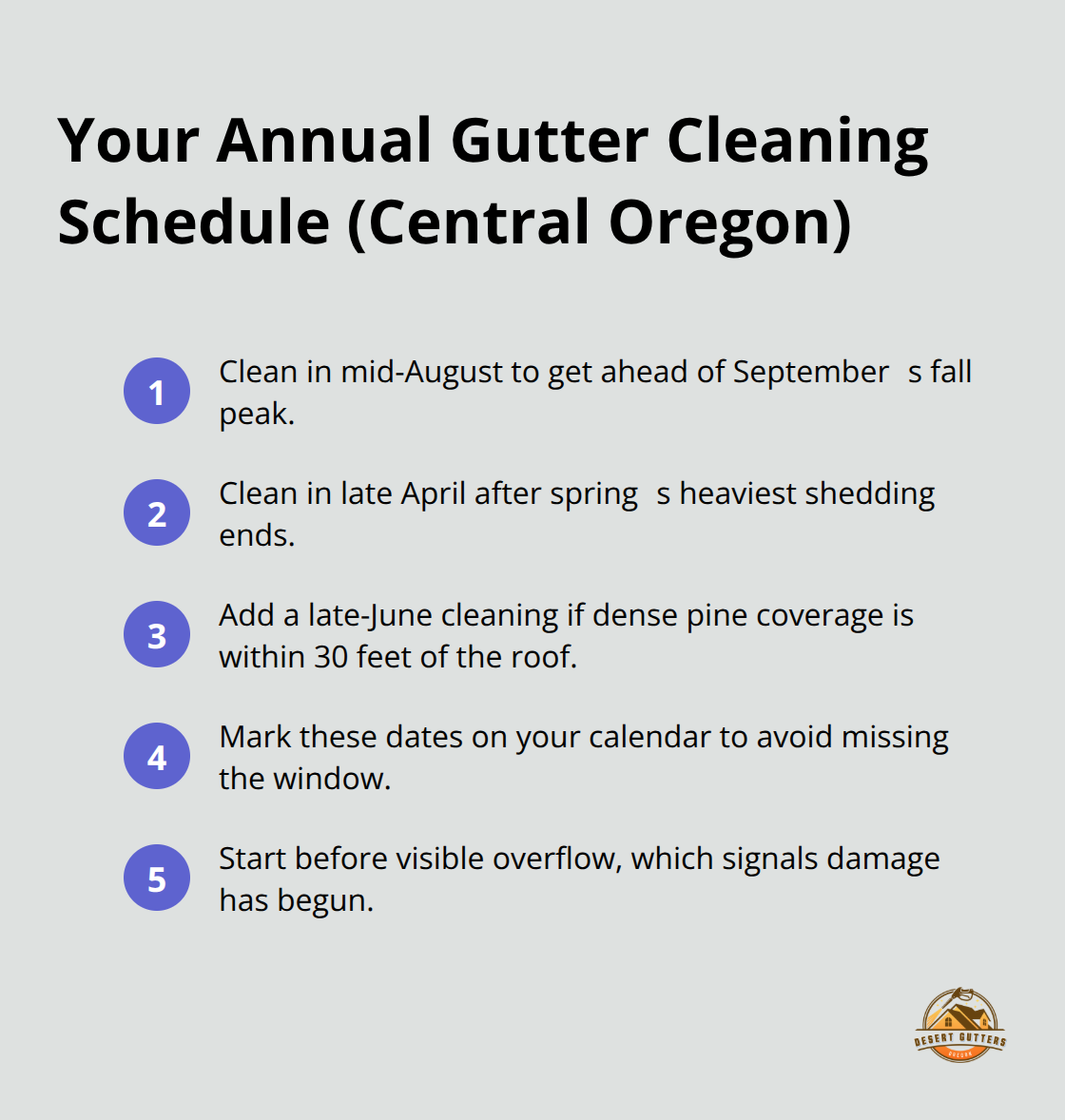
Mark these dates on your calendar now rather than waiting for visible overflow, which means water damage has already started seeping into your fascia and foundation. Many homeowners skip August cleaning thinking fall is soon enough, then watch water pour over their gutters during the first heavy September rain. Starting early prevents that costly mistake.
Professional Cleaning Removes Packed Needles More Effectively
Clearing pine needles yourself sounds straightforward until you realize how densely they pack and weave together in your gutters. A standard garden hose cannot flush them out because the needles interlock and resist water pressure. Professional gutter cleaning equipment uses high-pressure systems specifically designed to break apart needle clogs without damaging gutters, downspouts, or your roof edge. Professionals inspect for loose brackets, cracks, and rust damage during cleaning, catching problems before they cause foundation leaks or ice dams. DIY cleaning with a ladder and hand removal takes four to six hours for most Central Oregon homes, exposes you to fall risks from heights of 20 to 35 feet, and leaves behind smaller needle fragments that clog again within weeks. Professional crews complete the job in 90 minutes while inspecting your entire drainage system. The cost runs between $150 and $400 depending on gutter length and debris volume, a fraction of the $2,500 to $10,000 foundation repairs that clogged gutters cause.
Select Gutter Guards That Block Thin Pine Needles
Micro-mesh gutter guards work best in Central Oregon’s pine-heavy environment because their narrow openings block thin needles while allowing water through. Screen guards cost less upfront but risk pine needles slipping through if mesh holes exceed one-eighth inch, making them less reliable in dense needle zones. Reverse-curve guards shed larger debris but often allow needles to slip underneath or lodge against the curve if the angle isn’t steep enough for your roof pitch. Brush guards clog quickly in pine areas and actually increase maintenance rather than reducing it. Install micro-mesh guards only after confirming your existing gutters are structurally sound with no cracks, loose brackets, or sagging sections. Poor installation ruins guard effectiveness, so professional fitting (which accounts for your specific roof pitch and water volume) ensures proper water flow and needle deflection. Guards reduce cleaning frequency from twice yearly to once annually, saving time and ladder exposure while protecting your home during peak needle seasons.
Final Thoughts
Pine needle debris in gutters causes expensive damage that compounds quickly in Central Oregon’s climate. Water seeps into foundations, ice dams crack concrete, and roofs deteriorate faster than they should. Two annual cleanings before peak seasons stop this damage before it starts, costing far less than foundation waterproofing or roof replacement.
Professional cleaning removes packed needles that DIY efforts leave behind and catches structural problems early when they’re still affordable to fix. Micro-mesh gutter guards reduce your cleaning frequency and lower your exposure to fall risks, making them worth the upfront investment if your gutters are already in good condition. The combination of seasonal maintenance and guard installation creates a reliable system that protects your home year-round.
Central Oregon’s pine forests make gutter maintenance essential to your home’s longevity, and waiting for visible overflow means water damage has already started. Contact Desert Gutters for professional gutter cleaning, repair, and seasonal maintenance tailored to Central Oregon’s high-desert conditions, protecting your foundation and roof from the damage that pine needle debris gutters accumulate.