
Foundation moisture seeping into basements and crawl spaces causes thousands of dollars in damage every year. At Desert Gutters, we’ve seen firsthand how water infiltration weakens concrete, promotes mold, and compromises structural integrity.
The good news is that foundation moisture control strategies work when implemented correctly. This guide walks you through identifying problems early, installing effective solutions, and maintaining your foundation for decades to come.
What Does Foundation Moisture Actually Look Like
Water Stains and Efflorescence Reveal Active Moisture
Water stains appear as dark discoloration on basement walls, usually starting near the base where water pressure is strongest. These stains don’t fade on their own and indicate that water has penetrated the concrete repeatedly. Efflorescence on concrete looks like white, chalky deposits on concrete surfaces and forms when water carries mineral salts through the concrete and leaves them behind as the water evaporates. This white powder signals that moisture is moving through your foundation actively. If you see efflorescence, water is traveling through your concrete right now.
Mold Growth and Musty Odors
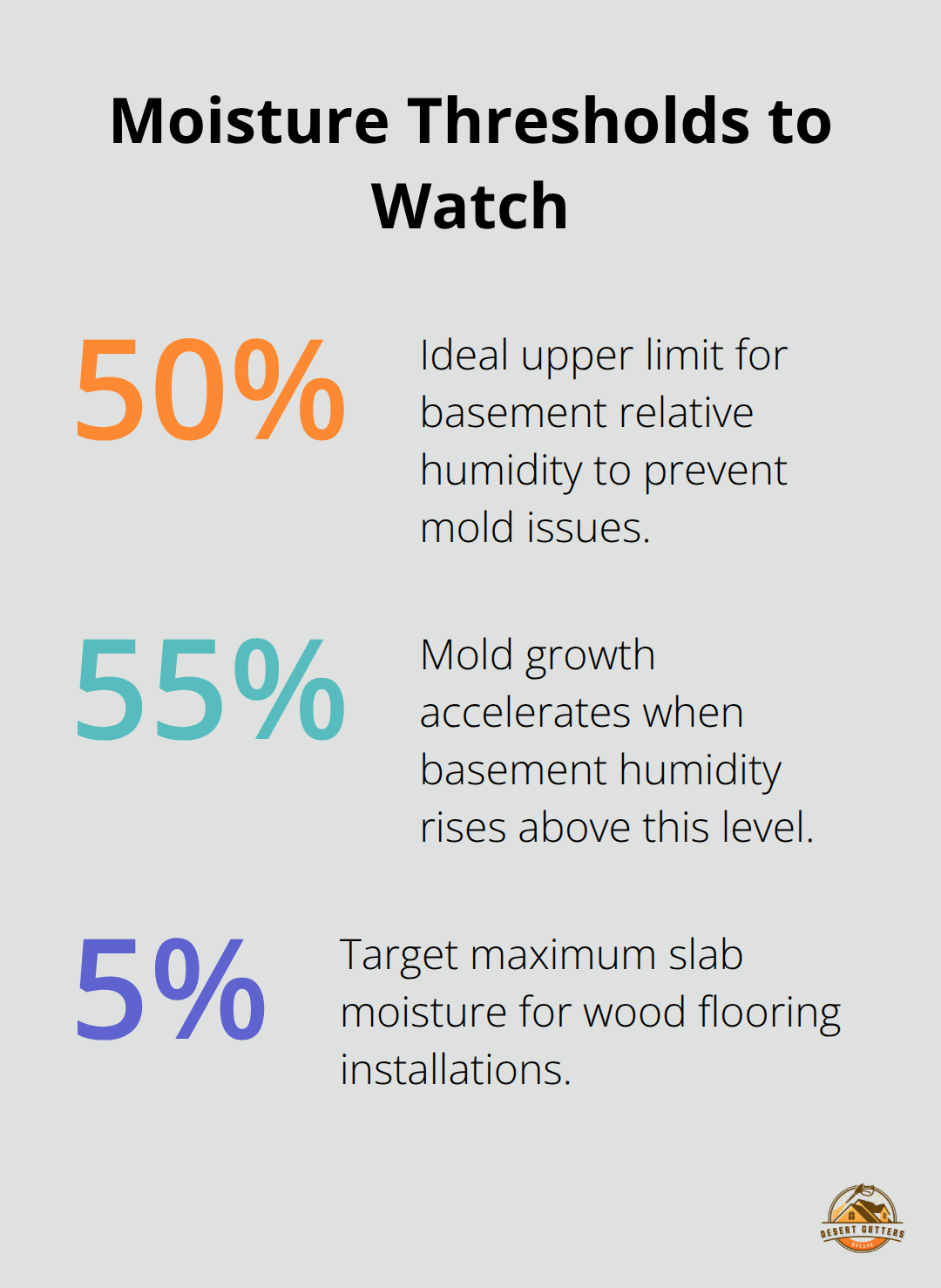
Musty odors in basements signal mold growth before you can see it visually. Mold growth when basement humidity exceeds 55 percent and spreads aggressively in damp basements. It can damage stored items within weeks. Visible mold on walls, insulation, or stored materials means moisture control has already failed and remediation becomes urgent. The smell itself acts as an early warning system-act on it before the problem worsens.
Cracks That Signal Water Entry
Horizontal cracks in concrete indicate hydrostatic pressure pushing against your foundation from groundwater outside. These cracks are more serious than vertical ones because they show that water is forcing its way through with significant pressure. Vertical cracks allow water seepage, but horizontal cracks mean your foundation is under active stress. Stair-step cracks in basement walls (especially near corners) suggest structural movement caused by water saturation and soil pressure.
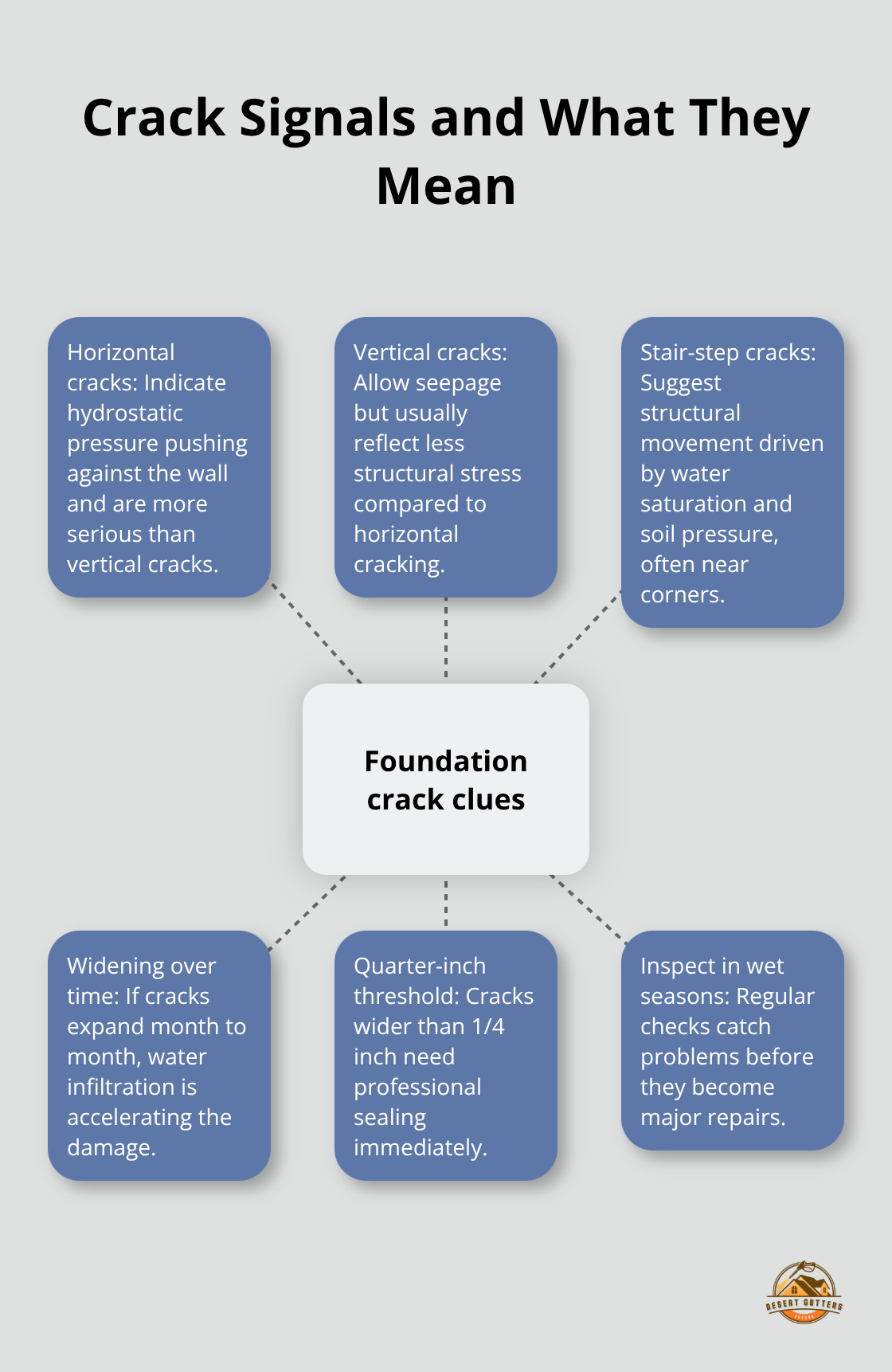
If cracks are widening visibly from month to month, water infiltration is accelerating the damage. Cracks wider than one-quarter inch need professional sealing immediately. Waiting allows water to penetrate deeper and causes interior mold and structural weakening that becomes exponentially more expensive to fix. Quarterly inspections during wet seasons catch these problems early, before they spiral into major repairs.
How to Stop Water Before It Reaches Your Foundation
Install Drainage Systems That Intercept Groundwater
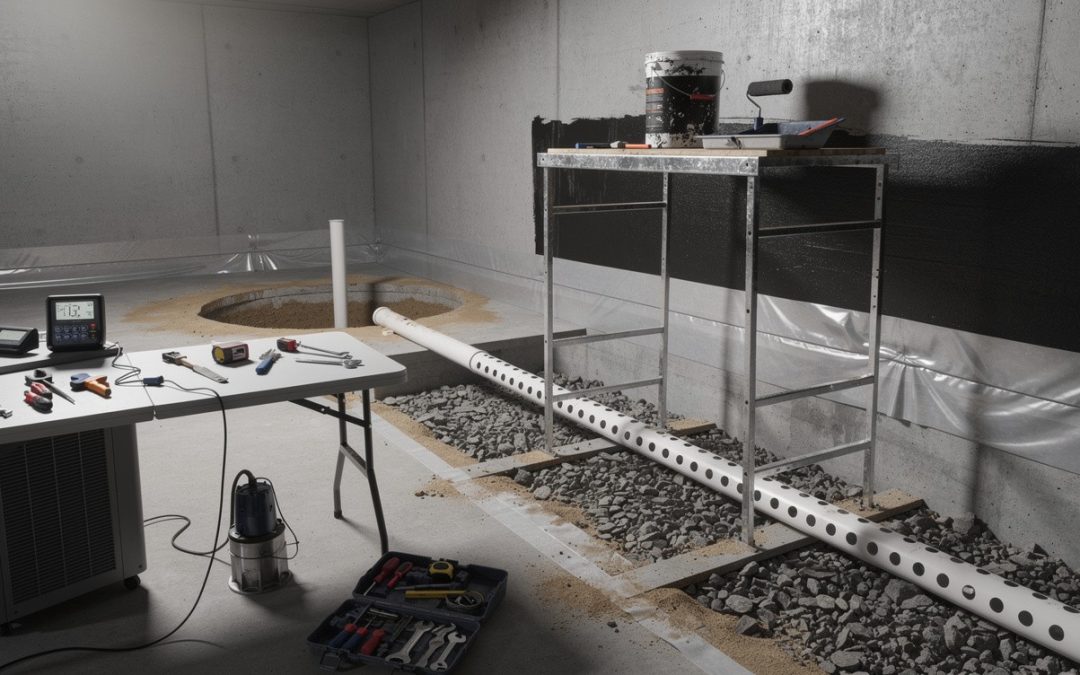
Drainage systems form the first line of defense against foundation moisture. French drains installed along the foundation perimeter intercept groundwater before it reaches your concrete, directing water away through a continuous channel. Interior French drains create a backup system inside the basement perimeter and connect to a sump pump that actively removes water from the lowest point of your foundation. The sump pump itself requires proper sizing for heavy rain events and your local water table levels-undersizing a pump guarantees failure during the worst storms. After interior drainage installation, backfill the drains with gravel to maintain water flow and repair the floor to prevent future cracks. Exterior drainage paired with interior systems catches multiple water pathways instead of relying on a single method.
Direct Downspouts and Clear Gutters Regularly
Downspouts extended at least 4 to 6 feet away from your foundation direct water toward the street or storm drain rather than letting water dump directly beside your house. Clogged gutters and downspouts rank as the top external cause of moisture intrusion, so clearing gutters every spring and fall removes pine needles and debris that block water flow. Seasonal maintenance costs far less than repairing a compromised foundation. Keeping gutters clear prevents thousands of dollars in foundation damage over time.
Apply Waterproof Coatings That Last Decades
Waterproof coatings applied to exterior concrete create a protective barrier that lasts 20 to 50+ years with proper maintenance. Liquid synthetic membranes like polyurethane and rubberized asphalt deeply infuse concrete and prevent water from penetrating the foundation wall. Interior acrylic sealants cost around $3 to $4 per square foot and work best after cracks are filled, though they function as temporary solutions without exterior protection. Epoxy sealants run $5 to $7 per square foot and offer greater durability, while penetrating sealers like RadonSeal minimize vapor emission from slabs and reduce moisture migration upward.
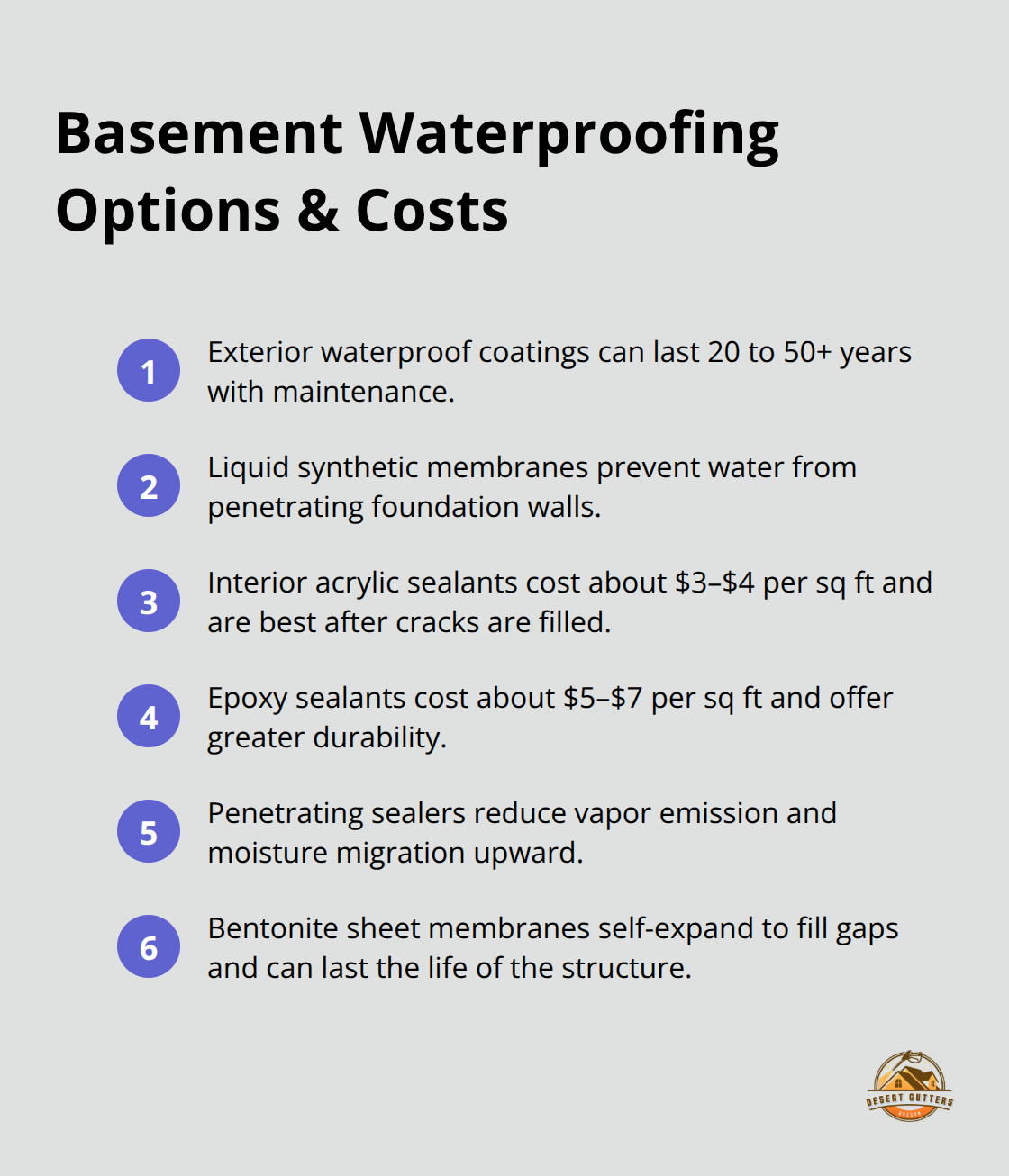
Bentonite sheet membranes use clay that self-expands to fill gaps and can potentially last the lifetime of your concrete structure in below-grade conditions.
Control Humidity With Dehumidifiers and Ventilation
Interior dehumidifiers paired with proper ventilation reduce basement humidity to ideal levels between 30–50 percent. Running an air conditioner alongside a dehumidifier for several days dries a damp slab more effectively than either device alone. Humidity levels above 55 percent accelerate mold growth, so monitoring relative humidity levels prevents mold before it becomes visible and costly to remediate.
Start With Low-Cost Fixes Before Major Investments
Addressing low-cost fixes first-such as redirecting downspouts and clearing gutters-costs almost nothing yet prevents many moisture problems from developing into structural issues that demand expensive interior drainage systems. These simple steps stop water at the source before it ever reaches your foundation, making them the most practical starting point for any moisture control plan. Once you’ve implemented these exterior defenses, the next phase involves assessing whether your foundation walls and slabs need additional protection through professional waterproofing or interior drainage installation.
Prevention and Long-Term Maintenance
Inspect Your Foundation Quarterly to Catch Problems Early
Walk your basement perimeter with a flashlight every three months and document any new stains, cracks, or odors with photos dated on your phone. This record becomes invaluable when you need to explain moisture patterns to a professional waterproofing contractor. Pay special attention to corners and low points where water naturally collects. If efflorescence appears where it wasn’t before, water pressure is increasing against your foundation and you need exterior drainage improvements immediately. Cracks wider than one-quarter inch require professional sealing within weeks because they accelerate water penetration exponentially. Horizontal cracks demand urgent attention since they indicate hydrostatic pressure actively pushing against your concrete.
Most homeowners ignore minor seepage until it becomes visible mold, which costs three to five times more to remediate than early intervention. Test your slab moisture content during spring thaw and after heavy rain events. Target readings of five percent or lower for wood flooring installations. If moisture readings spike above that threshold, your current drainage system isn’t capturing groundwater effectively and interior drains may become necessary.
Regrade Your Landscape to Direct Water Away
Landscape grading that slopes away from your foundation reduces the volume of water pushing against your concrete during storms. Soil should drop at least two inches over the first ten feet extending from your house. Clay soils hold water far longer than sandy soils, so if you have clay on your property, regrading becomes more important than in other locations. This simple fix prevents water from pooling against your foundation walls and forcing its way through concrete.
Maintain Clear Gutters and Extended Downspouts
Gutters and downspouts rank as the single biggest factor in preventing foundation moisture. Extend downspouts at least four to six feet away from your foundation to direct runoff toward the street or storm drain rather than allowing water to pool beside your house. Clogged gutters cause water to overflow and saturate soil directly against your foundation walls, creating the exact conditions that force water through concrete. Clear gutters every spring and fall, and after heavy wind events that drop pine needles and debris.
Undersized downspouts that cannot handle sudden desert downpours become overflow points that dump water beside your foundation. If your gutters are older and undersized, upgrading to larger capacity gutters prevents overflow during the intense rainstorms that cause the most damage. Bury or extend downspout discharge lines away from the foundation rather than letting water surface near your house. The combination of clear gutters plus extended downspouts costs far less than repairing foundation damage caused by years of water saturation.
Final Thoughts
Foundation moisture control strategies work when you address water at every level. Start with the easiest wins: clear your gutters, extend downspouts away from your foundation, and regrade soil to slope away from your house. These low-cost fixes stop water before it ever reaches your concrete. If moisture persists after these exterior improvements, interior drainage systems and waterproof coatings provide the backup protection your foundation needs.
The real cost of ignoring foundation moisture isn’t the initial seepage you see in your basement-it’s the mold remediation, structural repairs, and flooring replacement that follow months of water saturation. Homeowners who catch moisture problems early spend a fraction of what those who wait until visible damage appears will pay. Quarterly inspections take thirty minutes and reveal problems while they’re still manageable.
Professional assessment identifies which moisture control strategies your specific foundation needs. A contractor evaluates your drainage system, tests slab moisture content, and recommends whether interior drains, exterior coatings, or both will solve your problem. We at Desert Gutters know that gutter maintenance prevents thousands of dollars in foundation damage, and our professional gutter cleaning and repair services keep water flowing away from your foundation year-round.