
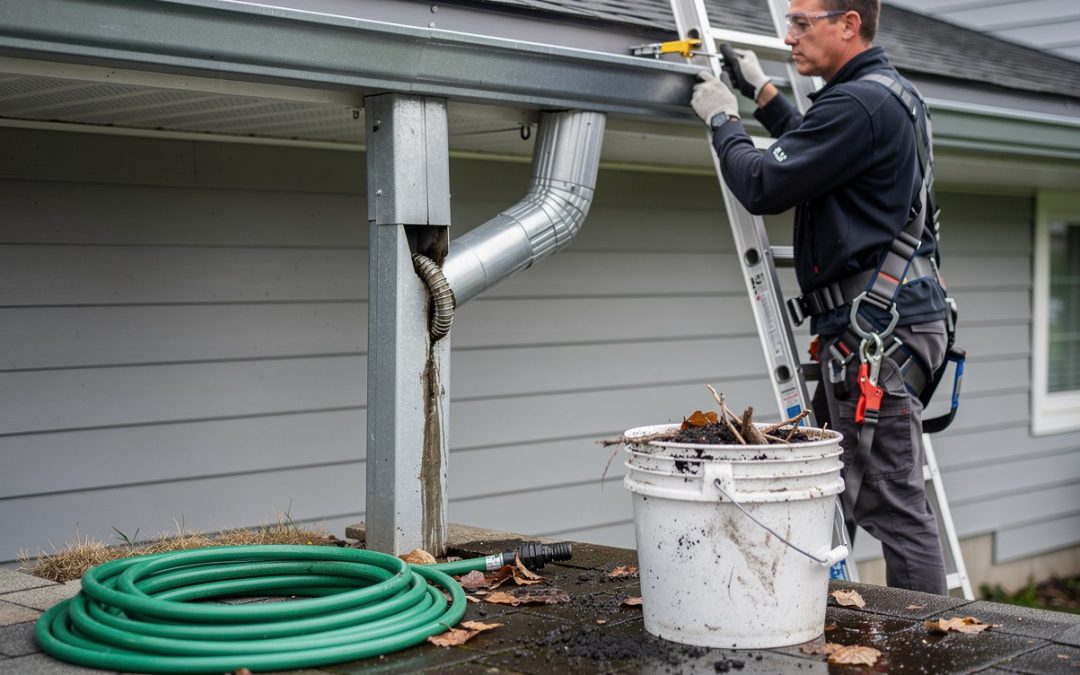
Clogged downspouts cause real damage-water pools around your foundation, gutters overflow, and your landscaping suffers. We at Desert Gutters know that catching these problems early makes all the difference.
This guide walks you through proven downspout clog removal methods you can handle yourself, plus when to bring in a professional. Stop waiting for the next rainstorm to expose the problem.
How to Spot a Clogged Downspout Before Water Damage Starts
Water Pooling Around Your Foundation
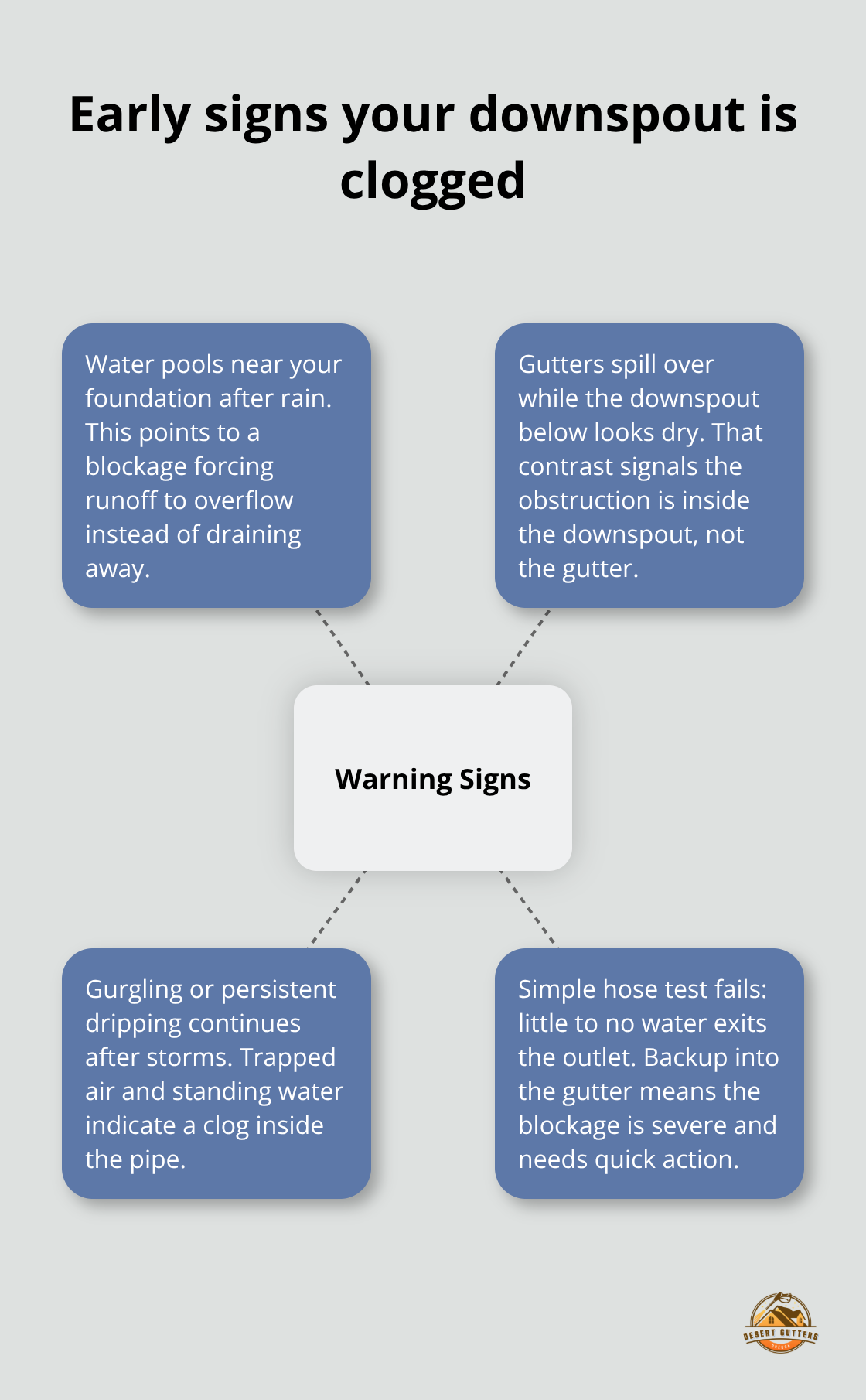
Water pooling near your foundation signals that your downspout isn’t working. Debris blocks the downspout’s interior, forcing water to back up into the gutter and overflow. When water sits against your foundation, it seeps into basements and crawl spaces-a problem that costs thousands to repair. Check the ground around your home’s perimeter after heavy rain. If you see standing water or wet patches that weren’t there before, your downspout has a blockage.
The mouth of the downspout, where it connects to the gutter, is the most common clog point. Leaves and large maple seeds flatten against the rectangular opening and create a seal that stops water flow completely. This happens fast-sometimes within a single heavy rain event.
Overflowing Gutters with Dry Downspouts
Look up at your gutters during or right after rainfall. If water spills over the gutter edges while the downspout appears dry below, the obstruction sits in the downspout itself, not the gutter. Gutters overflow when they’re clogged too, but water flowing over the edges while downspouts stay empty tells you exactly where the problem lives.
Gurgling Sounds and Persistent Dripping
Strange gurgling sounds from your gutters indicate trapped air above backed-up water. These noises happen when pressure forces air through small gaps. Dripping sounds that continue long after rain stops mean water pools inside the downspout instead of draining through. This standing water inside the pipe will freeze in winter, making the blockage worse and creating ice dams that damage your roof.
Test Your Downspout Flow Yourself
Insert a garden hose into the top of the downspout and run water for 10 seconds. Walk to the bottom outlet and watch for water discharge. If nothing comes out or the water trickles weakly, you have a clog. If water backs up into the gutter during this test, the blockage is severe enough that pressure builds (a sign you’ll want to act quickly). This simple test takes two minutes and tells you whether you need to act now or within the next week.
Once you’ve confirmed the clog exists, the next step is choosing the right removal method for your situation.
How to Clear a Downspout Clog Yourself
Use a Plumbing Snake to Break Up Debris
A plumbing snake works faster than you’d expect for most clogs. Insert the snake into the top of the downspout and rotate it clockwise while pushing forward-the spiral tip catches and breaks apart leaf clumps and debris. When you feel resistance ease, pull the snake back slowly. You’ll extract matted leaves, seed pods, and the compressed debris that forms that seal at the mouth of the downspout. Repeat the process two or three times until the snake slides through without catching. This method works best when the clog sits in the upper half of the downspout or in the elbow where the downspout bends. If the snake hits resistance deep in an underground section, stop pushing and move to the next method instead of forcing it deeper.
Flush with High-Pressure Water
High-pressure water from a garden hose nozzle flushes away smaller debris and loosens stubborn blockages without tools. Set the nozzle to a tight stream rather than mist, insert it into the top of the downspout, and let water pressure do the work. You’ll hear the debris shift and see water spray out the bottom outlet as the clog breaks apart. Try moderate pressure first-excessive force can dent aluminum downspouts or damage seams. If water backs up into the gutter during flushing, the blockage is severe enough that you need to try the plumbing snake first.
Disassemble and Hand-Clean Stubborn Blockages
For clogs that resist both the snake and high-pressure water, disassemble the downspout at the elbow joint. Most downspouts connect with crimped or screwed sections that come apart in minutes. Remove the lower section, and you’ll often see a dense leaf clump blocking the U-bend-pull it out by hand or with a wire hook.
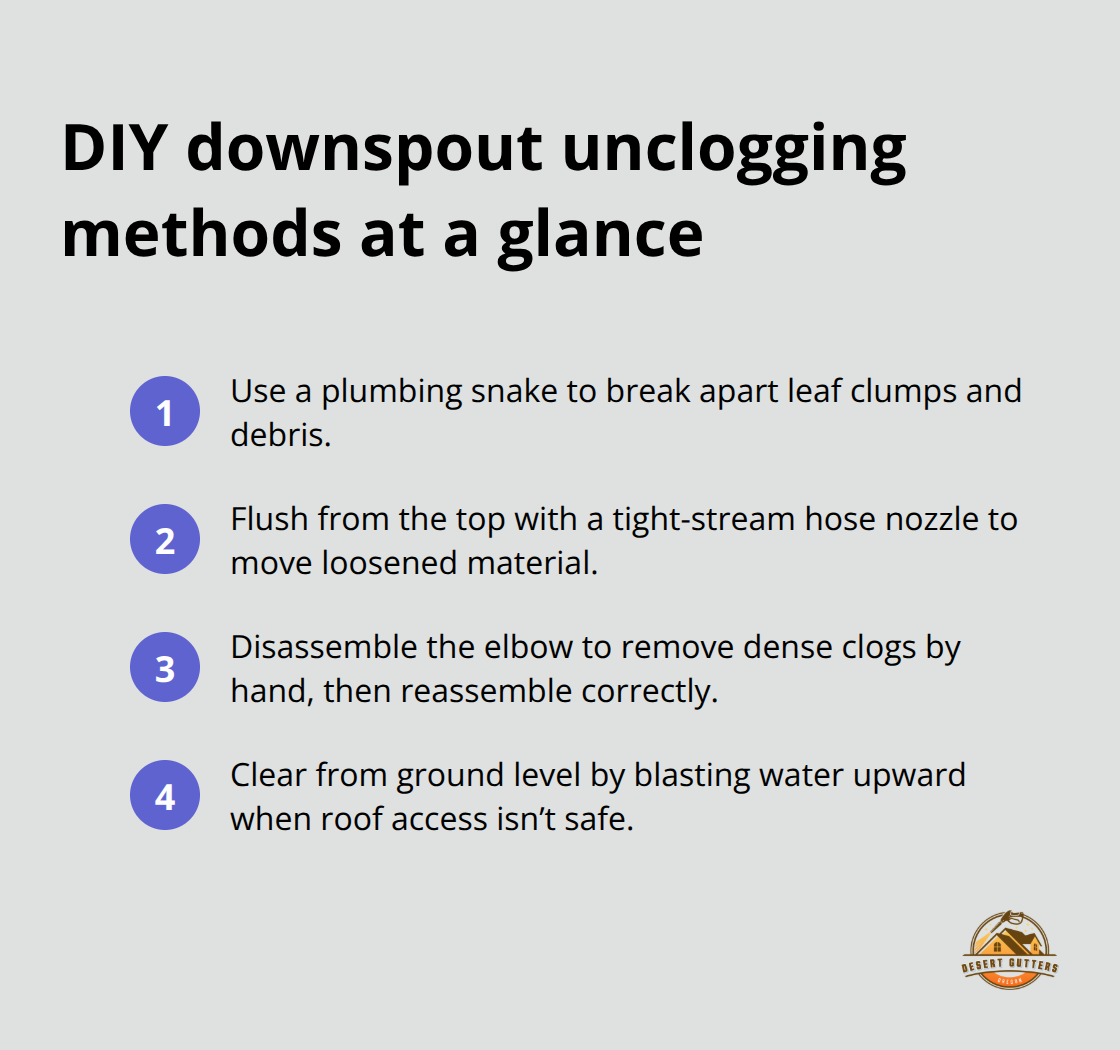
Reassemble the sections, ensuring crimped ends face downward to prevent future bottlenecks. Test the flow again with your garden hose before you finish.
Clear from Ground Level When Roof Access Isn’t Safe
Ground-level clearing from the bottom works when roof access feels unsafe or when the clog sits deep in the downspout run. Attach a high-pressure nozzle to your hose, position it at the downspout outlet, and blast water upward. This pushes debris toward the top and out through the gutter. Wet debris is heavier than dry debris, so this method works better after rain when the clog is already saturated. If these DIY approaches fail to restore full drainage, the blockage may extend into underground sections or indicate damage that requires professional assessment.
When to Call a Professional for Downspout Issues
Underground Blockages Require Professional Equipment
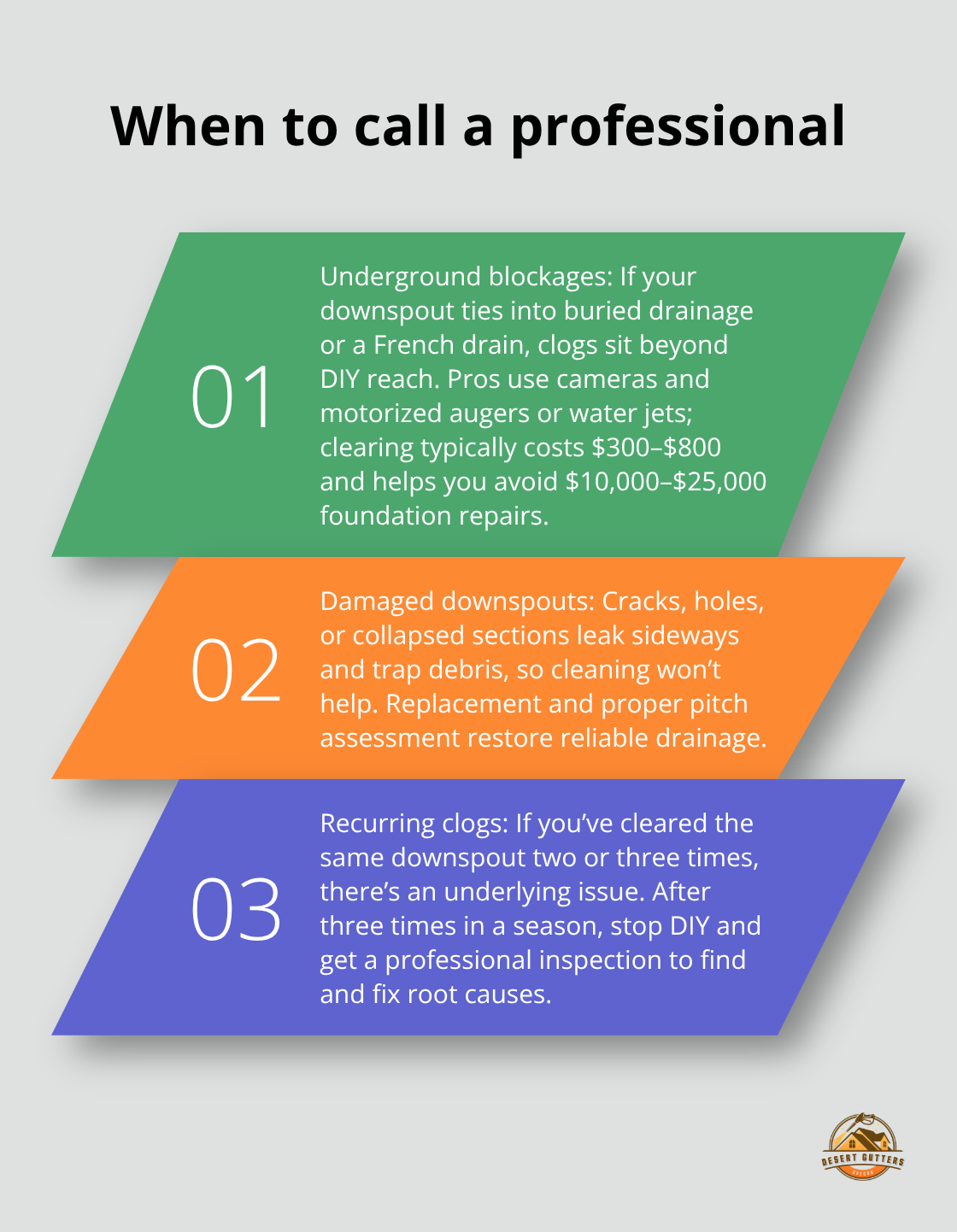
DIY methods work for most surface-level clogs, but underground blockages sit beyond reach of hand tools and garden hoses. If your downspout connects to a buried drainage line or French drain system, debris lodges where you cannot see or access it. A professional uses remote inspection cameras to locate the exact obstruction point, then deploys motorized augers or high-pressure water jets to clear what your garden hose cannot budge. This matters because pushing debris deeper into underground sections without knowing what lies ahead risks creating a worse blockage further down the line or forcing water toward your foundation instead of away from it. The cost of professional clearing for underground systems typically ranges from $300 to $800 depending on depth and severity, but this beats the $10,000 to $25,000 price tag for foundation repairs caused by backed-up water.
Damaged Downspouts Need Replacement, Not Cleaning
Cracks, splits, rust holes, or sections that have separated at seams mean water leaks out sideways instead of flowing down and away. Hand-cleaning a damaged downspout accomplishes nothing because the water never reaches the outlet. Collapsed sections, common in older homes or after ice dam stress, pinch the pipe and trap debris regardless of how hard you flush. When you see visible rust eating through aluminum or holes where water should drain, replacement becomes the only real solution.
A professional assesses downspout pitch with slope tools and uses cameras to spot structural damage you cannot see from the ground.
Recurring Clogs Signal Underlying Problems
Clogs that return after you’ve cleared the downspout two or three times indicate an underlying problem: improper slope that causes water to pool and trap sediment, a partially collapsed section that creates a pocket where debris accumulates, or root intrusion in underground pipes. If you’ve cleared the same downspout three times in a season, stop clearing it yourself and get a professional assessment. That pattern indicates damage or design failure that cleaning alone will never fix. A professional inspection identifies root causes, not just symptoms, and determines whether repair or replacement makes sense for your situation.
Final Thoughts
Downspout clogs happen fast, but you can stop them with twice-yearly maintenance in spring and fall. In Central Oregon’s high desert, pine needles accumulate year-round, so quarterly checks make sense if trees surround your home. A 10-minute inspection with your garden hose catches blockages before water pools against your foundation or ice dams form on your roof.
When you find a clog, act immediately because water sitting against your foundation seeps into basements and costs thousands to repair. The plumbing snake method clears most clogs in under an hour, and high-pressure flushing handles the rest. Disassembly works when other methods fail, and these approaches keep your landscaping from eroding and prevent the foundation cracks that develop when water pools for weeks.
Underground blockages, damaged downspouts, and recurring clogs signal problems that DIY methods cannot solve. If you’ve cleared the same downspout three times in a season, the underlying issue won’t go away without proper repair or replacement. Contact Desert Gutters to schedule your inspection and let our team handle the downspout clog removal method that fits your situation.