
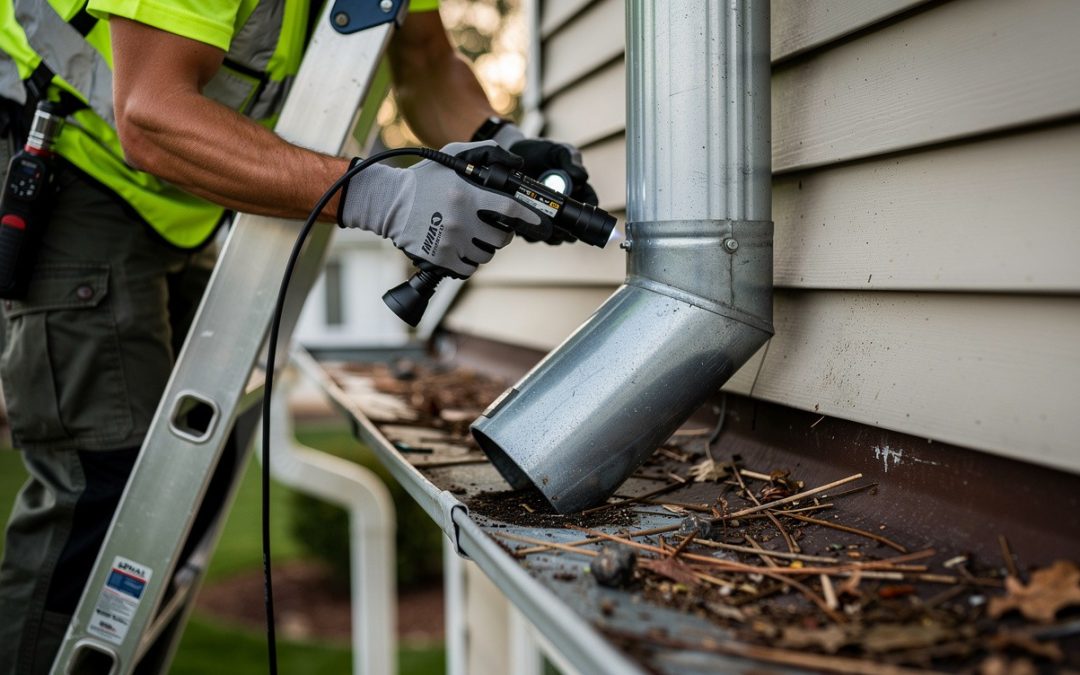
Most homeowners ignore their downspouts until water starts pooling around the foundation or ice dams form in winter. At Desert Gutters, we’ve seen how quickly small downspout problems turn into expensive repairs that damage your home’s structure and landscaping.
A downspout cleaning inspection catches these issues early, before they escalate into costly damage. This guide walks you through what to look for and how to keep your system working properly year-round.
How Downspout Problems Spiral Into Expensive Damage
Downspout blockages don’t announce themselves with fanfare. Water backs up silently in gutters, then starts pooling around your foundation-and by the time you notice the damage, structural repairs cost thousands. Foundation cracks that result from water intrusion can run $2,000 to $7,500 to repair, depending on severity. A single clogged downspout directs water straight against your home’s foundation instead of away from it, and soil erosion happens faster than most people realize.
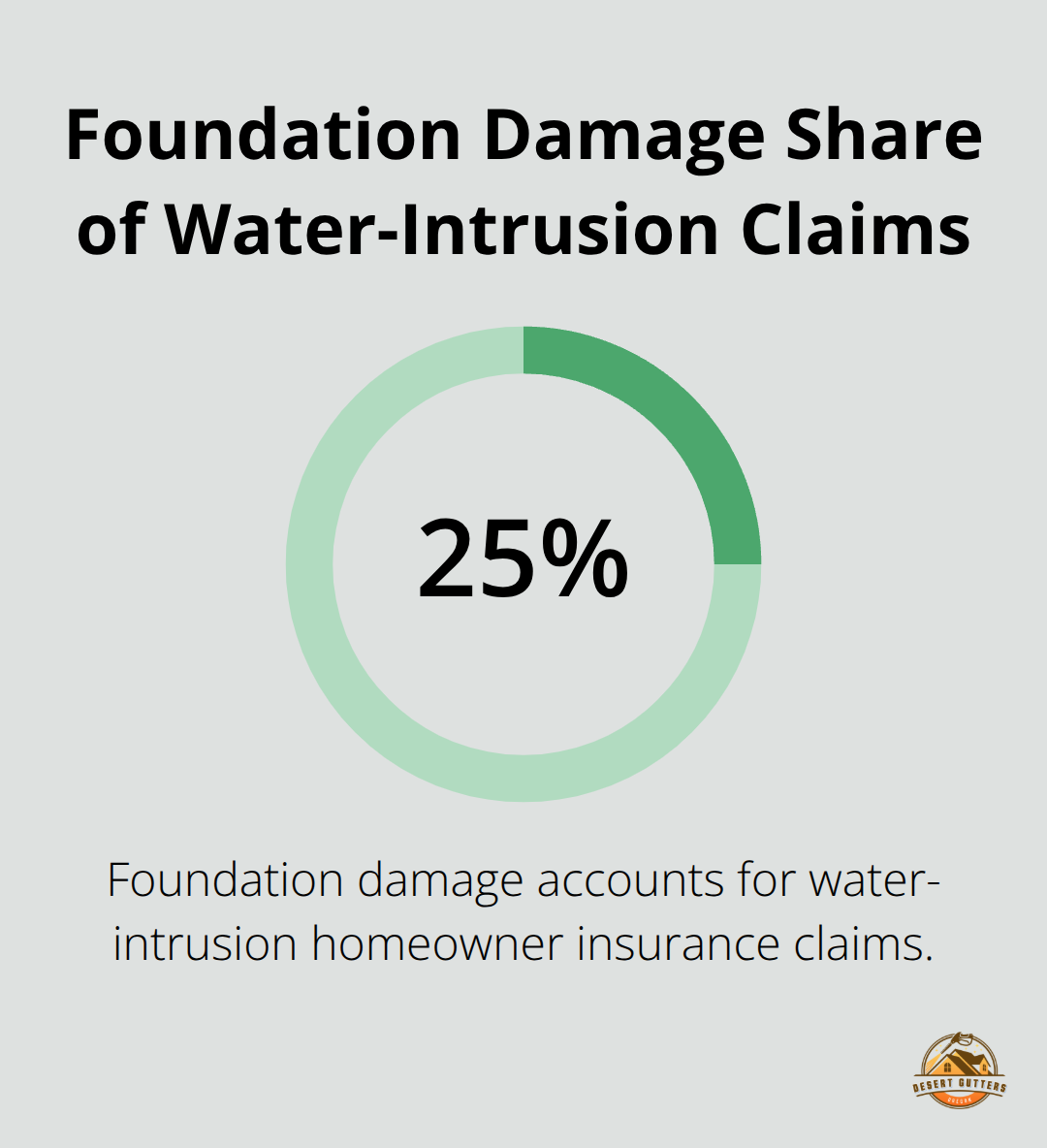
Studies from the National Association of Home Builders show that foundation damage accounts for roughly 25% of all homeowner insurance claims related to water intrusion. The problem accelerates because pooling water doesn’t just sit there-it seeps into basements, creates hydrostatic pressure against foundation walls, and promotes mold growth that spreads through crawl spaces.
Winter Ice Dams Compound the Damage
Winter conditions make downspout failures catastrophic. When downspouts fail to drain properly, backed-up water freezes in gutters and creates ice dams that can weigh 10 to 20 pounds per linear foot, pulling gutters away from the fascia and forcing water under roof shingles. In Central Oregon, freeze-thaw cycles mean ice dams form quickly and cause rapid damage to roof decking and interior ceilings. The weight alone can separate gutters from your home, and the water that seeps behind shingles rots the decking underneath before you even realize the problem exists.
Pest Problems Hide in Stagnant Water
Clogged downspouts create standing water that becomes a breeding ground for mosquitoes, which lay eggs in as little as a quarter-inch of water. Debris-choked downspouts also attract rodents and insects that seek shelter and moisture, and once pests establish a foothold near your foundation, they move into wall cavities and attics. Pest control treatments typically run $300 to $1,000 for initial service plus ongoing maintenance, making prevention far cheaper than remediation.
Blocked downspouts allow water to pool in landscaping beds, rotting plant roots and creating conditions where termites and carpenter ants thrive. The cascade of problems-foundation damage, pest infestations, mold remediation, and landscape replacement-turns a simple cleaning issue into a multi-thousand-dollar disaster that compounds over months.
The Cost of Delayed Action
Catching blockages early through regular inspection stops the damage chain before it starts. Each month that a downspout remains clogged, water continues its destructive work against your foundation, roof, and landscaping. The longer you wait, the more systems your home’s water management failure affects. Understanding what signs indicate a downspout problem helps you act before these cascading failures take hold.
What to Look for During a Downspout Inspection
Water Stains Reveal Hidden Overflow Problems
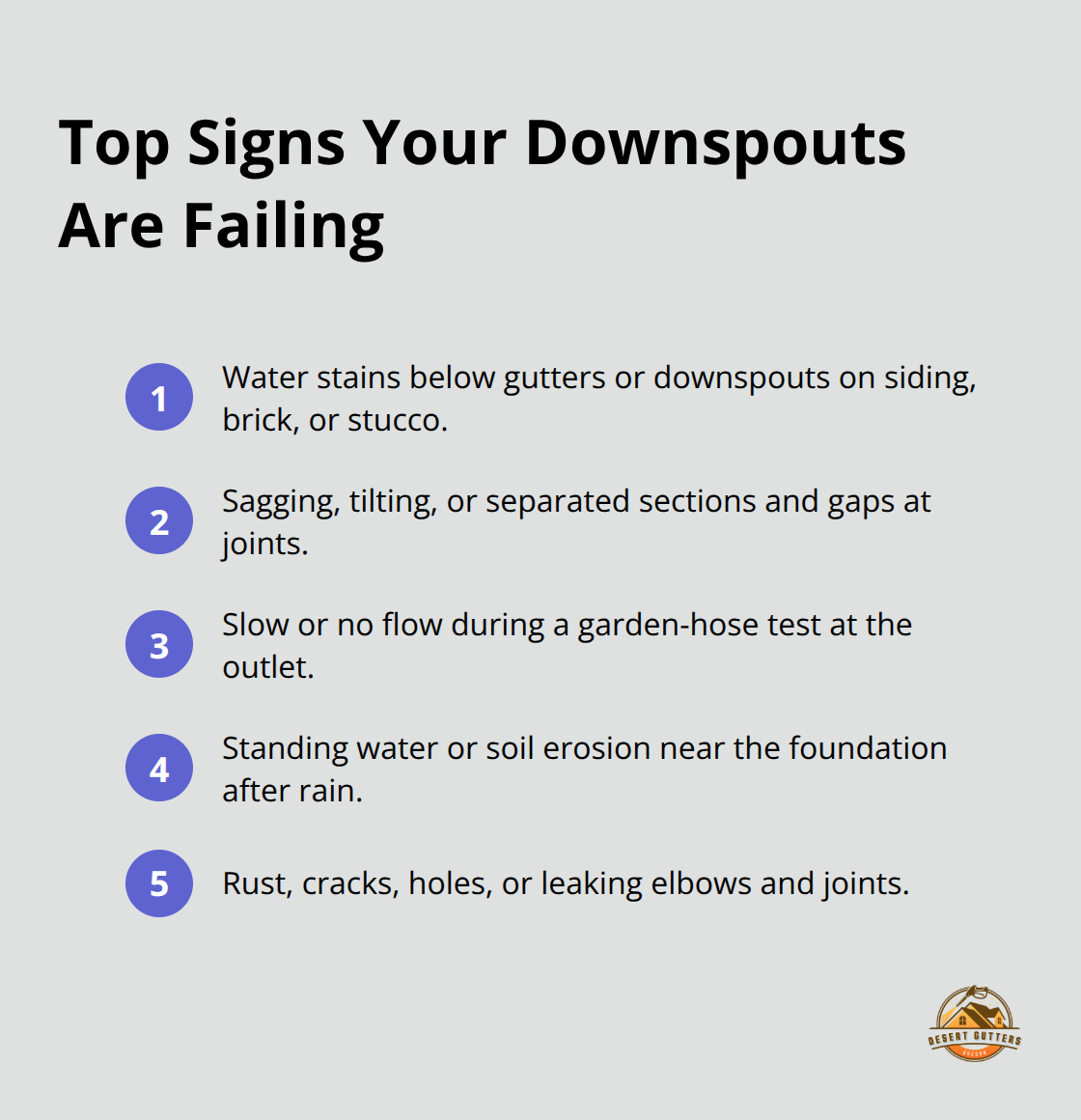
Water stains on your exterior walls below gutters and downspouts indicate that water has escaped where it shouldn’t. These stains typically appear as dark streaks or discoloration on siding, brick, or stucco, and they form because backed-up water overflows from gutters instead of flowing through downspouts to the ground. If you notice these stains after rain, your downspout system isn’t directing water away properly. Check the stains’ location carefully-stains concentrated near downspout outlets mean blockages force water to cascade down the wall instead of exiting through the pipe.
Sagging and Separated Sections Signal Structural Failure
Sagging or separated downspout sections are equally telling signs that your system needs attention. A properly installed downspout should run straight and tight against your home’s exterior; if sections have pulled away from the fascia, tilted outward, or developed visible gaps between joints, water escapes behind the downspout and soaks into fascia boards and wall cavities. Separation happens because ice dams place enormous weight on the system during winter, or because fasteners loosen from vibration and thermal expansion over time. You should also inspect the point where downspouts discharge water at ground level-if water pools near the foundation instead of flowing away, or if the discharge point has shifted, your downspout isn’t positioned correctly to protect your home.
Test Water Flow to Detect Internal Blockages
Visible debris and blockages inside downspouts require hands-on inspection. Run water into the top of each downspout with a garden hose and watch the outlet at ground level; if water trickles out slowly or doesn’t flow at all, a blockage exists inside. Pine needles, leaves, and dirt accumulate inside downspouts faster than in gutters themselves because the pipe’s narrower diameter traps debris more easily. In Central Oregon’s high-desert climate, pine needles are the primary culprit-they pack down inside downspout elbows and create dams that back water up into gutters.
Foundation Pooling Demands Immediate Action
Look for standing water pooling around your foundation or in landscaping beds after rain; this is the clearest sign that downspouts are either blocked or discharge too close to the foundation. Foundation pooling is serious because water begins eroding soil immediately, and within weeks hydrostatic pressure can develop against foundation walls. Check downspout outlets to confirm they extend at least 3 to 4 feet away from your home’s perimeter; many homeowners discover their downspouts discharge only 12 to 18 inches away, which guarantees foundation saturation during heavy rain.
Corrosion and Damage Compromise System Integrity
Inspect downspout elbows and joints for rust, cracks, or holes, especially in older aluminum systems-corrosion creates weak points where water leaks out before reaching the ground, defeating the entire purpose of the downspout system. These structural failures mean water that should travel safely away from your home instead saturates the areas it’s meant to protect.
Once you’ve identified these warning signs, the next step involves understanding how to address them properly and when professional help becomes necessary.
How to Inspect Your Downspouts Yourself
Check Discharge Points and Ground Slope
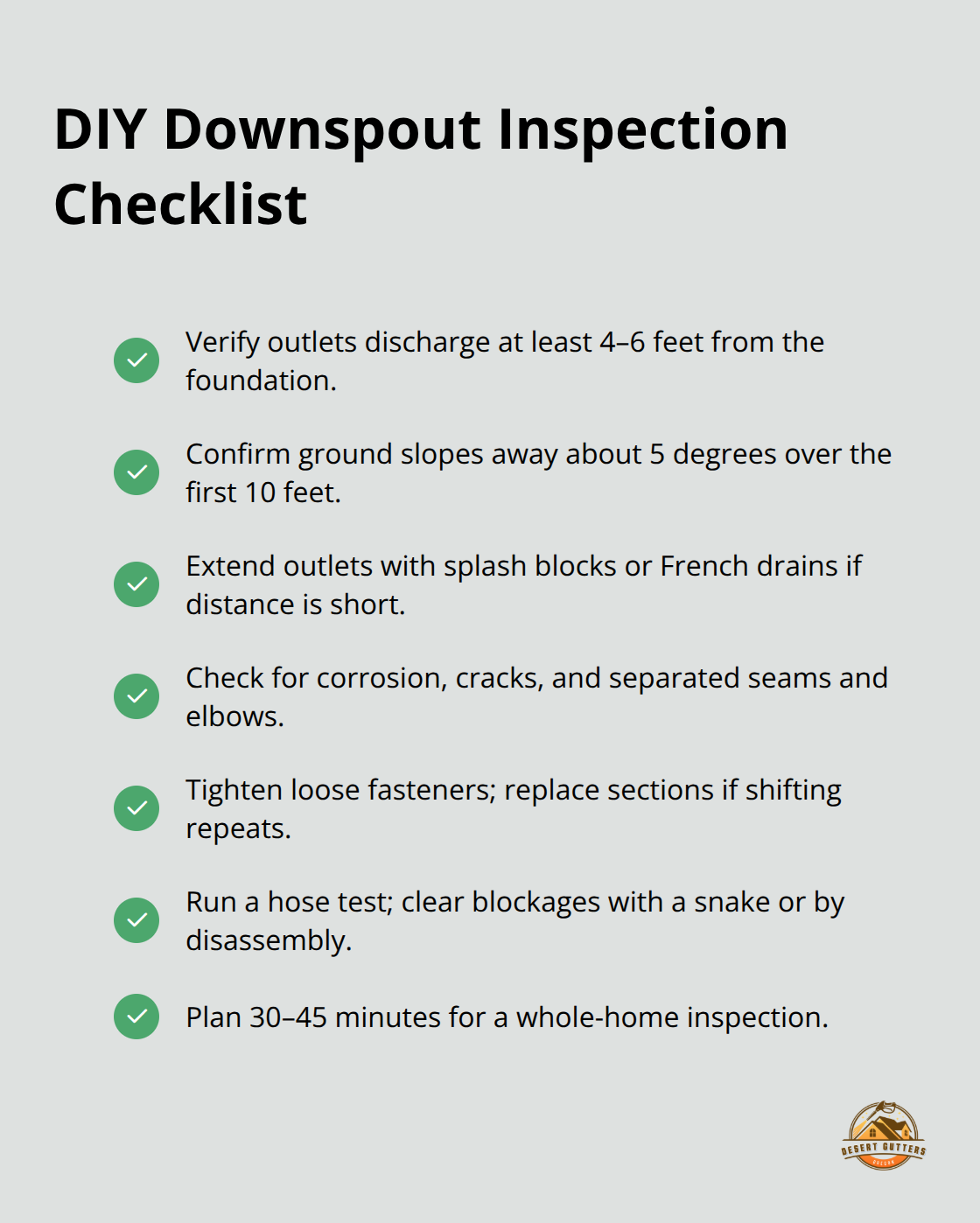
Start your inspection at ground level where downspouts discharge water. Walk around your home’s perimeter after rain and measure the distance from each downspout outlet to your foundation-water should travel at least 4–6 feet away before pooling near the house. If your downspouts discharge only 12 to 18 inches from the foundation, you saturate the soil that supports your home’s structural integrity. Check the ground slope as well; it should angle away from your foundation at roughly 5 degrees over the first 10 feet. If the ground slopes toward your house, water flows backward into the foundation regardless of downspout placement.
Poor grading amplifies downspout blockage problems because even properly flowing water gets redirected toward your foundation by bad slope. Extend downspout outlets using splash blocks or underground French drain systems if you lack the yard space for proper discharge distance. Many homeowners resist this step because it requires digging, but foundation repair costs average $11,950, making drainage extensions a cheap investment in prevention.
Examine Downspout Structure for Corrosion and Separation
Inspect the downspout structure itself for corrosion, cracks, and separation points. Run your hand along aluminum downspouts and feel for rust spots or soft areas where metal has thinned-these weak points leak water before it reaches the ground, negating your entire gutter system. Check all seams and elbows where sections connect; separated joints allow water to escape sideways into fascia boards and wall cavities.
Tighten fasteners with a screwdriver if sections have shifted, but understand that repeated tightening indicates deeper problems like thermal expansion or impact damage that require section replacement. These structural failures mean water that should travel safely away from your home instead saturates the areas it’s meant to protect.
Test Water Flow and Clear Internal Blockages
Test water flow by running a garden hose into the top of each downspout and watching the outlet-water should exit quickly and powerfully, not trickle or stall. If flow is sluggish, blockage exists inside, typically from pine needles packed into elbows where the downspout changes direction. Use a plumber’s snake to clear internal clogs, or disassemble elbow joints to physically remove debris if snaking fails.
Blocked downspouts create pressure that forces water backward into gutters, causing overflow that mimics gutter failures when the real culprit is hidden inside the pipe itself. This hands-on inspection takes 30 to 45 minutes per home and reveals problems that visual inspection alone misses.
Final Thoughts
A downspout cleaning inspection twice yearly catches problems before they become expensive. Water pooling around your foundation, ice dams in winter, and pest infestations all start with a blockage you could have spotted and cleared in under an hour. The cost of prevention is negligible compared to foundation repairs running $2,000 to $7,500 or pest control treatments costing $300 to $1,000.
You can handle basic downspout maintenance yourself if you’re comfortable on a ladder and willing to spend 30 to 45 minutes testing water flow and clearing debris. However, two-story homes, complex gutter systems, or safety concerns make professional service the smarter choice. Professionals spot damage you might miss, clear stubborn blockages that hand tools can’t reach, and verify that your entire drainage system slopes correctly away from your foundation.
Contact Desert Gutters to schedule your downspout cleaning inspection and protect your home year-round from the water damage that starts silently and compounds quickly. We provide free estimates so you can understand exactly what your home needs without guessing or delaying action.