
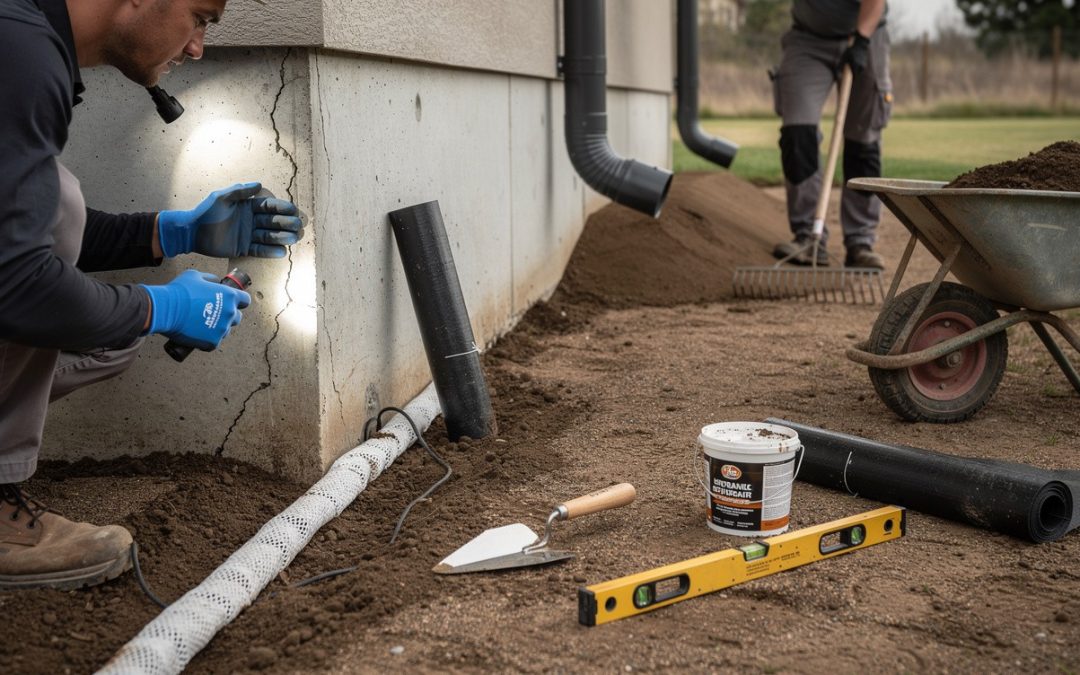
Foundation cracks start small but grow into expensive problems fast. Water seeping through your foundation can cost thousands to repair, which is why foundation crack prevention measures matter so much.
At Desert Gutters, we know that most foundation damage comes from water management failures. The good news is that you can stop cracks before they start with the right steps.
What Causes Foundation Cracks to Form
Water stands as the primary culprit behind foundation cracks, and poor drainage amplifies the damage significantly. When gutters overflow or downspouts discharge water too close to your foundation, that water saturates the soil around your home’s base. Saturated soil expands and contracts with moisture changes, placing immense pressure on foundation walls. In regions with expansive clay soils like the DFW area, this expansion and contraction cycle proves particularly aggressive. Soil swells when wet and shrinks when dry, creating stress that cracks concrete. Homeowners who neglect gutter maintenance face a predictable sequence: debris clogs the system, water pools near the foundation, and within months visible cracks appear. The fix is straightforward but non-negotiable: gutters must discharge water at least 5 to 10 feet from your foundation, and downspouts need to stay clear of leaves and pine needles year-round.
How Soil Settlement Destabilizes Your Foundation
Soil settlement occurs when the ground beneath your foundation shifts or compresses unevenly. Natural soil consolidation happens over time, but poor drainage accelerates it dramatically. When water penetrates soil inconsistently, some areas become saturated while others dry out, causing uneven settlement that stresses your foundation. Horizontal and diagonal cracks indicate this type of movement and warrant immediate professional evaluation. Freeze-thaw cycles in cold climates create pressure that pushes against foundation walls. In milder climates, extreme heat dries out clay soils rapidly, causing them to shrink and pull away from the foundation.
Moisture Imbalance as the Root Problem
The real issue is moisture imbalance. Maintaining consistent soil moisture around your foundation minimizes movement and reduces cracking risk substantially. Soaker hoses placed 12 to 18 inches from the foundation, run 15 to 30 minutes daily during dry periods, stabilize soil moisture effectively. Proper grading that slopes soil away from your home by at least 6 inches over 10 feet prevents water concentration near the foundation-the root cause of nearly all preventable foundation problems. This moisture management approach (combined with regular gutter maintenance and downspout extensions) protects your foundation from the stress that leads to visible damage.
Understanding these causes positions you to recognize which prevention strategies matter most for your specific situation. The next section covers the concrete steps you can take today to stop cracks before they start.
How to Stop Foundation Cracks Before They Start
Install and Maintain Gutters That Protect Your Foundation
Your gutter system stands as the first line of defense against foundation damage, and neglecting it guarantees problems. Gutters that overflow or discharge water within 5 to 10 feet of your foundation send saturated soil directly against your foundation walls, triggering the expansion and contraction cycles that crack concrete. Clean gutters four times annually-spring, early summer, fall, and winter-to prevent debris accumulation that causes overflow during heavy rain. Pine needles and debris pack gutters faster in high-desert regions, making consistent maintenance non-negotiable. If your downspouts empty near the foundation, extend them immediately using splash blocks or underground drainage lines that carry water at least 10 feet away. This single action stops the primary cause of foundation failure.
Grade Your Yard to Direct Water Away
Proper grading works alongside gutter maintenance to complete your defense strategy. Your yard must slope away from the foundation at a minimum 6-inch drop over the first 10 feet-this prevents water from pooling against your home’s base during storms. If your yard slopes toward the foundation or has flat spots near the house, regrading becomes essential. Mulch placed 2 to 4 inches deep and extending about 18 inches from the foundation preserves soil moisture while improving drainage, but keep mulch directly away from the foundation itself to prevent moisture trapping.
Control Soil Moisture to Prevent Movement
Soil moisture consistency matters more than most homeowners realize. Soil can expand and contract due to changes in moisture, temperature, or other factors, leading to cracks in your foundation. During dry periods, water the soil around your foundation using soaker hoses placed 12 to 18 inches away, running them 15 to 30 minutes daily to maintain steady moisture levels. Drip irrigation systems offer a superior alternative, delivering precise moisture control automatically while reducing water waste compared to traditional sprinklers. Monitor your soil regularly by checking for cracks, separation from the foundation, or signs of saturation, then adjust your watering schedule based on seasonal changes. In summer, increase watering frequency; during rainy seasons, reduce it to prevent oversaturation. Avoid overwatering, which creates hydrostatic pressure that pushes against foundation walls and increases basement seepage risk.
Manage Trees and Vegetation Near Your Foundation
Large trees planted closer than 15 to 20 feet from your foundation draw excessive moisture from the soil, causing shrinkage and settlement that destabilizes the foundation. If trees already exist near your home, install root barriers or consult an arborist to minimize moisture withdrawal and root disruption. These three strategies-gutter maintenance, proper grading, and soil moisture management-eliminate the conditions that cause foundation cracks. Implementing them protects your investment from the ground up and positions your home to handle the warning signs that appear when prevention efforts fall short.
When Cracks and Water Appear in Your Home
Identifying Foundation Cracks That Signal Real Problems
Cracks in foundation walls or basement concrete rarely appear without warning signs beforehand, and ignoring them accelerates structural damage significantly. Hairline cracks under 1/8 inch wide often result from normal concrete shrinkage and may not indicate foundation movement, but wider cracks or those growing visibly over weeks demand professional evaluation immediately. Vertical cracks with no visible gap typically signal concrete shrinkage in slabs on grade, while horizontal or diagonal cracks indicate lateral soil pressure and represent a genuine structural threat requiring urgent assessment. Stair-step cracks running diagonally through brick or concrete blocks suggest foundation movement along the wall and warrant a structural engineer’s inspection without delay.
You can monitor crack growth yourself using a straightedge or water level to track changes across foundation walls, recording measurements monthly to establish whether movement is active or stable. This simple tracking method reveals whether cracks expand rapidly (indicating active failure) or remain stable (suggesting past settlement that has halted).
Recognizing Water Intrusion Before Major Damage Occurs
Water seepage appearing in basements or crawl spaces signals that your foundation’s moisture barrier has failed, and this problem worsens rapidly in heavy rain or spring snowmelt. Damp patches, floor discoloration, or musty odors indicate ongoing water intrusion that creates hydrostatic pressure against foundation walls, accelerating crack expansion and promoting mold growth that damages wood framing and insulation. The presence of efflorescence (white, chalky deposits on concrete) proves water is moving through your foundation, carrying minerals to the surface and indicating internal moisture problems even when visible seepage hasn’t appeared yet.
Detecting Foundation Movement Through Door and Window Problems
Doors sticking in their frames or windows becoming difficult to open often precede visible cracks by months, as foundation settlement creates binding in door and window openings before cracks become apparent in walls. Gaps appearing between door frames and walls or between windows and their surroundings signal uneven foundation movement that distorts the home’s structural geometry.
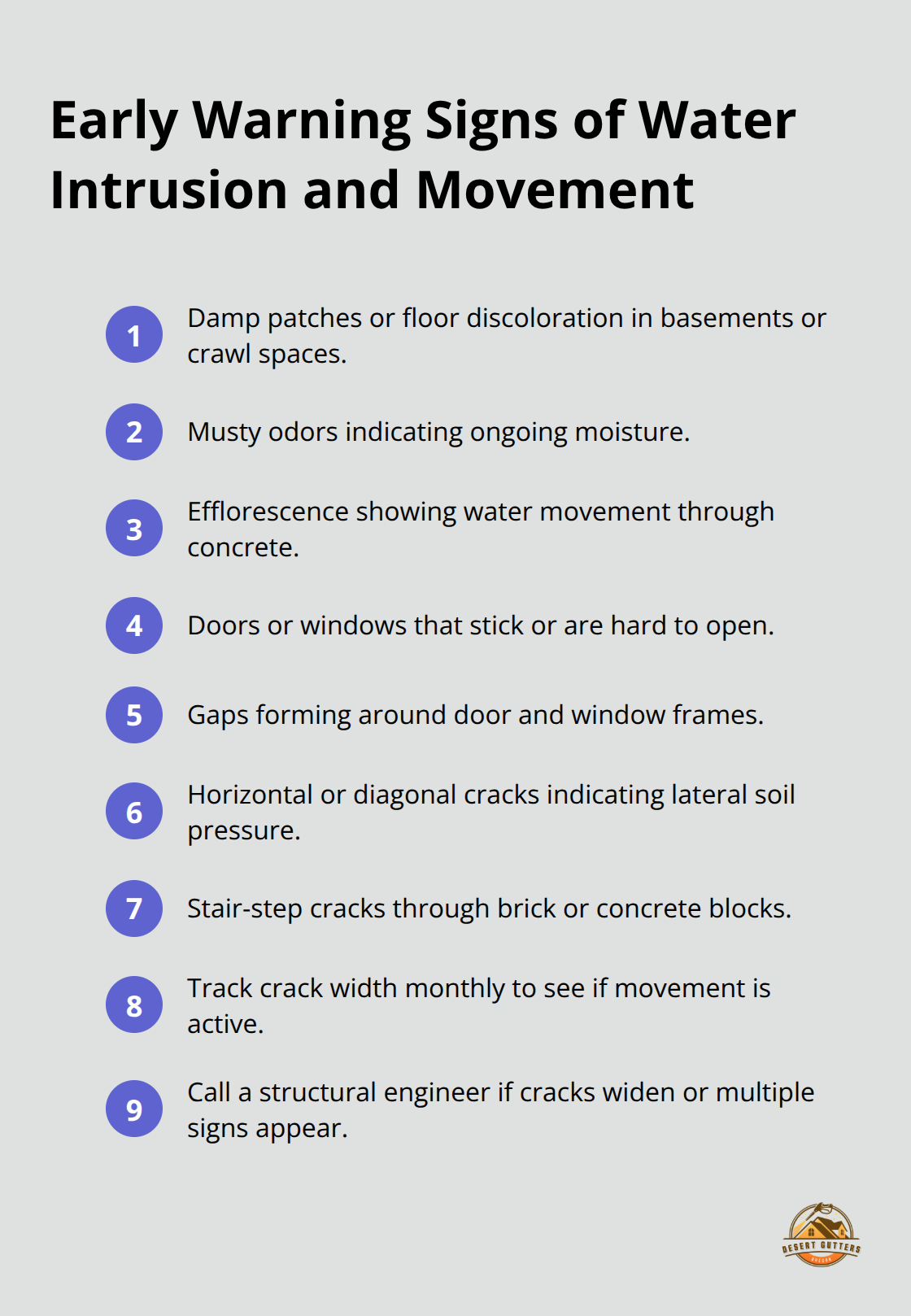
These physical changes in how doors and windows operate provide early warning that foundation stress is building.
When to Call a Structural Engineer
Hiring a structural engineer rather than a general contractor separates effective repairs from wasted money and temporary fixes. Engineers evaluate crack direction, size, and location to determine whether movement stems from soil settlement, water pressure, expansive clay, or structural design flaws, then recommend appropriate solutions like epoxy injection for small cracks, wall anchors for bowing walls, or underpinning for severe settlement. Professional assessment costs between 300 and 800 dollars but prevents costly repairs by identifying the actual cause rather than treating symptoms.
If you discover multiple warning signs simultaneously-cracks plus water intrusion plus sticking doors-contact a professional within days, not weeks, because combined indicators suggest active foundation failure. Prior foundation repairs visible in epoxy-filled cracks, I-beams, aluminum support posts, or bolted plates indicate past problems that merit thorough re-evaluation to confirm repairs remain effective and movement hasn’t resumed. Foundation damage accelerates predictably once warning signs appear, transforming manageable repairs into five-figure expenses within months.
Final Thoughts
Foundation crack prevention measures work only when you implement them consistently and monitor your home regularly. The strategies covered in this guide-maintaining clean gutters that discharge water 5 to 10 feet from your foundation, grading soil away from your home, and controlling soil moisture around your foundation-address the root causes of foundation damage rather than treating symptoms after cracks appear. These steps cost far less than foundation repairs, which commonly run $6,500 or higher depending on severity and repair method. Regular maintenance and inspections form the backbone of long-term foundation protection.
Inspect your foundation twice yearly in spring and fall, plus after heavy rainfall, looking for new cracks, water stains, or gaps around door and window frames. Clean your gutters four times annually to prevent the debris accumulation that triggers overflow and foundation saturation. Check your yard’s grading to confirm water slopes away from your home, and monitor soil moisture during dry periods using soaker hoses or drip irrigation systems. Early detection transforms foundation problems from catastrophic expenses into manageable repairs.
A hairline crack caught early responds to epoxy injection, while the same crack ignored for months may require wall anchors or underpinning costing thousands more. Sticking doors, water seepage, or visible cracks warrant immediate professional evaluation from a structural engineer who can identify the actual cause and recommend appropriate solutions. Contact Desert Gutters for a free estimate and take the first step toward foundation crack prevention that actually works.