
Your gutters work hard year-round, but seasonal changes bring different challenges. Spring thaw, fall leaves, and winter snow all demand specific maintenance approaches to keep water flowing away from your home.
At Desert Gutters, we’ve seen how neglecting seasonal gutter maintenance tips leads to costly damage. This guide walks you through what to do each season so your gutters stay in top shape.
Spring Cleanup After Winter Damage
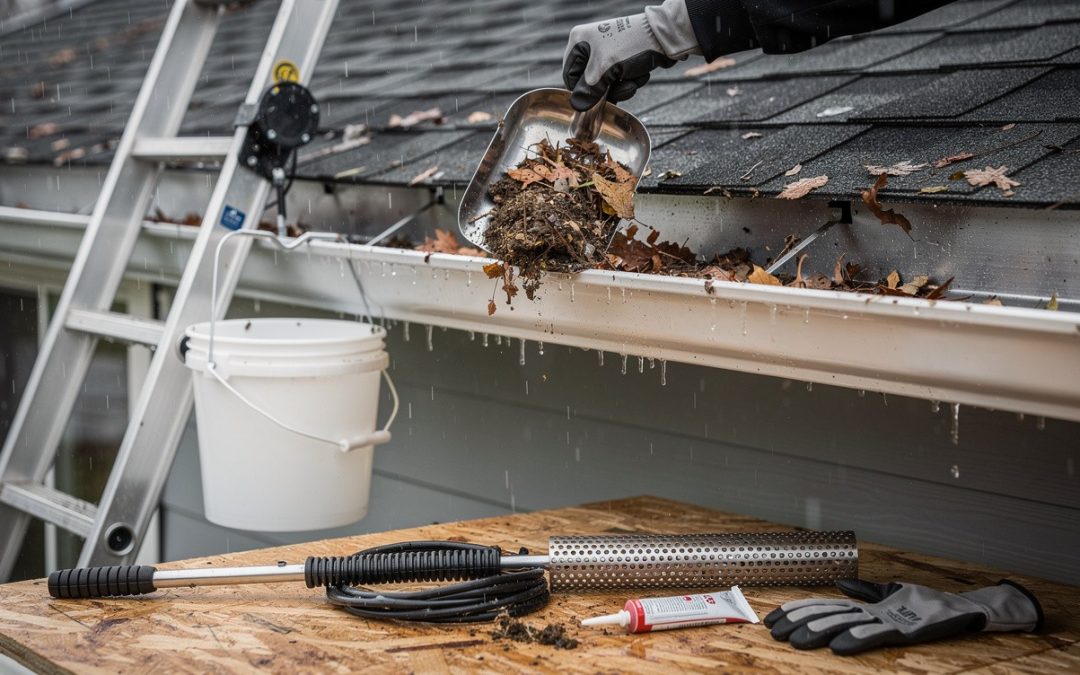
Spring is when winter’s damage becomes visible, and your gutters need immediate attention. Snow, ice, and freeze-thaw cycles stress gutters hard, often loosening fasteners or creating small cracks that worsen if left unchecked. Start by removing all debris that accumulated over winter-leaves trapped under snow, pine needles, twigs, and sediment. These materials block water flow and hide damage underneath. Grab a sturdy ladder, wear gloves, and scoop debris into a bucket rather than dropping it. This takes about 20 minutes for most homes, depending on roof size and tree coverage. Once you’ve cleared the gutters by hand, flush the entire system with a garden hose to see how water actually moves through it.
Test Water Flow Before Heavy Spring Rain
Water should flow smoothly from the gutters into downspouts without pooling or overflowing at joints. If you see water backing up or spilling over the edges, you have a slope problem or a hidden blockage. Many homeowners miss this step and discover clogs during the first heavy rain, when overflow damages siding and foundation walls. Downspouts are critical-water must exit them at least 3 to 6 feet away from your foundation to prevent soil saturation and basement flooding. If downspouts dump water close to the house, redirect them with extensions or splash blocks. Spring rainfall combined with snowmelt creates peak water volume, so your drainage system must be ready. Proper roof and gutter maintenance can extend a roof’s life, and spring is when that maintenance pays off most.
Inspect for Cracks, Separation, and Loose Fasteners
Winter weather pulls gutters hard. Check for cracks along seams, gaps where sections connect, or visible separation from the fascia. Ice dams force water under shingles and gutters, and if your gutters aren’t securely fastened, they’ll sag or pull away from the house. Look for rust stains on aluminum gutters or white corrosion on steel-these indicate damage that needs repair before summer storms arrive. Loose fasteners and hangers are common after freeze-thaw cycles. Tighten them or replace them if they’re corroded. Check flashing around chimneys, vents, and skylights too-ice and snow damage these seals regularly. If you find cracks wider than a quarter-inch or sections pulling away, professional repair is faster and safer than DIY fixes on a ladder in spring weather.
Move Forward to Fall Preparation
Spring maintenance sets the stage for summer, but fall demands equal attention. As leaves begin their descent and temperatures drop, your gutters face a different challenge: the rapid accumulation of debris that can trap moisture and create ice dams when winter arrives.
Fall Gutter Preparation for Winter Weather
Fall is when most homeowners drop the ball on gutter maintenance, and that mistake costs them dearly in winter. Leaves don’t just sit in gutters looking harmless-they trap moisture, compress into dense clogs, and create the perfect conditions for ice dams when temperatures drop. The reality is harsh: a completely clogged gutter during freeze-thaw cycles allows water to pool, refreeze at the eaves, and push into your attic and walls. Proper roof and gutter maintenance can extend a roof’s life by up to 50 percent, and fall cleaning is where that protection begins.

Start your fall cleanup in late October or early November, after most leaves have dropped but before the first hard freeze. Don’t wait until December-by then, ice may already be forming, and working on a frozen roof is dangerous and ineffective.
Clear Leaves and Debris Before Winter Arrives
Autumn leaves from large oak and maple trees clog gutters fast, sometimes within days of peak leaf drop. A single gutter section can hold pounds of compressed leaves and debris, blocking water flow completely. Use a leaf blower along the roofline to clear the bulk of debris in about 20 minutes for most homes, then follow up with manual hand-scooping to remove stubborn material wedged into corners and seams. Flush the entire system with a garden hose afterward-water should flow smoothly through downspouts without backing up. If water pools or spills over edges, you have either a clogging issue or a slope problem that needs fixing before winter. Some homeowners install gutter guards or screens to reduce ongoing debris buildup, but these aren’t foolproof; leaves still accumulate on top and in seams, so seasonal cleaning remains necessary. The key insight: clearing gutters in fall takes 30 to 45 minutes of work and prevents thousands in water damage, foundation repair, and roof replacement costs.
Inspect Gutters for Damage and Secure All Fasteners
Fall is when you check for the damage that summer storms and spring snowmelt inflicted but that you might have missed. Look for sagging sections, which indicate loose hangers or fasteners that won’t hold under snow weight. Check for rust stains on aluminum gutters or white corrosion on steel-these indicate corrosion that weakens the material and requires repair or replacement before winter. Verify that all gutter joints are tight and that flashing around chimneys, vents, and skylights is secure. Snow and ice can overload gutters-especially if they’re clogged with leaves. Tighten loose fasteners and hangers now rather than discovering problems during a January blizzard. Downspouts must still discharge water 3 to 6 feet from your foundation-verify this even though you checked in spring, because soil settling or landscaping changes can alter drainage paths. If you spot cracks, separation, or sagging that you can’t easily fix, professional inspection and repair in fall costs far less than emergency repairs after a winter storm causes damage.
Prepare for Winter’s Freeze-Thaw Cycles
Winter brings the real test for your gutters. Snow accumulation, ice dams, and repeated freeze-thaw cycles stress gutters in ways that no other season does. A gutter system that functions perfectly in fall can fail spectacularly in January if you haven’t prepared properly. The work you do now-clearing debris, tightening fasteners, and verifying drainage-directly determines whether your gutters survive winter intact or require costly repairs come spring. Next, we’ll walk through what to monitor and how to respond when winter weather hits hard.
Winter Gutter Protection During Freeze-Thaw Cycles
Winter is when gutters either survive or fail, and the difference comes down to what you do before the snow arrives and what you monitor once it does. Cold temperatures, heavy snow, and repeated freeze-thaw cycles create stress that no other season matches. Ice dams form when melting snow refreezes at the eaves, and they happen fastest in gutters already clogged with fall leaves or debris. Water backs up under shingles, seeps into walls, and causes interior damage that costs thousands to repair. The National Association of Home Builders reports that proper roof and gutter maintenance extends roof life by up to 50 percent, and winter is when that investment either pays off or falls apart.
Check for Ice Dams and Snow Accumulation After Storms
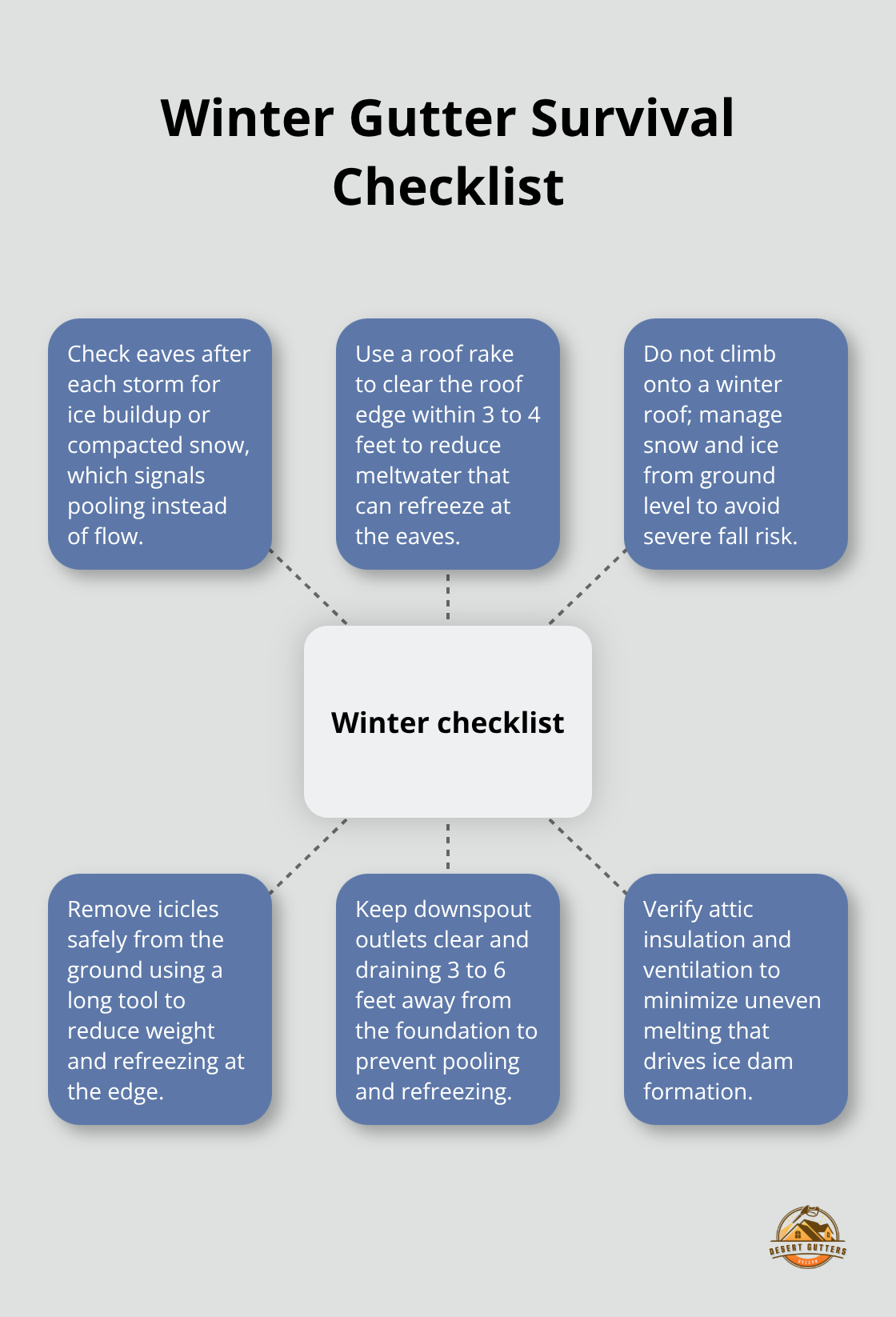
Your first priority after the first significant snowfall is checking whether gutters hold snow or ice accumulation. Walk around your home’s perimeter and look at the eaves from ground level. If you see thick ice buildup or snow compacted in the gutters, water is pooling instead of flowing. This happens even in gutters you cleaned in fall, because winter winds blow debris back in and ice formation accelerates clogging. Use a roof rake to remove snow from the roof edge within 3 to 4 feet of the eaves, which reduces the meltwater that refreezes and forms dams. Never climb onto a winter roof yourself; the fall risk is extreme and the surface is dangerously slippery.
If you see icicles hanging from gutters, that’s a sign water is backing up behind ice and refreezing at the edge. Icicles also create slip hazards below and add weight that stresses gutters and fasteners. Remove them safely from ground level using a long tool rather than climbing.
Verify Attic Insulation and Ventilation
Proper attic ventilation, along with insulation, helps prevent ice dams. Heat escaping through the roof melts snow unevenly, creating the conditions for ice dams even when gutters are clear. Check your attic in late fall before snow arrives. If insulation is thin or missing near the eaves, heat loss accelerates ice dam formation. Ventilation keeps the roof cold and uniform, preventing meltwater from refreezing at the eaves. If your attic feels warm in winter or shows condensation on the underside of the roof, ventilation is inadequate and ice dam risk skyrockets. Address these issues before winter or plan for more frequent roof raking and gutter monitoring.
Inspect Gutters Within 24 to 48 Hours of Heavy Snow
After heavy snowfall, inspect gutters and roof edges within 24 to 48 hours. Snow accumulation happens fast in high-desert and mountain regions where sudden storms dump 6 to 12 inches in hours. Gutters designed for normal winter conditions fail under extreme load, especially if they’re already stressed by loose fasteners or previous damage. Check that gutters remain firmly attached to the fascia and that no sections are pulling away or sagging. If gutters pull loose or sag under snow weight, water flow stops completely and ice dams form within days. Professional inspection and repair in winter is difficult and dangerous, so catching problems early prevents emergency calls during the worst weather.
Maintain Downspout Drainage Away From Your Foundation
Downspouts must still discharge water 3 to 6 feet from your foundation even in winter. Frozen ground and ice buildup near foundations increase the risk of water damage and foundation shifting when spring thaw arrives. Keep downspout outlets clear of ice and snow so meltwater flows away from the house rather than pooling and refreezing.
Final Thoughts
Seasonal gutter maintenance tips work only when you stick to them year after year. Spring cleanup removes winter damage and prepares for heavy rain, fall clearing prevents ice dams before they form, and winter monitoring catches problems before they become emergencies. This cycle repeats because gutters face different threats each season, and skipping even one season invites water damage, foundation problems, and costly repairs.
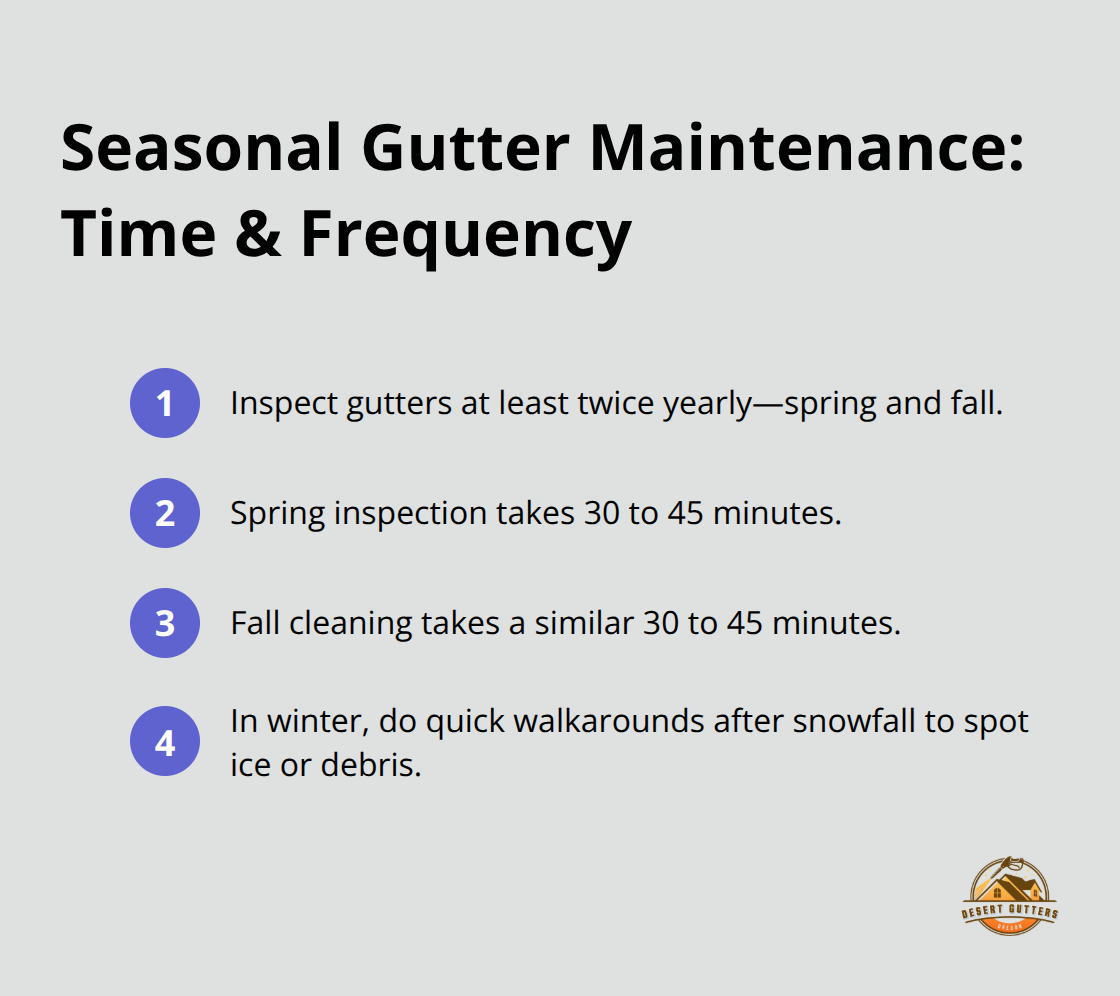
A realistic maintenance schedule means inspecting gutters at least twice yearly-spring and fall-plus quick checks after major storms. Spring inspection takes 30 to 45 minutes and catches winter damage early, while fall cleaning takes similar time but prevents thousands in ice dam damage. Winter monitoring requires just walking around your home after snowfall to spot ice buildup or debris, and this isn’t excessive; it’s the difference between a functioning drainage system and a failing one.
Water damage and foundation issues start small, but professional gutter cleaning and repair prevent them from becoming expensive problems. Professional seasonal gutter maintenance keeps water flowing away from your home year-round, and we at Desert Gutters understand Central Oregon’s extreme seasonal swings and the specific threats they create.