
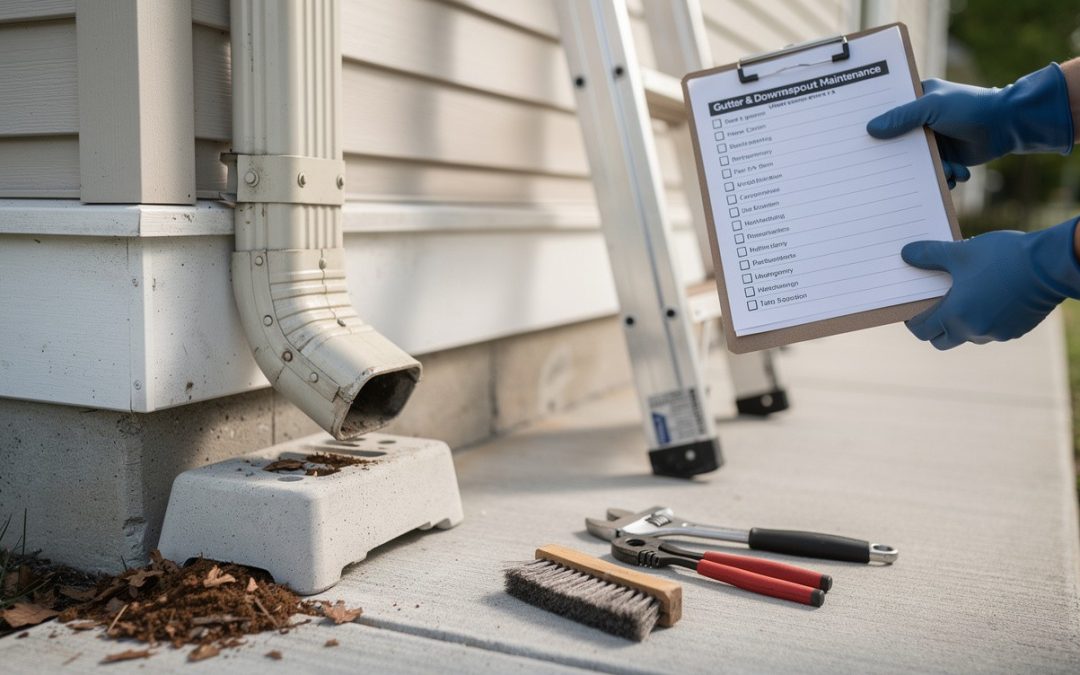
Most homeowners ignore their downspouts until water starts pooling around the foundation. At Desert Gutters, we’ve seen firsthand how a simple downspout maintenance schedule prevents thousands of dollars in damage.
Your downspouts work year-round to direct water away from your home, but seasonal debris and weather changes create real problems. This guide walks you through what to check each season and how to fix common issues before they become expensive repairs.
Why Downspouts Protect Your Home
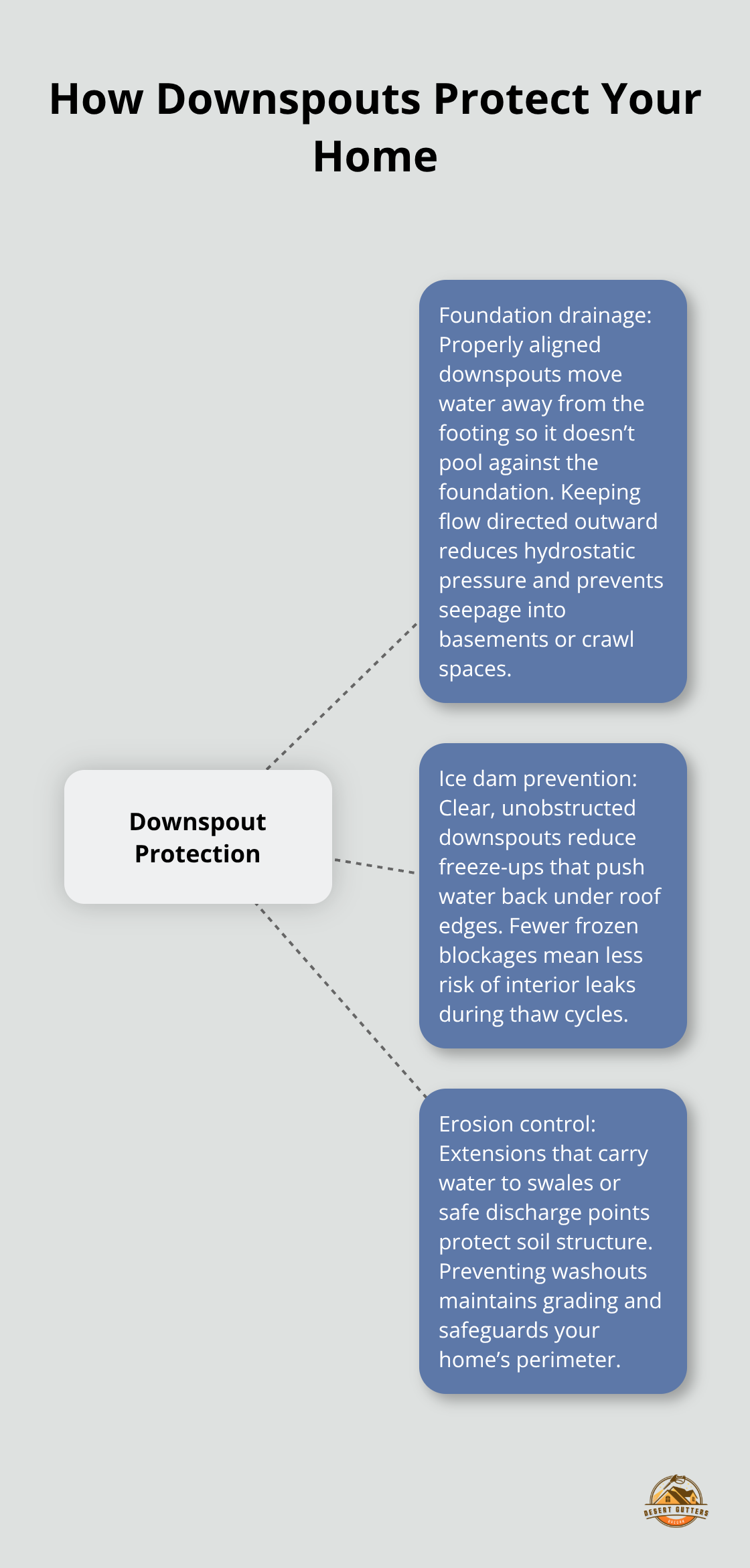
Downspouts are the difference between a dry foundation and thousands of dollars in water damage. When downspouts work properly, water flows away from your home at the rate of 4 to 6 gallons per minute during moderate rainfall. When they fail, that same water pools against your foundation, seeps into basements, and saturates the soil around your home’s structure. Foundation damage escalates from minor cracks to structural failures when homeowners treat downspout maintenance as optional rather than essential.
Foundation Protection Starts With Proper Drainage
Water sitting against your foundation creates hydrostatic pressure that pushes moisture through concrete and into your basement or crawl space. Ice dams and frozen blockages in downspouts contribute to foundation issues, with clogged or frozen gutters trapping water and ice that leads to ice buildup and water intrusion. A single downspout extension that fails to direct water at least 4 to 6 feet away from your home’s perimeter can cost you 10,000 to 20,000 dollars in foundation repairs within five years. Downspouts that separate from gutters or become misaligned allow water to cascade directly onto the soil next to your foundation instead of flowing away. This reality makes checking downspout alignment and positioning extensions properly far more important than most homeowners realize.
Winter Ice Dams and Frozen Blockages
Winter creates a specific downspout problem that most people don’t anticipate until water backs up into their walls. When downspouts clog with pine needles, leaves, or sediment during fall and winter, water freezes inside the downspout rather than draining away. This ice buildup forces water backward into your gutter system and underneath your roof edge, where it melts and leaks into your attic and interior walls. Central Oregon’s freeze-thaw cycles make this problem worse than in milder climates. A downspout that appears clear in November can become completely blocked by December after wind deposits debris into gutters and the first snowfall hits.
Erosion Around Your Property
Water pouring from a downspout without proper extension or direction erodes the soil around your home’s perimeter. Over time, this erosion destabilizes landscaping, creates washouts near your foundation, and leaves gaps where water penetrates deeper into the ground. Downspout extensions that direct water to proper drainage swales or away from planted beds prevent this erosion while protecting your yard’s grade and your home’s structural support. Understanding these three protection mechanisms-foundation drainage, ice dam prevention, and erosion control-shows why your downspout maintenance schedule matters as much as your gutter inspections.
Seasonal Downspout Maintenance Checklist
Spring Inspection and Clearing After Winter
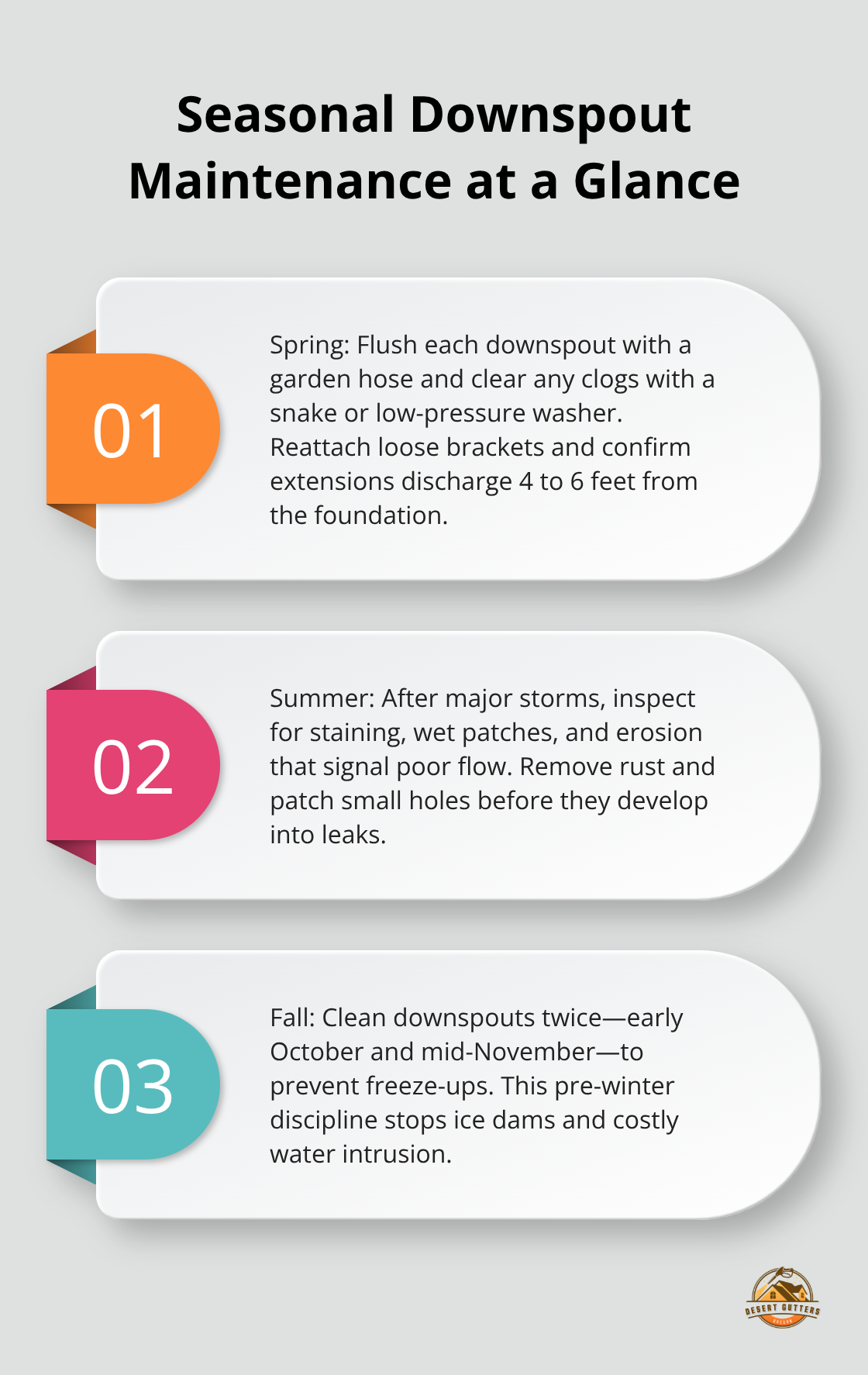
Spring cleanup after winter is where most homeowners fail at downspout maintenance. Pine needles, sediment, and ice debris accumulate in downspouts during cold months, and waiting until summer means water already pools around your foundation when heavy rains arrive. Start in late March or early April by running water through each downspout with a garden hose while standing at the gutter outlet. If water backs up or flows slowly, your downspout has a clog. A plumbing snake or pressure washer clears blockages-water alone won’t flush them out. After clearing, walk your property’s perimeter and check that each downspout extension actually directs water 4 to 6 feet away from your foundation. Many homeowners discover their extensions have separated or settled closer to the house over winter. Tighten any loose brackets and verify extensions are angled slightly downward to prevent water from pooling at the outlet.
Summer Checks After Heavy Rainfall
Summer demands a different focus because heavy rainfall exposes problems your spring check might have missed. Central Oregon’s monsoon season and afternoon thunderstorms bring intense water volume that overwhelms downspouts with partial blockages or poor pitch. After any major storm, walk your foundation perimeter and look for water staining, erosion, or wet soil patches that indicate water isn’t flowing away properly. Check for rust or corrosion on metal downspouts, especially where seams connect sections together. Corrosion weakens joints and leads to separation, so address rust spots with a wire brush and consider patching small holes with metal repair tape before they become leaks.
Fall Leaf Removal and Winter Prevention
Fall is your final seasonal opportunity and the most critical one. Leaves and pine needles fall continuously from September through November, and a downspout that clears easily in October becomes completely blocked by late November. Clean downspouts at least twice during fall-in early October and again in mid-November before freezing temperatures arrive. This discipline prevents ice dams and frozen blockages that cause the water intrusion problems discussed earlier. Don’t skip this step. The cost of a professional downspout cleaning runs 150 to 300 dollars, while foundation repairs from winter water damage require professional assessment.
Once you establish this seasonal rhythm, you’ll spot problems before they escalate into expensive repairs. The next section covers the specific issues that emerge despite your best maintenance efforts and how to fix them yourself or know when to call a professional.
Common Downspout Problems and How to Fix Them
Clogs from Pine Needles and Sediment Buildup
Pine needles, sediment, and debris pack down into dense blockages that water cannot penetrate. Central Oregon’s high-desert environment makes this worse than most regions because pine needles fall year-round and accumulate faster than leaves do in other climates. When you run a garden hose down a clogged downspout, water backs up immediately at the blockage point instead of flowing through.
A plumbing snake works better than water pressure alone because it physically breaks apart the compacted debris. Push the snake down from the top of the downspout while rotating it to dislodge pine needles and sediment, then flush with water. If the snake doesn’t clear the blockage after two attempts, the clog sits deeper in an elbow joint or at the connection point where the downspout attaches to the gutter outlet. A pressure washer at 1,500 PSI or less clears what manual tools cannot-anything higher risks damaging the downspout seams.
Separation and Misalignment Issues
Downspout brackets loosen over time from freeze-thaw cycles and the weight of standing water. Walk your property’s perimeter after heavy rain and look for water cascading down the side of your home instead of flowing through the extension. Check that the downspout hasn’t pulled away from the gutter outlet by more than a quarter inch.
Tighten all visible bolts and brackets with a wrench, and if brackets are rusted or stripped, replace them with stainless steel hardware that resists Central Oregon’s weather swings. Misaligned extensions that point toward your foundation instead of away from it defeat the entire purpose of downspout maintenance. Downspout extensions should be extended a minimum of 4-6 feet away from the foundation to prevent pooling at the outlet. Extensions that have settled or shifted need adjustment or replacement.
Corrosion and Rust Development
Metal downspouts exposed to moisture and temperature fluctuations develop rust spots within three to five years if not maintained. Small rust spots that you catch early respond to wire brushing and metal repair tape, which costs under 20 dollars and takes 15 minutes. Rust that penetrates through the downspout wall creates pinhole leaks that allow water to seep behind your home’s exterior.
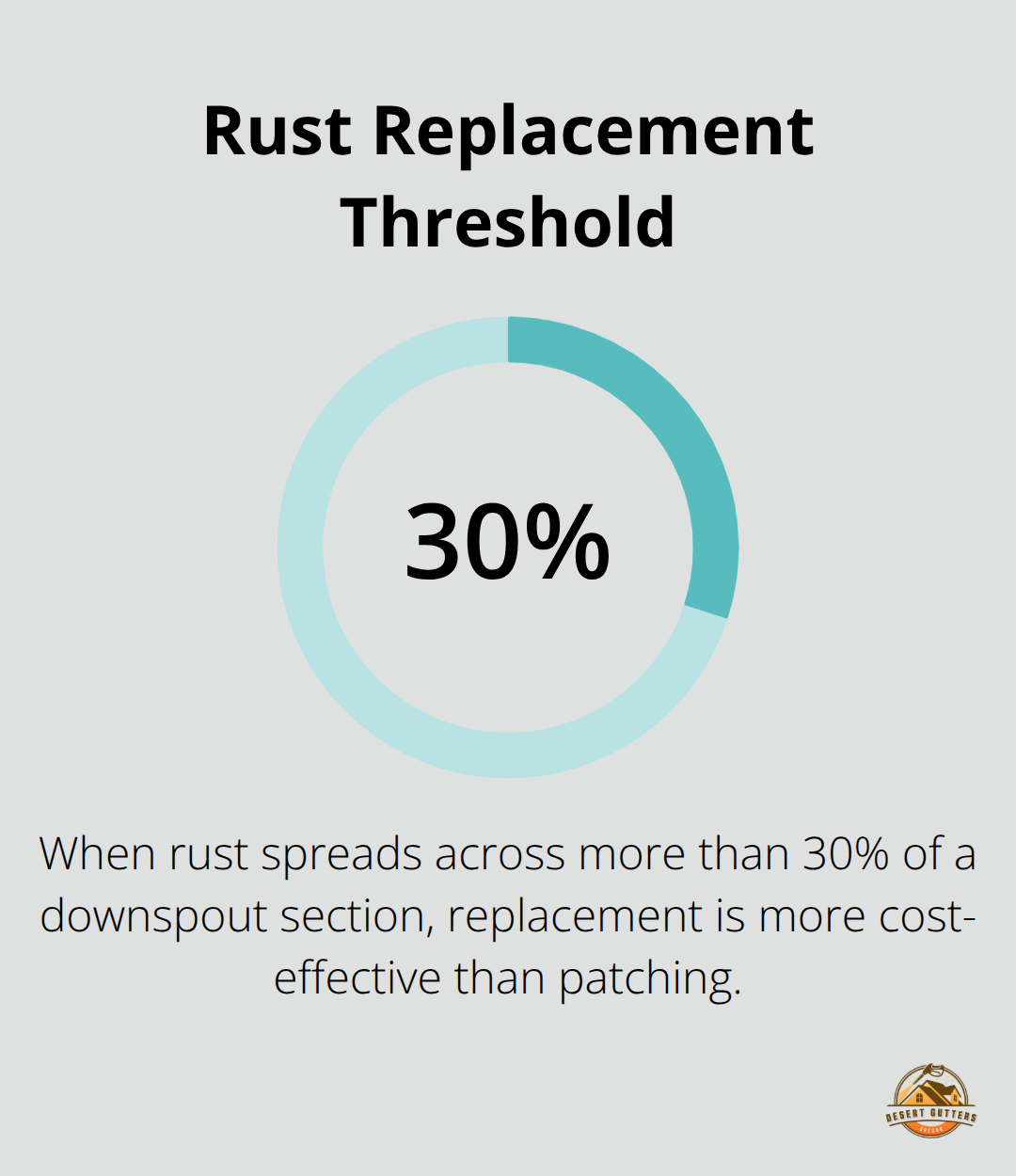
Once rust reaches this stage, patching fails because the structural integrity is already compromised. Replacing the affected downspout section runs 200 to 400 dollars depending on materials and accessibility. Prevent rust by cleaning downspouts twice yearly and ensuring water drains completely rather than pooling where moisture sits. Galvanized steel downspouts last longer than painted aluminum in high-desert climates, but they still require attention. If you spot rust spreading across more than 30 percent of a downspout section or multiple pinhole leaks, replacement makes more financial sense than repeated repairs.
Final Thoughts
Your downspout maintenance schedule prevents the foundation problems, ice dams, and erosion that cost thousands to repair. The seasonal rhythm we’ve outlined-spring clearing after winter, summer checks after storms, and fall prevention before freezing temperatures-protects your home from water damage that catches most homeowners off guard. Early detection and simple fixes address pine needle clogs, separated brackets, and rust development before they escalate into expensive repairs.
A $20 repair tape applied to rust spots in summer prevents the $300 downspout replacement you’d need in winter, and tightening loose brackets takes 15 minutes to stop water from cascading onto your foundation. Running a garden hose through each downspout twice yearly catches blockages before they freeze solid and force water into your walls. Know when to stop fixing and call a professional-if a plumbing snake doesn’t clear a clog after two attempts, the blockage sits in an elbow joint that requires professional equipment, and rust spreading across more than 30 percent of a downspout section means replacement makes more sense than patching.
We at Desert Gutters handle the maintenance work that protects Central Oregon homes from these exact problems every day. Desert Gutters provides free estimates so you know the cost before committing to your seasonal downspout maintenance schedule. Schedule your inspection and let professionals handle the work that keeps your foundation dry and your home protected year-round.