
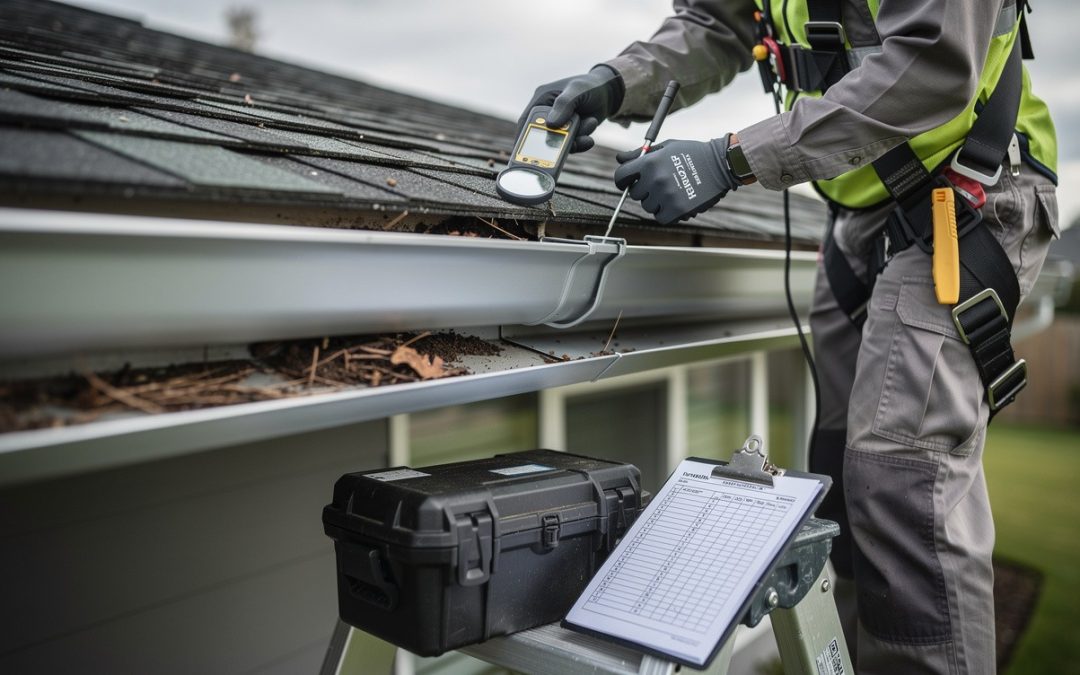
Your gutters work hard to protect your home, but most homeowners ignore them until problems appear. At Desert Gutters, we’ve seen how small issues-clogged debris, tiny cracks, or poor drainage-turn into expensive damage.
A professional gutter inspection service catches these problems early, before they threaten your foundation, siding, or roof. This guide walks you through what to watch for and what happens during an inspection.
Warning Signs Your Gutters Need Inspection
Water Damage on Exterior Walls and Siding
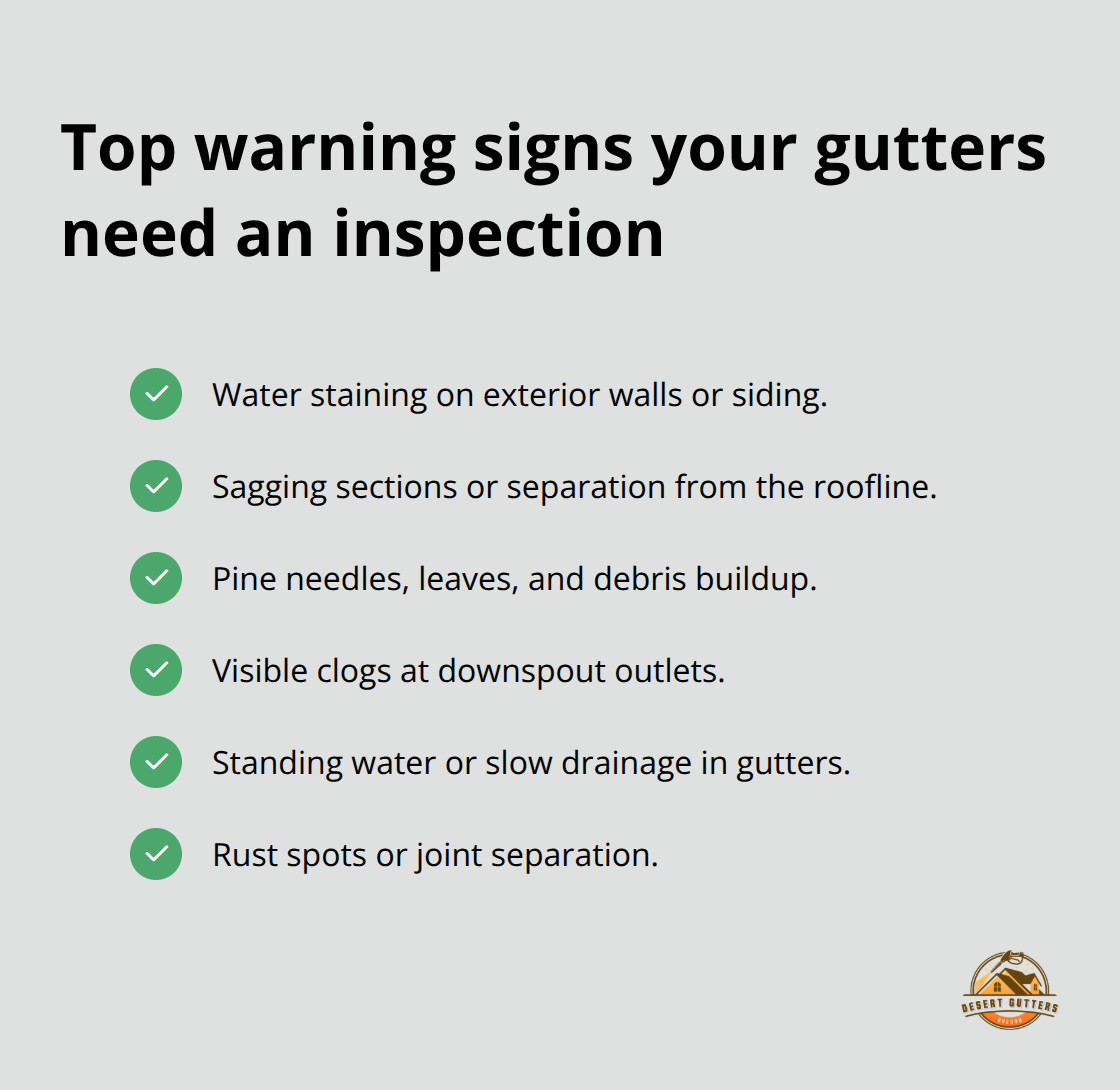
Water staining on exterior walls and siding signals that your gutters aren’t working. When gutters overflow or leak, water runs down your fascia and siding instead of away from your home. In Central Oregon, sudden downpours drop heavy rainfall in short periods, and this damage accelerates fast. Look for dark streaks, discoloration, or soft spots on wood siding-these indicate water has pooled there for weeks or months.
If you spot staining, your gutters need attention within days, not weeks.
Sagging Gutters and Separation from the Roofline
Sagging gutters pull away from your roofline because debris weight and standing water create stress on the fasteners. A gutter that sags even slightly loses its slope, which prevents water from flowing toward downspouts. This pooling causes joint separation and accelerates rust and corrosion. Check your gutters from ground level during daylight-if sections dip noticeably below the roofline or hang at different heights, professional inspection is urgent. Central Oregon’s winter freeze-thaw cycles make sagging gutters especially dangerous because ice adds weight on top of existing stress.
Pine Needles and Desert Debris Accumulation
Pine needle accumulation in Central Oregon gutters happens year-round, but autumn and late spring are peak seasons. When leaves, twigs, and pine needles accumulate, they create dams that block the flow of water, causing overflow during any rain. This debris also traps moisture, which accelerates rust in metal gutters and creates conditions for joint separation. Desert landscaping with juniper and ponderosa pines means most Central Oregon homes face constant needle pressure. If your property has three or more large trees within thirty feet, expect visible debris accumulation every four to six weeks.
Testing for Clogs and Poor Drainage
Visible clogs at downspout outlets reveal the most obvious warning sign-water backing up behind debris indicates your system isn’t draining. Test this yourself by pouring water from a bucket into a gutter section near the downspout and watching whether it flows freely or pools. Standing water inside gutters signals an immediate problem that demands professional cleaning and inspection to identify underlying slope or debris issues. These drainage failures often hide secondary problems that only a thorough inspection uncovers, which is why the next step involves understanding what professionals actually look for when they assess your system.
What a Professional Inspection Reveals
Visual Assessment of Gutters and Connections
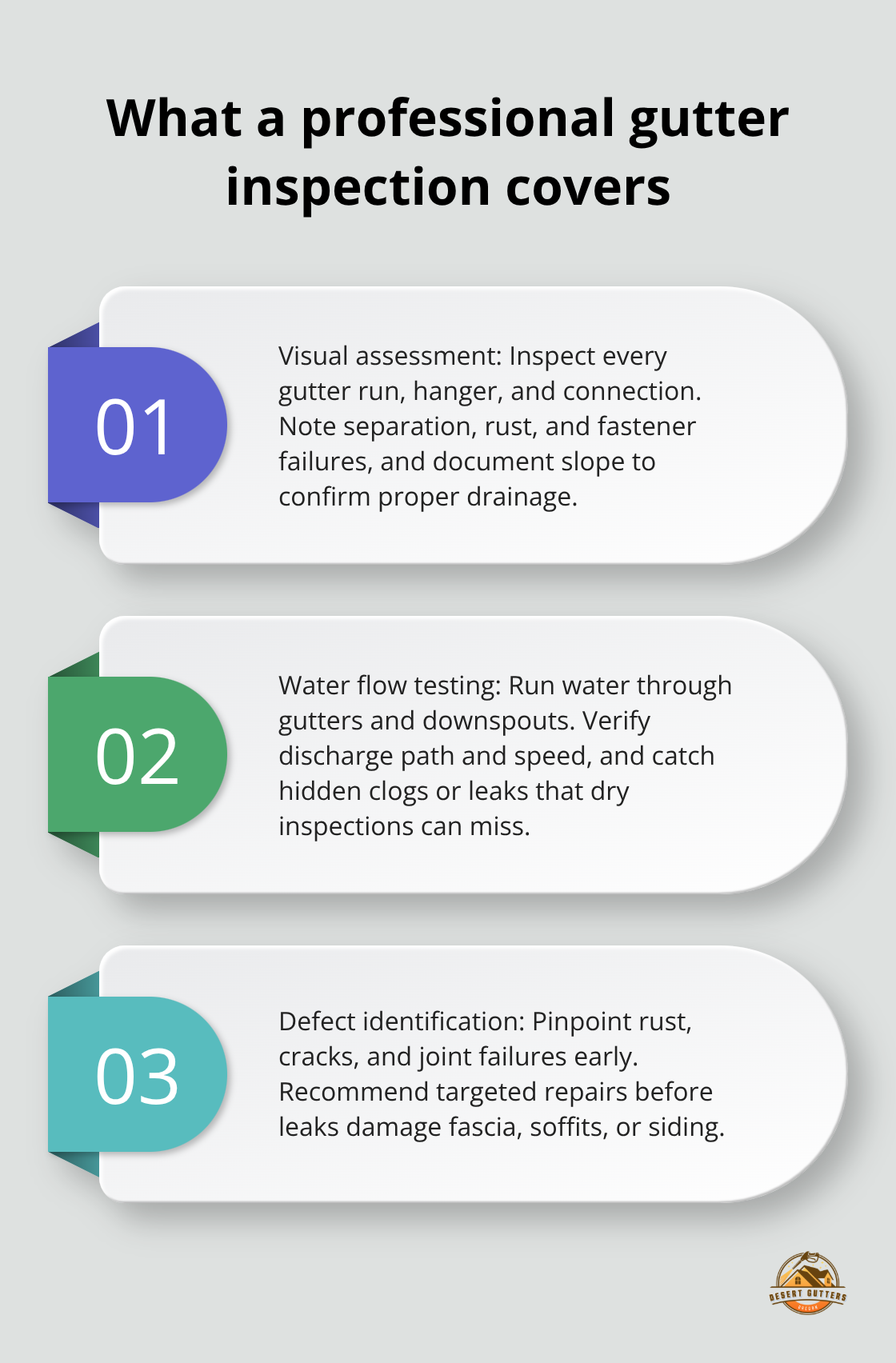
A thorough inspection starts with a visual walkthrough of every gutter section, downspout, and connection point. We check for separation where sections overlap, rust spots that indicate corrosion, and fastener failure where hangers have pulled loose. Central Oregon’s intense sun and freeze-thaw cycles accelerate rust formation, so metal gutters in this region need annual inspection to catch oxidation before it creates holes. We also photograph the slope of each run-gutters need to drop approximately one quarter inch per ten feet to prevent pooling. If your gutters have settled or shifted due to winter ice weight, this slope measurement reveals whether water can actually flow toward downspouts or if it sits in low spots where it shouldn’t be.
Testing Water Flow and Drainage Patterns
Testing water flow means we run water through the system and observe where it exits and how fast it moves. This reveals clogged downspouts that look clear from above but are actually packed with debris inside the pipe, and it shows whether water escapes through hidden cracks or joint failures that don’t appear during a dry inspection. We trace downspout discharge to confirm water flows at least four to six feet away from your foundation-this distance is critical in Central Oregon because seasonal downpours can overwhelm drainage systems if water pools near the house.
Identifying Rust, Cracks, and Joint Failures
We look for rust patterns, cracks in the metal, and joint separation caused by debris weight and freeze-thaw stress. Cracks typically start small near fastener holes where metal is weakest, but they expand rapidly once water begins seeping through. Joint separation happens when rivets fail or when overlapping sections shift under weight, and this is especially common in homes with dense tree cover because pine needles and moisture create constant pressure. A professional inspection catches these problems before water starts leaking behind your gutters and damaging fascia boards or soffit, which can cost thousands to repair once wood rot begins. These findings point directly to the specific challenges that Central Oregon homes face year-round.
What Makes Central Oregon Gutters Fail
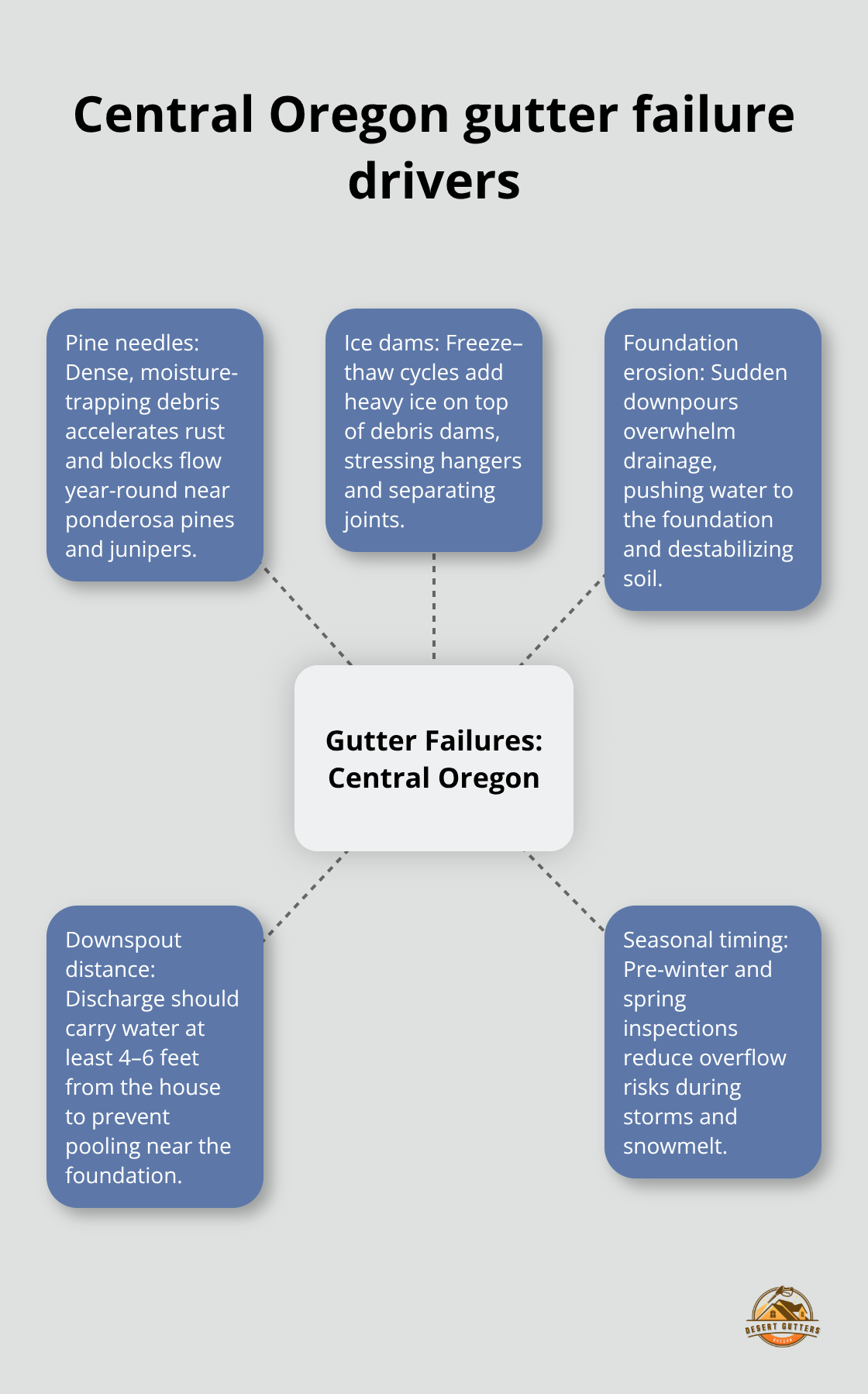
Central Oregon’s high-desert climate creates three specific gutter failures that homeowners face repeatedly, and understanding them helps you catch problems before they cause structural damage. Pine needles from ponderosa pines and junipers accumulate faster in this region than almost anywhere else in the country, and a single season of neglect can pack gutters so densely that water has nowhere to flow. Winter freeze-thaw cycles compound this problem because ice forms on top of needle dams, adding weight that pulls fasteners loose and forces sections to separate. Foundation erosion from poor drainage happens because Central Oregon receives sudden downpours that overwhelm gutters already struggling with debris, sending water pooling against your foundation where it seeps into cracks and destabilizes soil.
Pine Needles Create Year-Round Pressure
Pine needle accumulation peaks in late spring and autumn, but Central Oregon homes with three or more large trees nearby face constant needle pressure every month. Unlike leaf debris that breaks down over weeks, pine needles pack tightly and trap moisture accelerating rust formation in metal gutters. The weight of wet needles pulls down on fasteners, and this stress causes hangers to bend or pull away from fascia boards. If your property has dense tree cover, you cannot rely on twice-yearly cleaning schedules that work in other regions-quarterly inspections catch dangerous accumulation before it causes overflow during the sudden afternoon storms Central Oregon experiences. Professional inspection every six weeks during spring and autumn prevents overflow and potential foundation water seepage when needle dams reach critical mass.
Winter Ice Dams Demand Preventive Action
Ice dams form when melted snow refreezes in gutters, and Central Oregon’s elevation means winter temperatures drop well below freezing for extended periods. Water trapped behind pine needle dams freezes solid, adding weight that exceeds what most fasteners can hold. This weight causes gutters to sag, joints to separate, and in severe cases, entire sections to pull away from fascia boards. Proper attic insulation prevents roof melting that feeds ice dams, but even well-insulated homes develop ice dams if gutters are clogged-this is why pre-winter inspection and cleaning matter more in Central Oregon than in moderate climates. Clearing debris before winter arrives and verifying that downspouts drain properly allows any water that does melt to escape rather than refreeze in your gutter system.
Foundation Erosion Follows Poor Drainage
Water that pools near your foundation penetrates soil, destabilizes the ground beneath concrete, and creates cracks that expand during freeze-thaw cycles. Central Oregon’s seasonal downpours overwhelm drainage systems that aren’t positioned correctly, and if downspouts discharge within three feet of your house, this water will reach your foundation. Erosion also exposes foundation footings and creates voids underneath concrete, which leads to settling and structural failure over time. Inspections must verify that downspouts extend at least four to six feet away from your foundation and that water flows freely through them-standing water behind a clogged downspout is as dangerous as water flowing directly against your house. Testing drainage during inspection reveals underground clogs that aren’t visible from above, and professionals use water testing to confirm flow patterns before problems cause expensive foundation repairs.
Final Thoughts
A professional gutter inspection service catches problems that homeowners miss until water damage appears on siding, foundations, or inside walls. Early detection stops small issues-loose fasteners, rust spots, or debris dams-from becoming expensive repairs that cost thousands of dollars. Central Oregon’s pine needles, freeze-thaw cycles, and sudden downpours create conditions where gutters fail faster than in other regions, which is why waiting until visible damage appears puts your home at risk.
Regular inspections prevent foundation erosion, roof leaks, and fascia rot by identifying drainage failures before water reaches vulnerable areas. Testing water flow during inspection reveals clogged downspouts that look clear from above, slope problems that trap water, and joint separations that allow leaks behind your gutters. Catching these issues during inspection means you address them before winter ice adds weight to already-stressed systems or before spring downpours overwhelm gutters packed with pine needles.
We at Desert Gutters provide professional gutter cleaning, repair, and seasonal snow removal specifically designed for Central Oregon homes. Contact Desert Gutters today for your free estimate, and we’ll walk through your gutters, identify what needs attention, and explain exactly what we find-no pressure, no surprises. Protecting your home from water damage starts with knowing what’s actually happening in your gutter system.