
Your home’s foundation is under constant attack from moisture. Water seeps into cracks, freezes and expands, and erodes the soil beneath your home-all of which can lead to expensive structural damage.
We at Desert Gutters have seen firsthand how proper drainage and waterproofing stop these problems before they start. This exterior foundation protection guide covers the proven methods that actually work.
Why Water Destroys Foundations Faster Than You Think
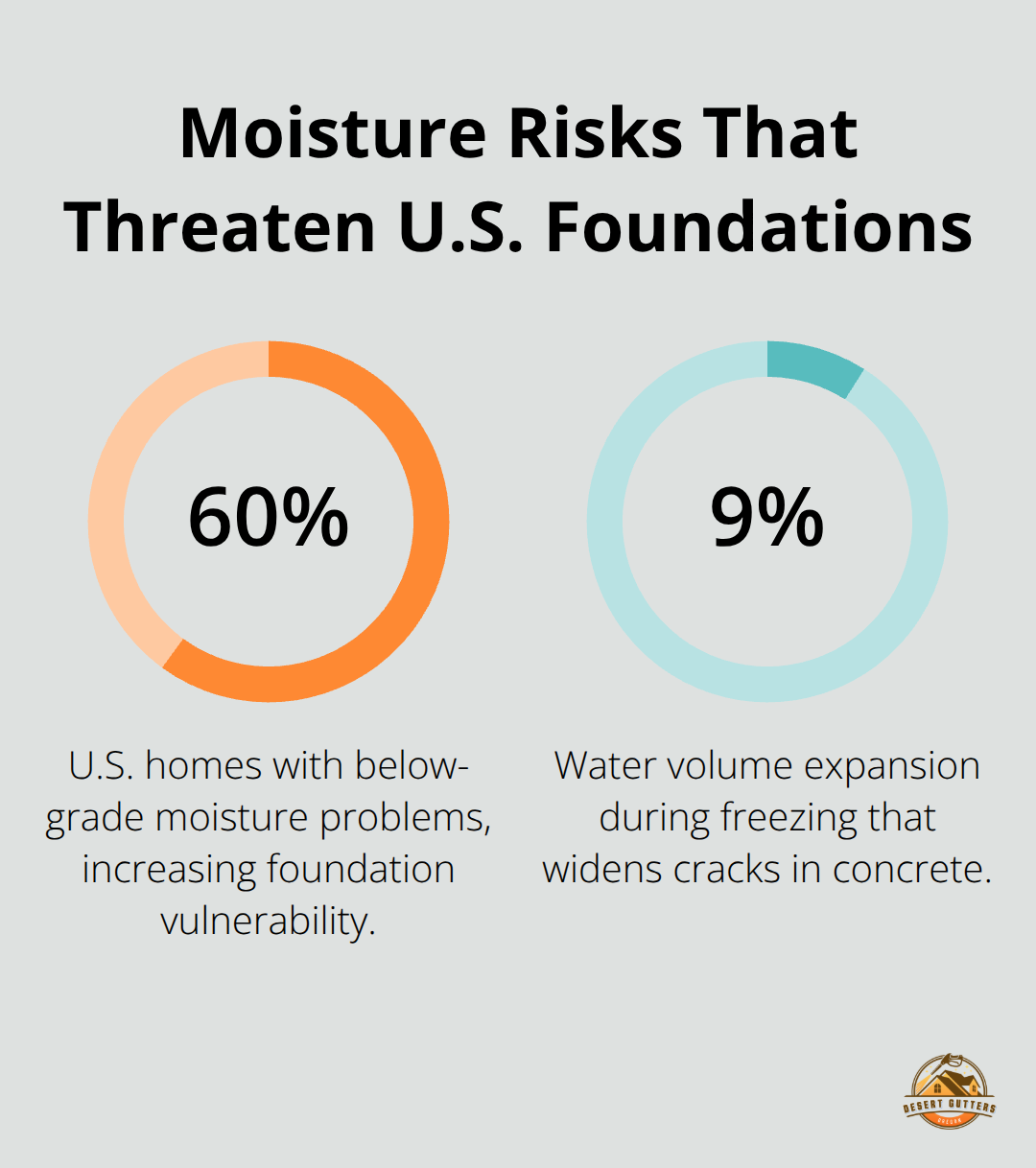
Water infiltration is the primary threat to your foundation because it works constantly and relentlessly. When water enters concrete through cracks or mortar joints, it dissolves the cement that binds the structure together. Concrete isn’t waterproof-it’s porous-so water penetrates deep into the material and weakens it from the inside. The Basement Health Association reports that approximately 60% of U.S. homes experience below-grade moisture problems, which means your foundation faces statistically higher vulnerability than you’d expect. This infiltration happens silently for months or years before you notice damage, making prevention far more cost-effective than repair.
Foundation repairs typically cost between $2,300 and $7,300, but major structural work can reach $15,000 according to 2025 data. Moisture also triggers mold growth, which creates indoor air quality problems and potential health concerns for your family.
Freeze-Thaw Cycles Create Invisible Cracks
In cold climates, freeze-thaw cycles are exceptionally destructive. Water enters small cracks in concrete, then freezes and expands by 9% volume. This expansion pushes outward on the concrete, widening existing cracks and creating new ones with each cycle. Colorado experiences more frequent freeze-thaw cycles than historical averages due to climate patterns, meaning foundations in regions like Central Oregon face repeated stress that accelerates damage. A single winter season can transform a hairline crack into a quarter-inch gap that allows significant water intrusion the following season. This process repeats year after year, progressively weakening the foundation structure until bowing walls, horizontal cracks, and settlement occur. Professional inspection after major freeze-thaw events is essential because new cracks often appear within days of temperature swings, and catching them early prevents exponential damage growth.
Soil Erosion Removes the Foundation’s Support
Moisture also erodes the soil surrounding your foundation, literally removing the ground that supports your home. When water pools near the foundation or drainage systems fail, soil becomes saturated and loses its load-bearing capacity. Saturated soil exerts hydrostatic pressure against foundation walls-pressure that can shift concrete, crack mortar, and force water through joints and gaps. Standing surface water near your home is a major threat to structural health, and acting early saves thousands in repair costs later. Soil erosion happens fastest in areas with poor drainage, where water collects after storms and during snowmelt. The soil beneath your foundation can settle unevenly when moisture removes its structural integrity, causing foundation settlement and cracking. Proper grading and drainage systems must work together because grading alone won’t stop hydrostatic pressure if water still reaches the soil against your foundation walls.
How Poor Drainage Accelerates the Damage Cycle
Inadequate drainage systems allow water to accumulate around your foundation perimeter, intensifying all three damage mechanisms simultaneously. When gutters overflow, downspouts discharge too close to the house, or grading slopes toward the foundation, water saturates the soil and creates conditions for freeze-thaw damage and erosion. This is why the next section covers proven methods to protect your foundation-each strategy addresses one or more of these moisture pathways and stops water before it reaches your foundation walls.
Proven Methods to Protect Your Foundation From Moisture
Stop Water at the Surface With Gutters and Downspouts
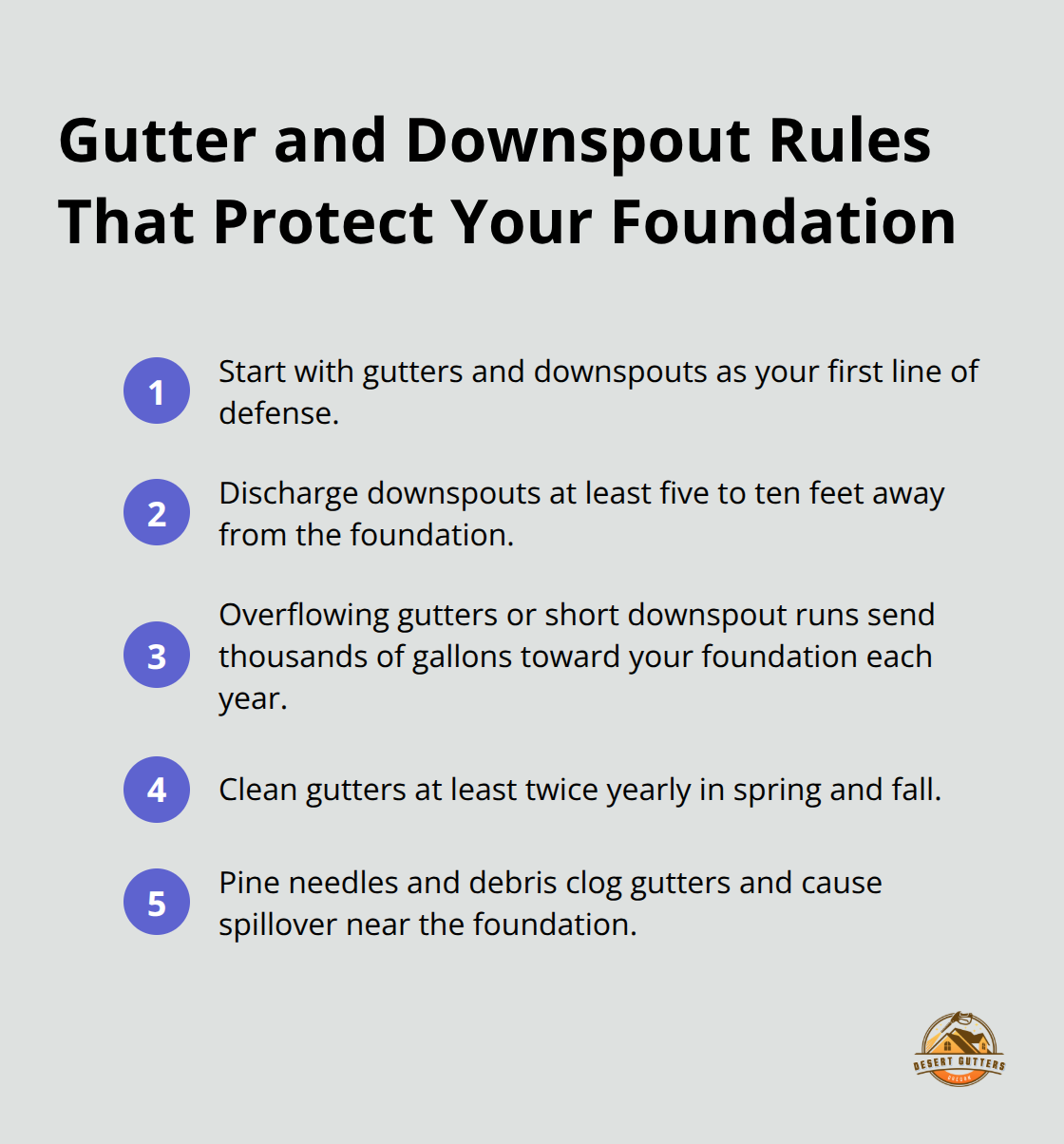
The most effective foundation protection strategy stops water at the surface, before it ever touches your foundation walls. Proper drainage systems work in layers, and each layer prevents water from advancing deeper toward your home’s structural integrity. Start with your gutters and downspouts because they’re your first line of defense against foundation damage. Gutters that overflow or downspouts that discharge within four to six feet of your foundation send thousands of gallons directly toward your foundation perimeter each year. Downspouts should discharge water at least five to ten feet away from the foundation to prevent soil saturation and the hydrostatic pressure that cracks foundation walls. Pine-needle buildup and debris clog gutters, causing water to spill over the edges and saturate soil near your foundation. Gutter maintenance at least twice yearly (spring and fall) prevents problems before they start.
In Central Oregon, where pine needles accumulate rapidly, professional gutter cleaning protects your foundation from the constant threat of overflow.
Regrade Your Yard to Direct Water Away From Your Home
After gutters and downspouts redirect water away from your home, the next layer is grading. Proper grade means the ground should drop approximately six inches over the first ten feet away from your house to direct water away from the foundation. If your yard slopes toward your home or water pools near the foundation after rain, regrading is essential and far cheaper than foundation repairs. Use gravel or decorative rocks directly against the foundation instead of soil or dense mulch to improve drainage and reduce moisture retention near walls. Mulch should be kept at least twelve inches away from foundation walls; if mulch is used near the house, create a gravel buffer to maintain drainage. This simple adjustment prevents water from collecting against your foundation and eliminates one of the primary pathways for moisture infiltration.
Install Exterior Drainage Systems for Persistent Water Problems
When surface drainage and grading aren’t enough, install exterior drainage systems like French drains in the perimeter trenches around your foundation. French drains are the most common exterior drainage solution and should be installed in perimeter trenches before backfilling to carry water away from the foundation. Placement depth for basement trench drains is typically about twelve to eighteen inches deep near the footings to optimize water flow away from the structure. Surround drains with gravel and backfill soil in six-inch layers, compacting each layer to prevent settling that reduces drainage effectiveness. A well-designed exterior system discharges water at a distance from the house to avoid rewetting the soil near the footing.
Apply Waterproof Coatings to Foundation Walls
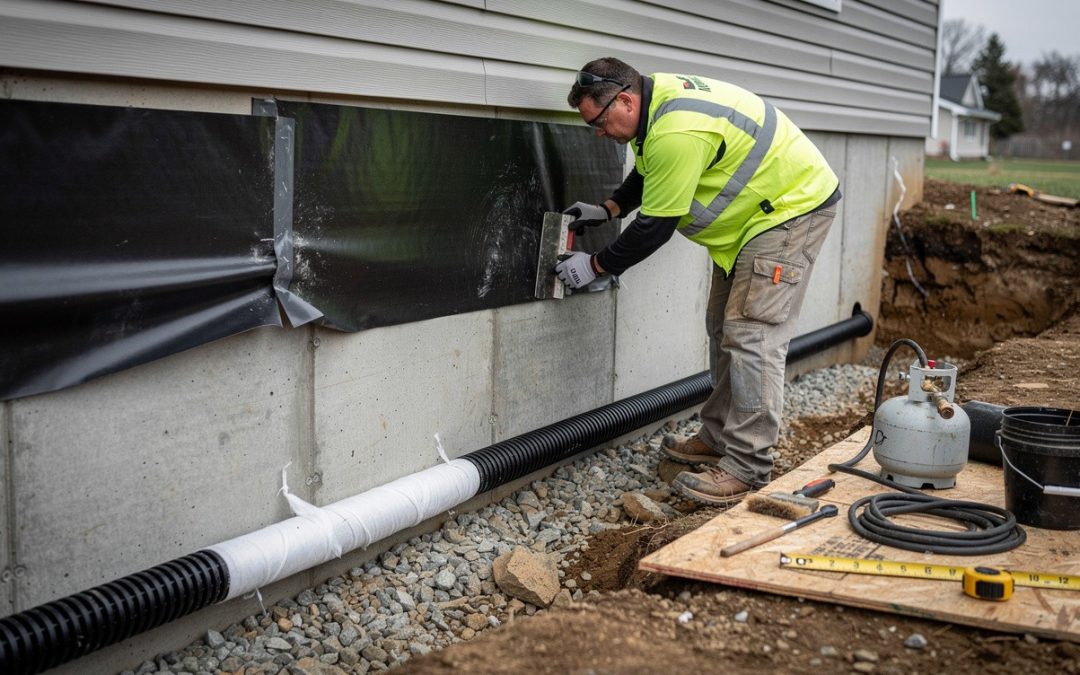
For foundation walls themselves, exterior waterproof coatings and sealants create a continuous membrane that blocks water from entering the concrete or masonry. Exterior liquid membranes offer protection for up to about twenty-five years on foundation walls, while exterior synthetic sheet membranes form a continuous polymer barrier when adhered in place. Surface preparation is non-negotiable: clean the exposed foundation thoroughly, remove dirt and debris, repair damage, and fill cracks to create a smooth substrate before applying any coating. Application via airless spray at 1,000 to 2,000 psi delivers even coverage across the entire foundation surface, reducing seam leaks that occur with brush or roller application. Allow a full day for curing after application before backfilling soil.
Combine Multiple Protection Layers for Maximum Defense
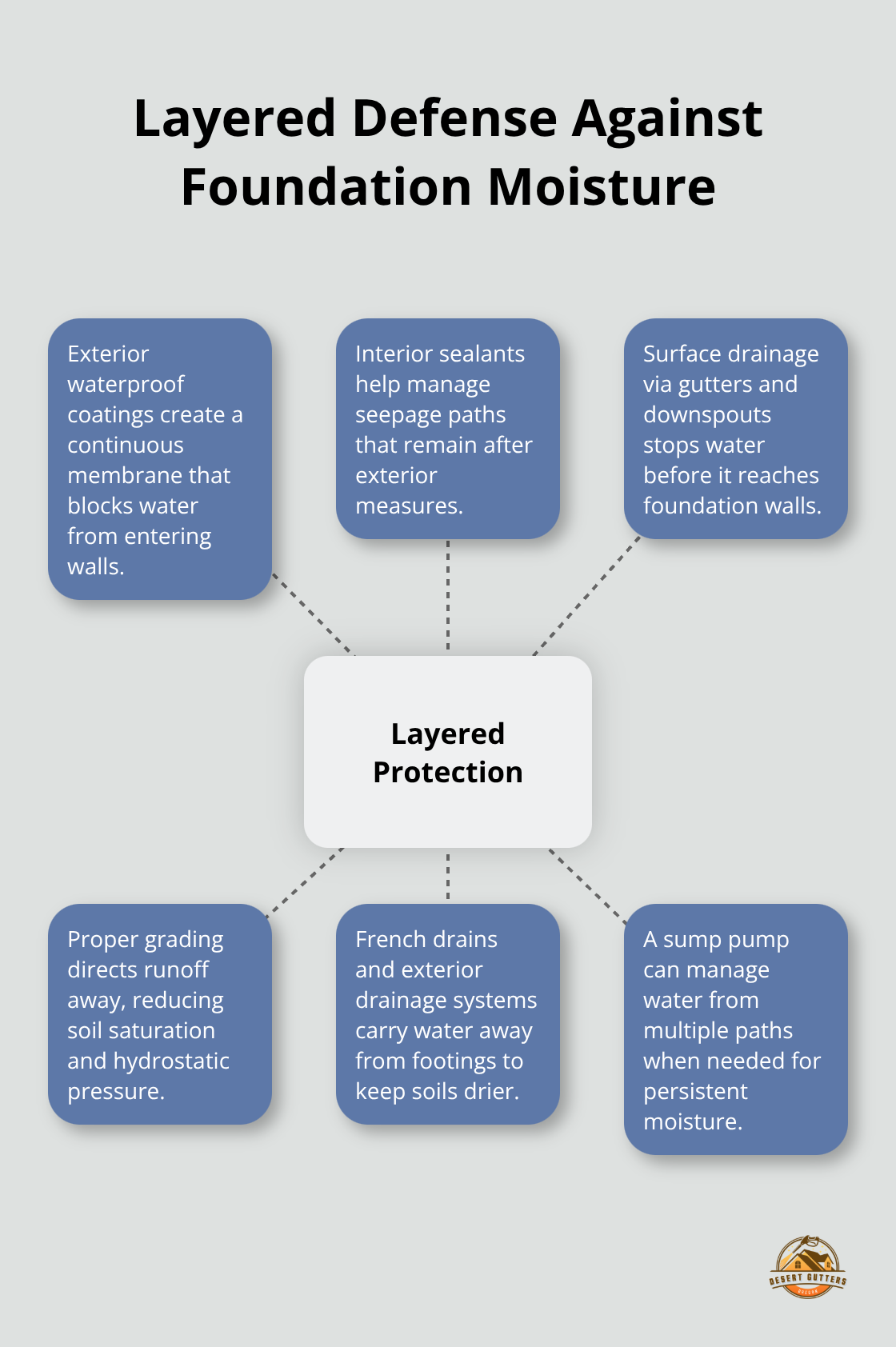
The most durable protection combines exterior coatings, interior sealants, drainage systems, and sometimes a sump pump to manage water from multiple paths. This layered approach addresses the moisture pathways that damage foundations and provides long-term protection against water infiltration, freeze-thaw damage, and soil erosion. Once your exterior protection is in place, the next step involves identifying and addressing foundation problems that may already exist-cracks, bowing walls, and other warning signs that indicate where water has already begun its work.
Warning Signs Your Foundation Is Already Damaged
Hydrostatic pressure from saturated soil around your foundation doesn’t announce itself loudly. Instead, it sends warning signals through cracks, bowing walls, and white mineral deposits that most homeowners miss until the damage becomes severe. Bowing walls develop when water-saturated soil pushes inward against foundation walls with relentless force, and this deformation typically starts subtly before accelerating into structural failure.
Spot Bowing Walls and Horizontal Cracks Early
If your basement walls curve inward even slightly, or if you notice horizontal cracks running across foundation walls, professional assessment is non-negotiable because these aren’t cosmetic issues-they indicate active structural stress. Horizontal cracks signal that hydrostatic pressure is actively pushing on your foundation, and ignoring them allows the problem to worsen rapidly. Vertical cracks that widen over time also warrant immediate attention, as they often precede more serious structural movement. The longer you wait to address bowing or horizontal cracking, the more expensive the repair becomes, so act as soon as you spot these warning signs.
Recognize Efflorescence as a Water Movement Indicator
Efflorescence, the white chalky residue that appears on foundation walls, is a direct sign that water is moving through your concrete and depositing mineral salts as it evaporates. This isn’t just a visual problem; it confirms water penetration is happening right now, which means your foundation needs waterproofing before cracks widen and allow significant seepage. When you see efflorescence, water has already found a path through your foundation, making immediate action essential to prevent further damage.
Seal Cracks Before They Become Water Highways
Small hairline cracks in concrete seem harmless, but they function as water highways during heavy rain and snowmelt. Seal cracks wider than a hairline immediately with epoxy or polyurethane sealants because a quarter-inch crack allows substantial water infiltration that accelerates freeze-thaw damage and internal concrete weakening. Cracks that continue to widen month after month indicate structural movement and require professional evaluation to determine the underlying cause.
Address Pooling Water Immediately
Standing water pooling around your foundation after rain is the most obvious red flag that your drainage system is failing. This pooling creates the exact conditions that cause hydrostatic pressure, soil saturation, and foundation movement, so immediate action is essential-either redirect downspouts further from your home, regrade the yard to slope away from the foundation, or install French drains if surface solutions won’t work. Water that sits against your foundation for days after rainfall indicates that your current drainage strategy isn’t working and needs modification or replacement.
Determine Whether Damage Is Active or Stable
The key distinction is prevention versus correction. Exterior waterproofing applied before water reaches your foundation walls costs significantly less and provides far superior long-term protection than trying to fix damage after it occurs. If you already see signs of water damage-efflorescence, new cracks, or bowing-your foundation needs comprehensive evaluation and likely a combination of exterior drainage improvements, waterproof coatings, and interior sealants to stop water from multiple directions. Professional inspectors can identify whether damage is active and progressing or stable, which determines urgency and which solutions will actually solve your specific problem rather than masking symptoms temporarily.
Final Thoughts
Foundation protection starts with what you control right now-your gutters and downspouts stop water before it saturates soil around your foundation. In Central Oregon’s high desert climate, pine needles clog gutters within weeks, and professional gutter cleaning and repair prevents thousands of gallons from reaching your foundation each year. Walk your foundation perimeter after heavy rain to spot pooling water, efflorescence, or new cracks that signal active damage.
Professional assessment identifies whether damage is active and progressing or stable, which determines which solutions will actually solve your problem rather than temporarily masking symptoms. Some foundations need only improved surface drainage and gutter maintenance, while others require exterior waterproof coatings, French drains, or interior sealants to address existing damage. A qualified inspector recommends the most cost-effective combination of solutions for your specific home.
The investment in prevention today saves you from the $2,300 to $15,000 foundation repairs that neglect creates tomorrow. This exterior foundation protection guide shows that water finds its way through multiple pathways, and stopping it requires a layered defense that addresses surface drainage, grading, exterior coatings, and interior safeguards working together. Start with proper drainage and maintenance to keep water away from your foundation.