
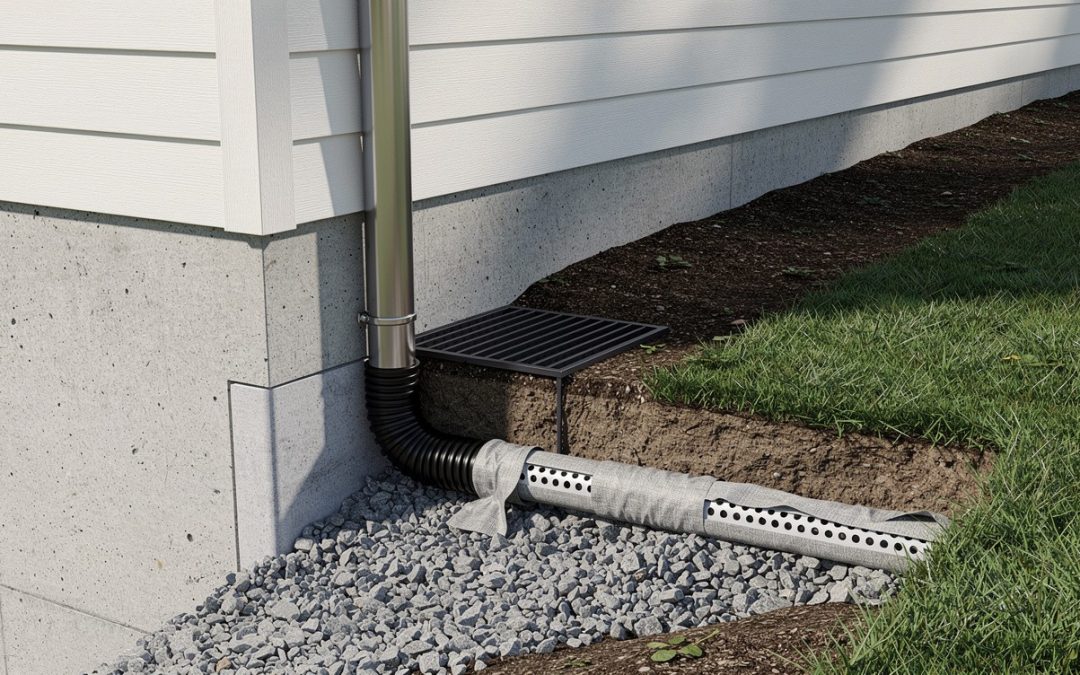
Your gutters are only half the battle. Water that leaves your gutters through downspouts needs somewhere to go, and if it doesn’t flow away from your foundation, you’re looking at serious problems.
At Desert Gutters, we’ve seen countless Central Oregon homes damaged by poor downspout drainage solutions. Foundation cracks, basement flooding, and eroded landscaping are all preventable with the right approach.
What Happens When Downspouts Don’t Direct Water Away
The Force of Roof Runoff
Water that flows off your roof carries tremendous force. A 2,000-square-foot roof in Central Oregon collects roughly 1,250 gallons of water during a moderate one-inch rainstorm. Without proper downspout drainage, that water pools directly against your foundation. Hydrostatic pressure from standing water pushes against foundation walls and basement floors, creating cracks that start small but expand over time. Foundation repairs in Central Oregon homes have exceeded $15,000 when water sat against the base for just two or three seasons.
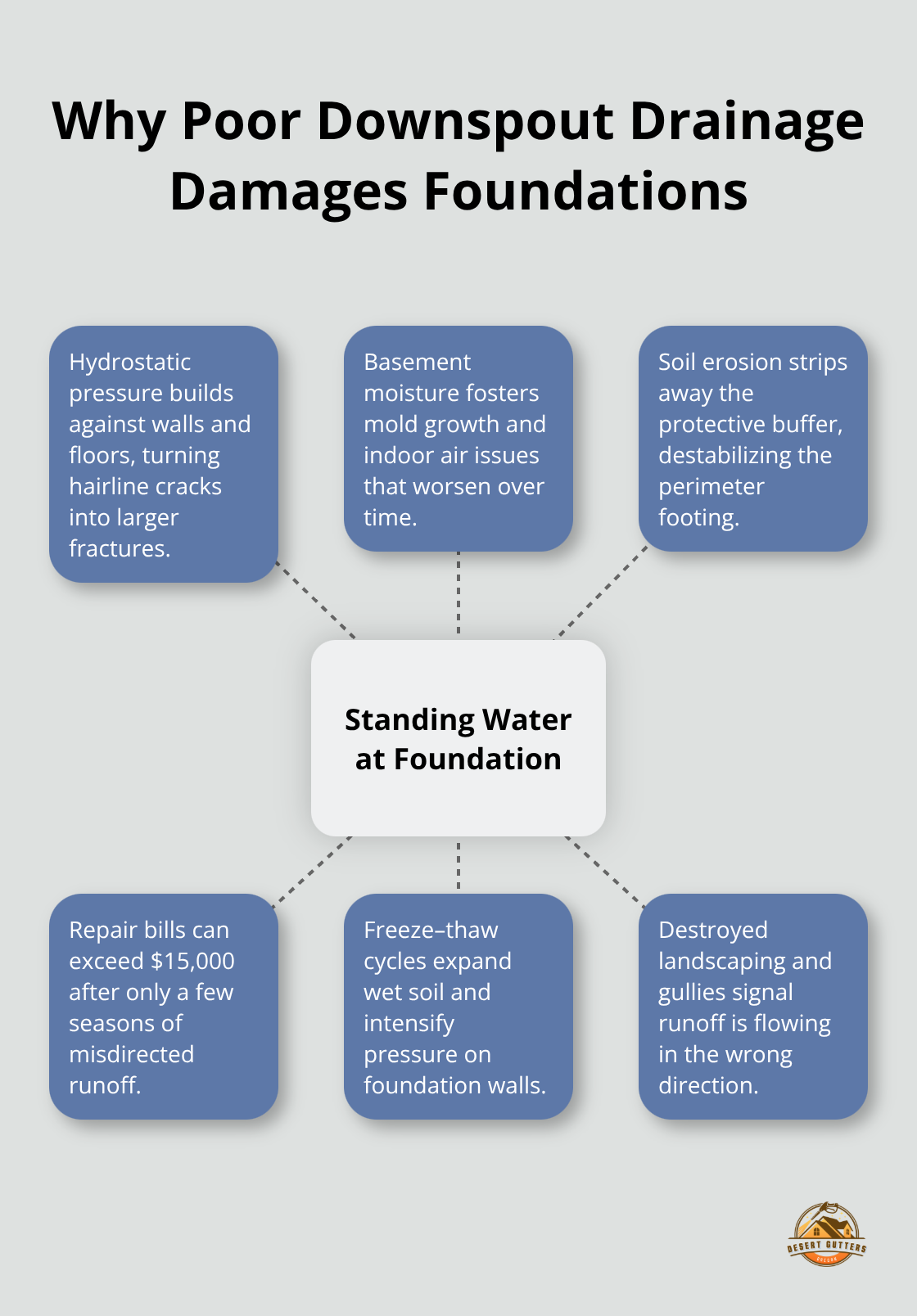
Once water breaches your foundation, you’re dealing with basement moisture, mold growth, and structural deterioration that compounds every year you delay action.
Soil Erosion and Foundation Instability
The soil around your foundation suffers when downspouts discharge incorrectly. Water that pools near your home erodes the ground, destabilizing the soil that supports your foundation’s perimeter. Concentrated runoff creates gullies and depressions around downspout outlets, signaling that water flows too forcefully or in the wrong direction. Landscaping gets destroyed in these zones-plants die from waterlogging, mulch washes away, and exposed soil becomes compacted and lifeless. Beyond aesthetics, this erosion means your foundation loses the protective soil buffer that helps distribute its weight evenly.
Central Oregon’s freeze-thaw cycles make this worse because wet soil around your foundation expands when it freezes, putting additional pressure on foundation walls. This seasonal stress accelerates structural damage that might otherwise take years to develop.
The 5-to-10-Foot Rule
Downspouts must discharge at least 5 to 10 feet away from your home to prevent foundation damage. If your downspouts empty within 3 feet of your foundation, water will eventually find its way into your basement or crawlspace. The fix is straightforward: downspout extensions, splash blocks, or buried drainage lines push water far enough away that it doesn’t threaten your home’s structural integrity. These solutions work because they redirect the force of roof runoff away from the vulnerable zone immediately surrounding your foundation.
Understanding where your water goes matters more than most homeowners realize, and the next section covers the specific problems that plague Central Oregon properties.
Common Downspout Problems in Central Oregon
Pine Needles Create Year-Round Blockages
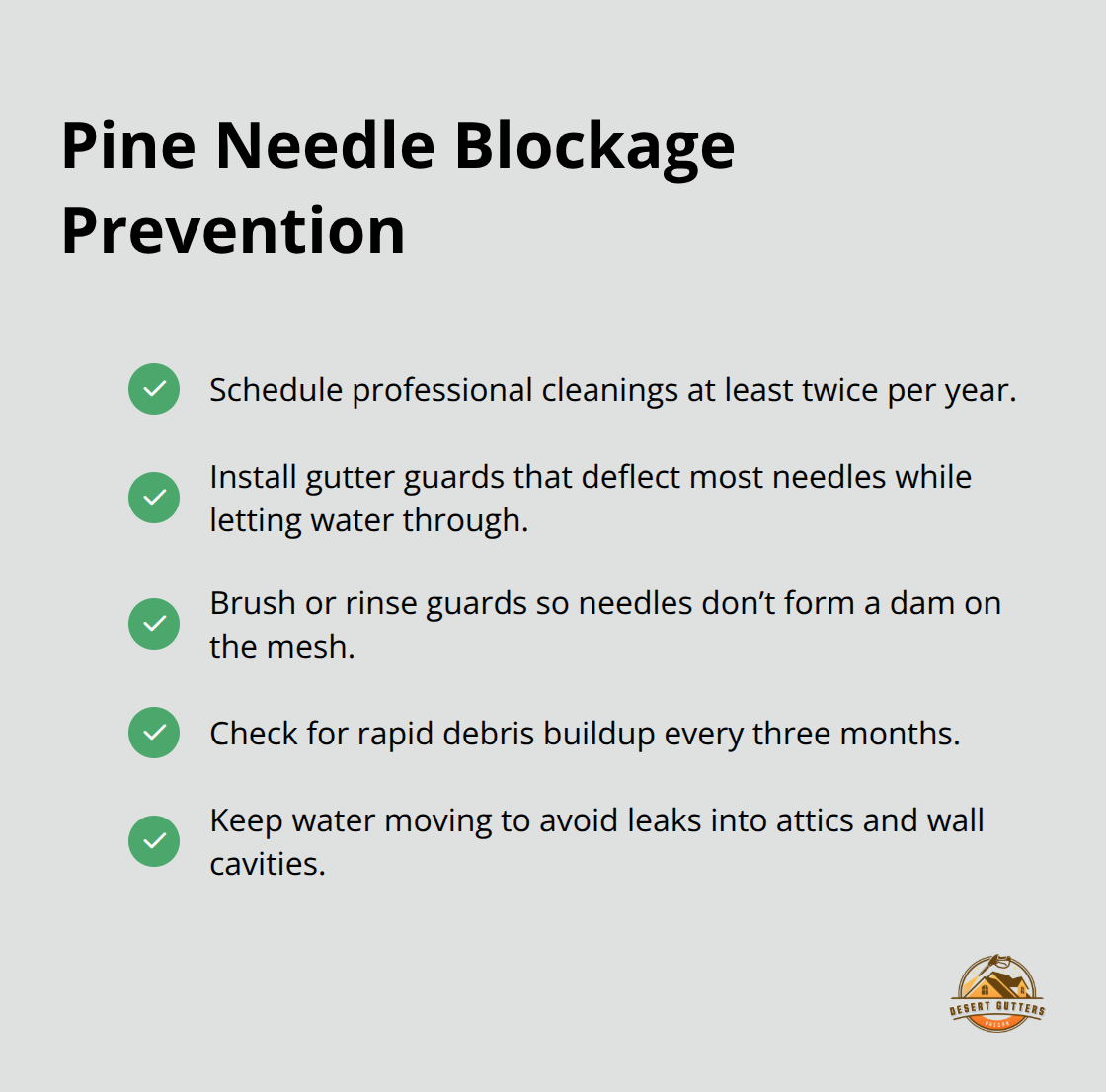
Pine needles clog downspouts faster in Central Oregon than almost anywhere else in the country. Your region’s ponderosa and lodgepole pines shed needles, with ponderosa pines dropping old needles during fall months. When needles accumulate in your downspout, water backs up in your gutter and either overflows or sits stagnant. Stagnant water weighs down gutters, pulls fasteners loose, and forces water to seep behind the gutter into your fascia and soffit. The real danger emerges when water finds gaps and cracks in your roofline-it penetrates into your attic and wall cavities where it promotes rot and mold growth that spreads unseen for months.
Dense pine needle clogs block water flow completely, leaving homeowners shocked at how much debris accumulates in just three months. Gutter guards help reduce needle entry, but they require regular cleaning themselves because needles still land on top of the mesh and create a secondary dam. The most effective approach combines professional cleaning at least twice yearly with gutter guards that allow water through while deflecting most debris.
Improper Slope and Positioning Slow Water Movement
Improper downspout slope and positioning compound the pine needle problem. Many Central Oregon homes have downspouts installed at angles that don’t encourage water movement-if your downspout slopes toward the house or sits nearly vertical, water moves sluggishly and gives debris time to settle. Testing your downspout performance during the next rainstorm reveals whether water exits smoothly. Watch where water exits and check whether it flows to the outlet without interruption.
If you see overflow at the gutter joint, water trickling from seams, or water spraying sideways, your downspout needs attention. A downspout that discharges 4–6 feet from the foundation, with 8–10 feet preferred in wet climates or homes with basements, meets proper drainage standards. Correcting slope requires repositioning brackets and ensuring the downspout angles slightly away from the house.
Disconnected and Damaged Downspouts Redirect Water Incorrectly
Disconnected or damaged downspouts make drainage problems worse because water spills out before reaching ground level, pooling against your foundation. Loose brackets, dents in the downspout, or separation at the seams disrupt flow and force water to escape sideways. These failures happen gradually-a bracket loosens here, a seam separates there-until water no longer travels where it should.
Fixing disconnections involves re-securing brackets and sealing gaps with appropriate fasteners. Central Oregon’s freeze-thaw cycles stress downspout connections, so inspect your system each spring after winter weather passes. A downspout that leaks or separates sends water directly into the vulnerable zone around your foundation, accelerating the foundation damage and erosion problems that proper drainage prevents. Identifying these issues early stops water from pooling where it causes the most harm, which brings us to the solutions that actually work.
Fix Your Downspout Discharge Now
Install Extensions and Splash Blocks for Immediate Results
Extensions and splash blocks solve most Central Oregon downspout problems immediately. A downspout extension is a simple pipe or elbow that attaches to your existing downspout outlet and directs water 5 to 10 feet away from your foundation. Splash blocks sit at ground level and deflect water outward, working best on level terrain where water flows freely. The difference between installing these solutions and ignoring the problem is the difference between a dry basement and water damage that costs thousands to repair.
Central Oregon’s seasonal rainfall patterns mean your downspout system handles concentrated bursts during spring snowmelt and fall storms, so extensions that push water past the first 5 feet of soil around your home are non-negotiable. If your current downspout empties within 3 feet of your foundation, add an extension today. Splash blocks work for single-story homes with adequate slope away from the house, but extensions perform better on larger roofs because they maintain water velocity over distance.
Consider Underground Drainage for Permanent Protection
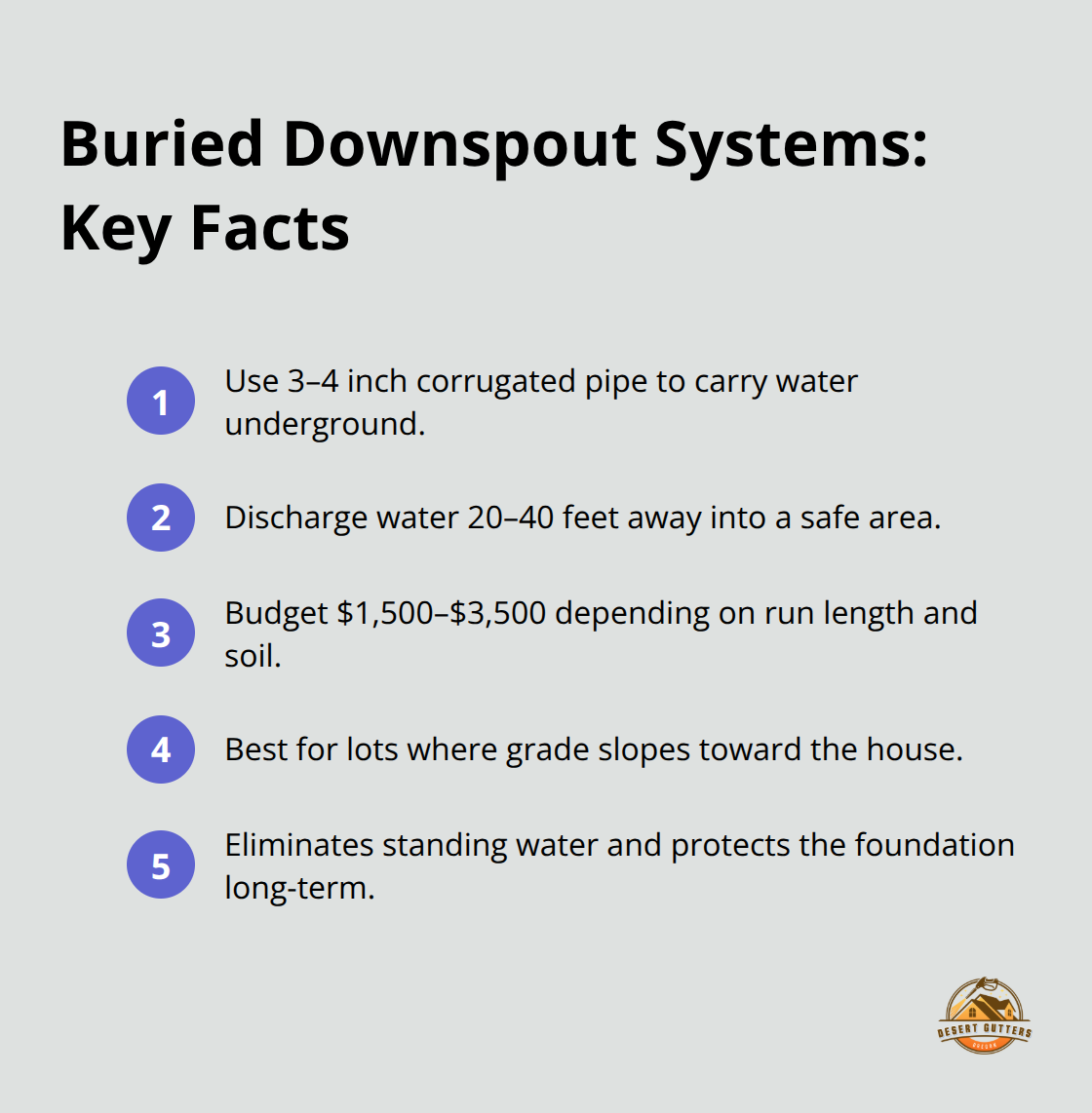
For homes where grade slopes toward the foundation, buried downspout systems with pop-up emitters offer the most reliable solution. Water travels underground through 4-inch or 3-inch corrugated pipe and emerges 20 to 40 feet away where it can disperse safely. These systems cost between $1,500 and $3,500 depending on run length and soil conditions, but they eliminate standing water problems permanently and protect your foundation for decades.
Grade Your Soil Away From the Foundation
Proper grading away from foundation works alongside downspout extensions to prevent water from pooling near your home. The ground should slope away from a building at least 1/4 inch per foot for the first 6–10 feet. If your grade slopes toward your foundation or sits flat, water from your downspout extension will still pool near the base even if it travels the right distance initially.
Many Central Oregon homeowners think extensions alone solve drainage issues, but grading is equally critical-water needs somewhere to go after it leaves the downspout. Dense landscaping with deep-rooted plants intercepts runoff and prevents erosion, but first-year plantings won’t help immediately.
Clean and Inspect Your System Twice Yearly
Your maintenance schedule determines whether solutions actually work. Clean gutters and downspouts at minimum twice yearly, in spring after winter debris accumulates and in fall before pine needles clog the system. Central Oregon’s heavy pine needle load makes fall cleaning essential-waiting until winter means blocked downspouts during spring snowmelt when you need drainage most.
Inspect downspout connections, brackets, and outlets after freeze-thaw cycles to catch loose fasteners or separated seams before water starts pooling. Test your system during rain by watching where water exits and confirming it flows away from the foundation without pooling or backing up into gutters. If you see water trickling from seams or spraying sideways, tighten connections or adjust brackets immediately. Twice-yearly cleaning combined with visual inspections catches problems early and keeps water flowing where it should.
Final Thoughts
Your downspout drainage system protects your foundation from damage that compounds every season you delay action. The problems we’ve covered-foundation cracks, basement flooding, soil erosion, and landscape destruction-all stem from water that doesn’t flow away from your home. Installing extensions, splash blocks, or buried drainage lines stops these issues before they start, while proper grading ensures water continues moving away after it leaves the downspout.
Professional inspection identifies problems you can’t see from the ground and catches freeze-thaw damage that loosens connections. A trained eye spots loose brackets, separated seams, improper slope, and grading issues that allow water to pool near your home, and inspectors test your system during rain or with a garden hose to confirm water exits where it should without backing up or spraying sideways. Early detection prevents foundation damage that costs $15,000 or more to repair, making proactive inspection far cheaper than addressing water damage after it happens.
Test your current downspout system during the next rain and watch where water exits for pooling, overflow, or damage. If water doesn’t travel at least 5 feet away, add an extension today, and schedule professional cleaning before fall pine needle season arrives. We at Desert Gutters provide free estimates and handle gutter cleaning, repair, and downspout drainage solutions for Central Oregon homes-contact us to protect your foundation now rather than paying for repairs later.