
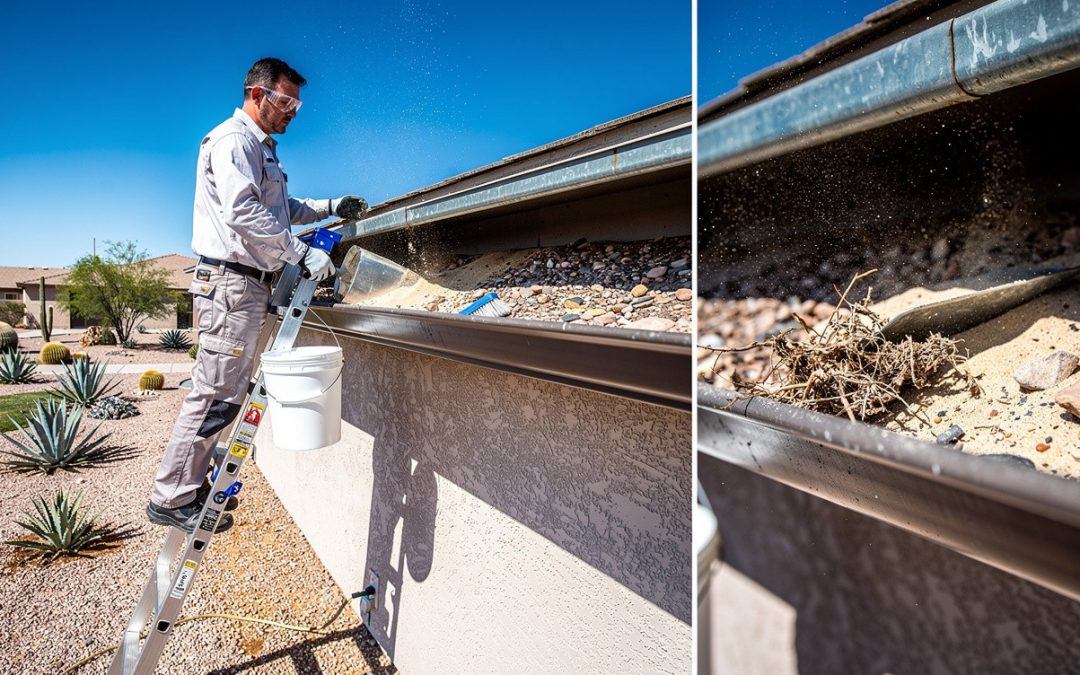
Your gutters work harder in the desert than anywhere else. Pine needles, sudden storms, and dry-climate debris create unique challenges that most homeowners underestimate.
At Desert Gutters, we’ve seen firsthand how neglected gutters lead to foundation damage, roof problems, and expensive repairs. These desert gutter maintenance tips will help you protect your home year-round.
What Makes Desert Gutters Fail Faster
Pine Needles and Compacted Debris Create Blockages
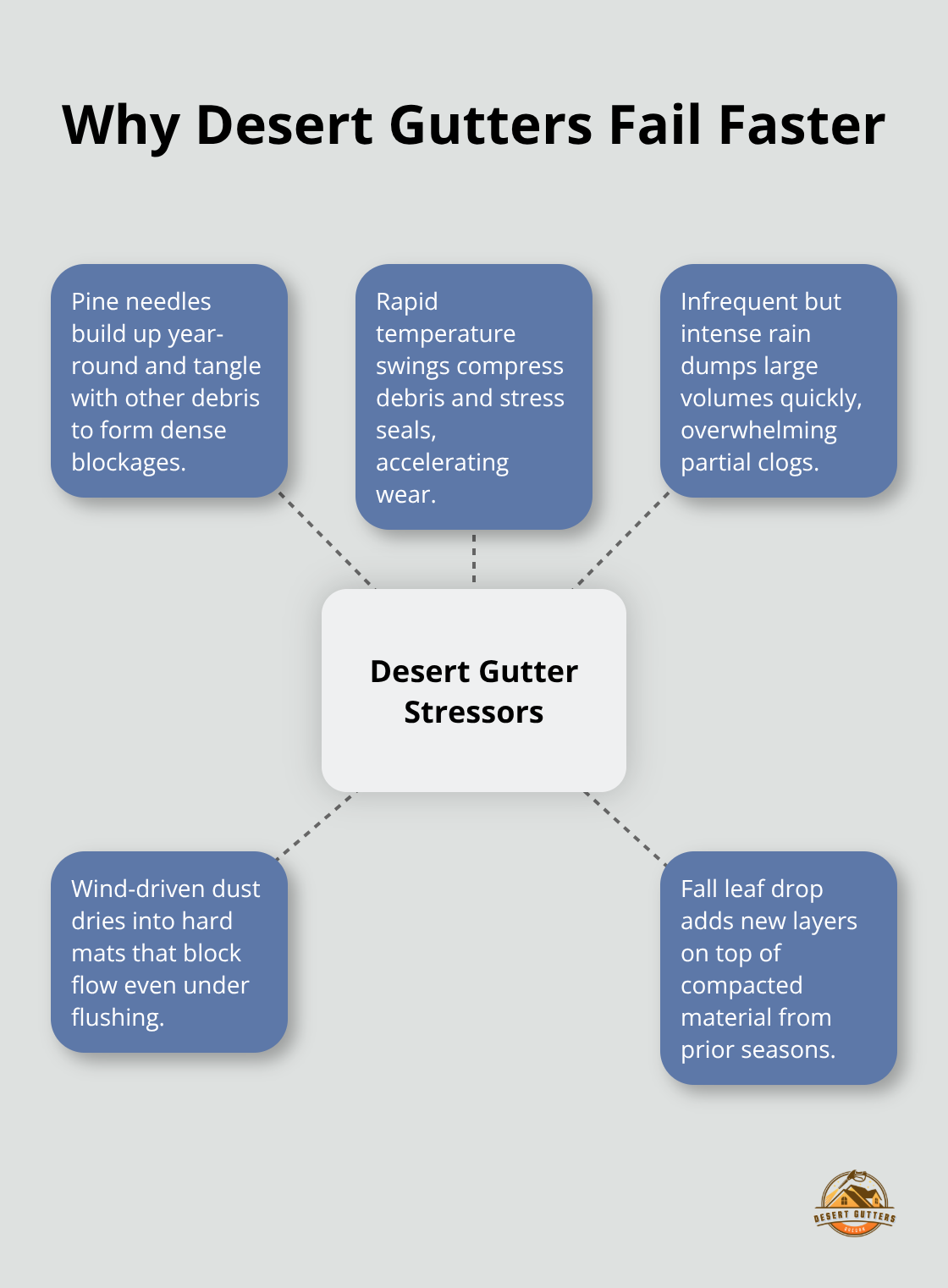
High-desert environments attack gutters from multiple angles simultaneously, and most homeowners underestimate how aggressive these conditions are. Pine needles accumulate year-round in Central Oregon, but the real damage happens when they combine with rapid temperature swings and infrequent but intense rain. A single downpour after weeks of drought dumps significant water volume into gutters already packed with compacted debris. The dry climate causes debris to compress into dense mats that resist water flow, meaning a gutter that looks half-full can actually overflow during storms.
Temperature Swings Accelerate the Problem
Winter snow and ice create initial blockages, then spring thaw adds moisture that helps debris compact further. Summer brings wind-driven dust accumulation, while fall leaf drop compounds everything. This seasonal cycle (winter blockage, spring compaction, summer dust, fall leaves) creates a perfect storm for gutter failure. Flash flooding in the high desert doesn’t give you time to react-it happens within hours of storm onset.
Standard Maintenance Schedules Don’t Work Here
Most homeowners follow a twice-yearly gutter cleaning schedule that works in milder climates but fails in Central Oregon. Inspection every eight weeks during peak debris seasons catches problems before they cause foundation damage and roof deterioration. The compacted debris mat that forms in desert climates can lead to sagging gutters, mold growth, wet basements, and leaky roofs. Standard water pressure simply slides across the dense, dried mat without clearing it.
Water Damage Happens Faster Than You Think
A gutter that looks manageable can hide serious overflow risk beneath its surface. Pooling water on the roof signals that debris has already blocked drainage paths, and foundation cracks often appear before homeowners notice gutter problems. Desert conditions (intense sun, rapid temperature changes, infrequent heavy rain) compress this timeline dramatically compared to other regions. What takes months to cause damage elsewhere can happen in weeks here.
Professional Removal Breaks Through Compacted Debris
Manual debris removal in each section followed by downspout flushing confirms that water actually drains from inlet to outlet. This approach works because it addresses the compacted mat directly rather than hoping water pressure will solve the problem. Central Oregon’s specific conditions demand this level of attention to prevent the water damage and erosion that threaten your home’s foundation and roof structure.
When to Clean Your Central Oregon Gutters
Spring Cleaning Stops Snowmelt Damage
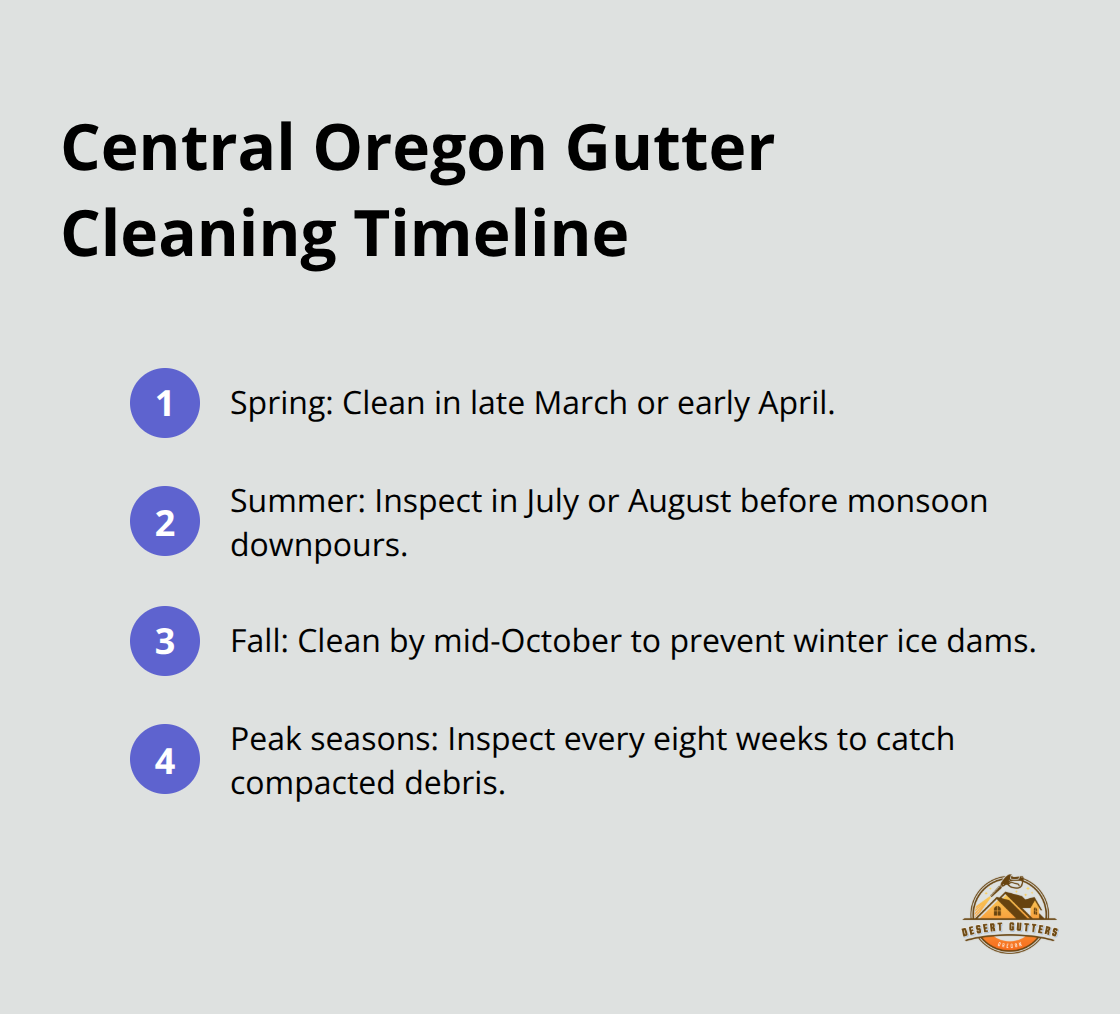
Spring arrives in Central Oregon with snowmelt, ice dam debris, and winter damage that demands immediate attention. Schedule your first cleaning in late March or early April, before heavy spring rains hit and while gutters still contain compacted ice and winter sediment. This timing matters because snowmelt combined with blocked gutters saturates your foundation and leads to basement seepage and structural cracks. After winter, gutters accumulate sand, gravel, and ice-compressed debris that water pressure alone cannot remove. Manual removal followed by downspout flushing confirms drainage works end-to-end before the wet season intensifies.
Summer Inspections Catch Monsoon Blockages
Summer in the high desert means wind-driven dust accumulation and intense UV exposure that dries debris into harder mats. Schedule a mid-summer inspection in July or August to catch blockages before monsoon season arrives. Central Oregon experiences sudden intense downpours from July through September, and a single storm can dump enough water to overwhelm partially clogged gutters within hours. Don’t wait until visible overflow appears-water already saturates your roof deck and foundation by that point.
Fall Maintenance Prevents Winter Ice Dams
Fall leaf drop compounds the problem from September through November, requiring a final cleaning before winter arrives. This autumn maintenance prevents ice dams from forming in December and January, when freeze-thaw cycles trap water behind debris-blocked sections. Schedule your fall cleaning by mid-October to stay ahead of the seasonal rush and secure a winter-ready system.
Eight-Week Inspections Beat the Compacted Debris Mat
Most homeowners underestimate how aggressively Central Oregon’s climate attacks gutters across all four seasons. Winter snow and ice compress debris into dense mats, spring snowmelt tests drainage systems under stress, summer dust accumulation accelerates compaction, and fall leaves block sections that already carry spring and summer debris. A twice-yearly schedule fails here because the compacted debris mat resists standard water pressure, meaning flushing alone leaves blockages intact. Every eight weeks during peak debris seasons catches problems before overflow damage occurs. This approach prevents the water damage, ice dams, and foundation erosion that threaten your home’s long-term stability in the high desert.
The seasonal rhythm of Central Oregon gutter maintenance differs dramatically from milder climates, and understanding these specific timing windows protects your investment far better than generic maintenance calendars.
What Gutter Problems Look Like in Central Oregon
Ice Dams Form When Debris Blocks Winter Drainage
Ice dams form in Central Oregon gutters when debris blocks drainage and traps water behind compacted pine needles and winter sediment. As temperatures drop below freezing, that trapped water expands and creates an ice barrier that forces meltwater backward under your roof shingles. Icicles hanging unevenly from your gutters, water stains on interior walls near the roofline, or visible bulges of ice protruding from gutter sections signal this problem. The real danger isn’t the ice itself-it’s the water that seeps behind it and saturates your roof deck, attic insulation, and eventually your interior walls.
Central Oregon’s freeze-thaw cycles make this problem worse than in consistently cold climates because repeated melting and refreezing compress debris into a harder mat that blocks water even after temperatures rise. Water damage on your ceiling in January or February indicates an ice dam is almost certainly the cause, and waiting until spring to address it means thousands in hidden damage already exists behind your walls.
Sagging Gutters Signal Overflow and Foundation Risk
Sagging gutters overflow foundation cracks soil saturation Central Oregon develop because blocked gutters force water to overflow directly down your exterior walls instead of through downspouts. When water pools in a gutter section for days or weeks, the weight of that standing water plus the compacted debris mat pulls the gutter away from fascia boards, creating visible sags you can see from the ground. More critically, overflow water cascades down your foundation perimeter and saturates the soil around your home’s base, leading to foundation cracks, basement seepage, and erosion that destabilizes your entire structure.
Central Oregon’s infrequent but intense rain events accelerate this damage because a single storm can dump enough water to overwhelm a partially blocked gutter, and the rapid saturation of your foundation happens too fast to notice until cracks appear.
Roof Clogs Lead to Expensive Water Damage
Clogs that lead to roof problems are equally serious-standing water on your roof deck rots wood sheathing, promotes mold growth, and creates the perfect environment for water to find its way into your attic and interior spaces. Two years of missed cleanings can result in roof replacement costs exceeding $15,000 when the underlying damage could have been prevented with consistent maintenance. The compacted debris mat in high-desert gutters resists standard pressure washing, meaning visual inspection alone won’t tell you if drainage actually works end-to-end.
Final Thoughts
Water damage repairs in Central Oregon homes cost $10,000 to $25,000 when foundation saturation or roof rot develops, yet most of this expense stems from preventable gutter failures. The compacted debris mat that forms in high-desert conditions resists standard pressure washing, so DIY maintenance often leaves blockages intact even after you spend hours on a ladder.
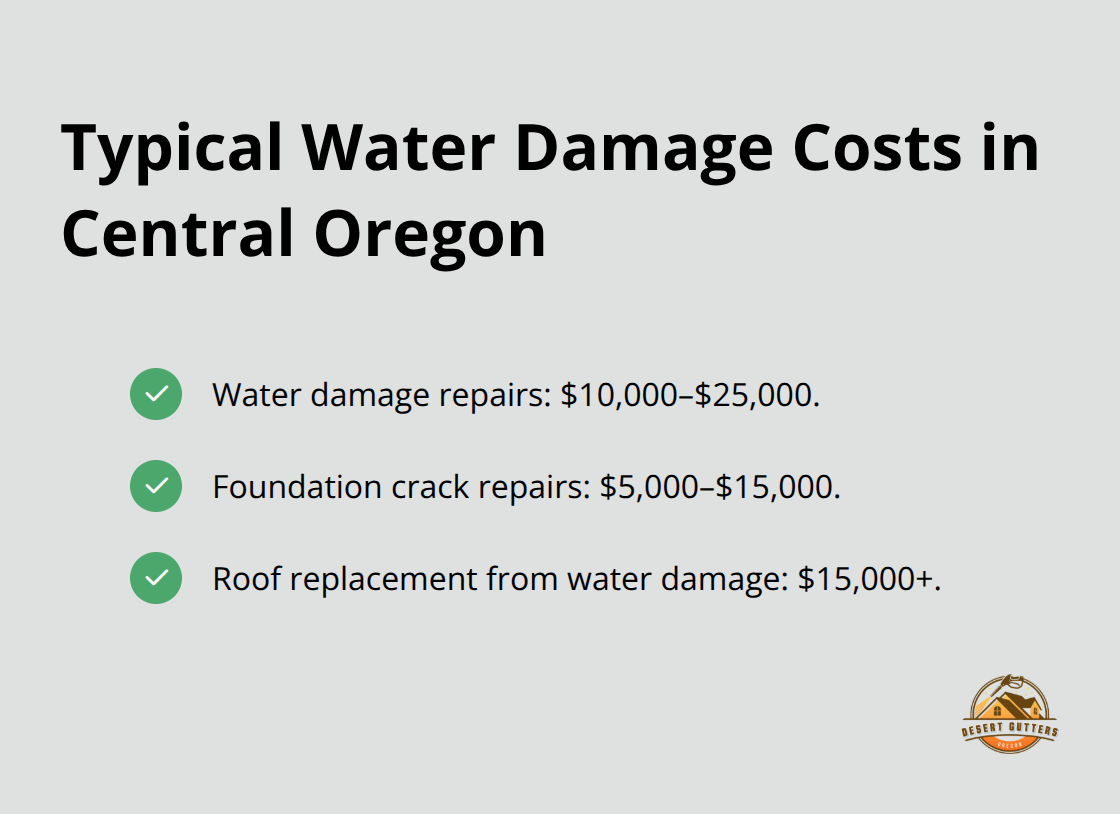
Foundation cracks from overflow water cost $5,000 to $15,000 to repair, and roof replacement from water damage easily exceeds $15,000 when the underlying problem was simply a clogged gutter section.
Professional gutter maintenance addresses these risks directly through manual debris removal in each section followed by downspout flushing that confirms water actually drains from inlet to outlet. This approach works because it breaks through the compacted debris mat rather than hoping water pressure will solve the problem. Central Oregon’s specific conditions demand this level of attention because freeze-thaw cycles, wind-driven dust, and sudden intense downpours create a perfect storm for gutter failure that generic maintenance schedules cannot handle.
Desert gutter maintenance tips matter most when you work with professionals who understand your region’s unique challenges. We at Desert Gutters provide free estimates with dependable local service, so you can understand exactly what your gutters need before committing to anything. Schedule your inspection with Desert Gutters and stop paying for preventable water damage.