
Your gutters work hard to protect your home, but most homeowners ignore them until water starts pouring down the siding. Pine needles, debris, and seasonal weather in Central Oregon create real problems that damage foundations and roofs.
We at Desert Gutters see the damage that neglected gutters cause every week. These gutter system maintenance tips will help you avoid expensive repairs and keep your roofline flowing properly year-round.
Why Gutter Maintenance Matters in Central Oregon
Pine Needles Create Year-Round Clogs
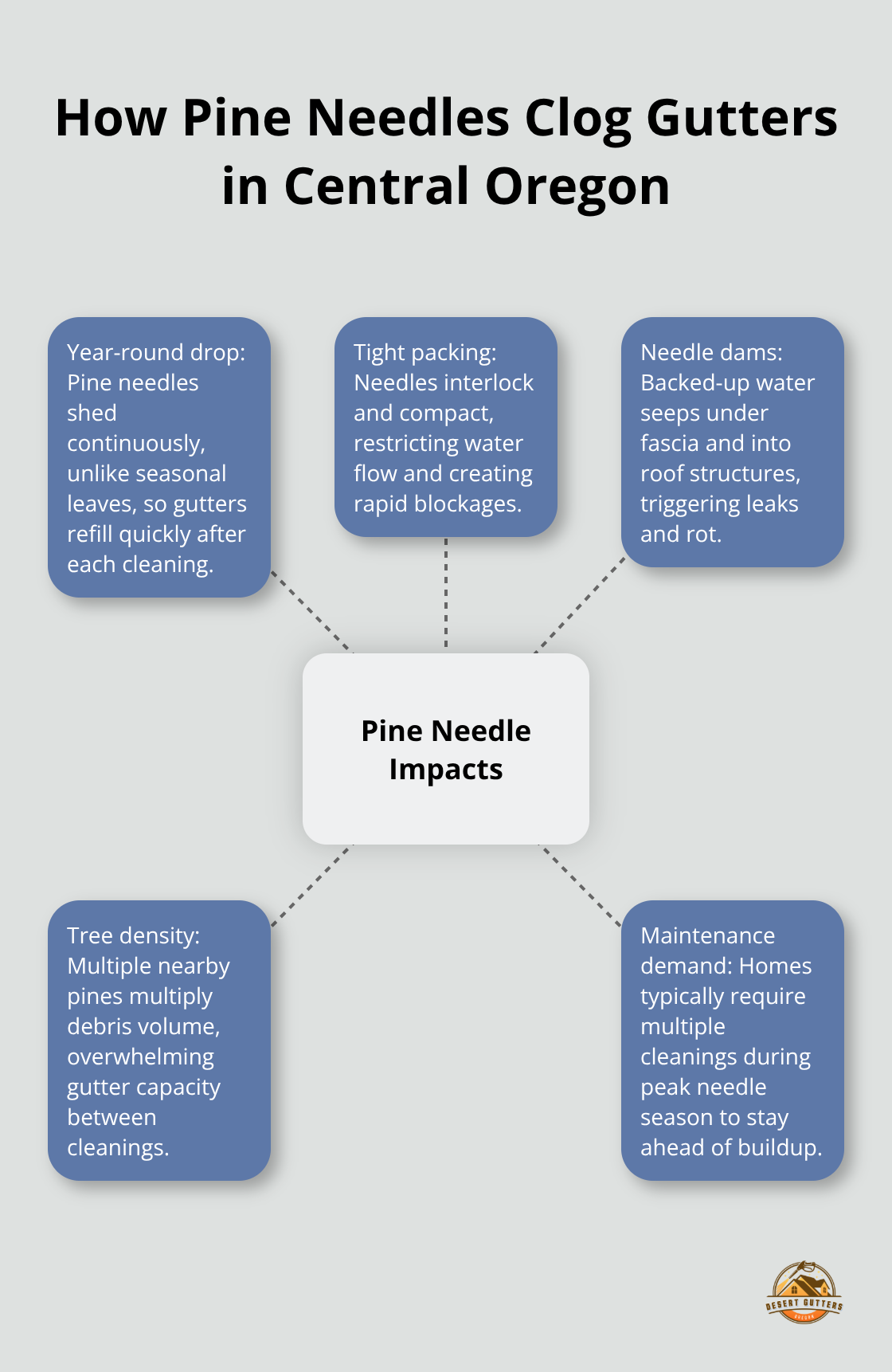
Pine needles from the juniper and ponderosa forests surrounding Central Oregon homes create a maintenance nightmare that most homeowners underestimate. Unlike deciduous leaves that fall seasonally, pine needles drop year-round and pack tightly into gutters, restricting water flow within days of accumulation. A single mature ponderosa pine sheds approximately 300,000 needles annually, and when multiple trees surround your property, those needles fill gutters faster than you can clean them.
The real danger emerges when water backs up behind the needle dam, seeping under fascia boards and into your roof structure. Central Oregon homeowners typically need three to four gutter cleanings annually during peak needle season to prevent cascading failures, yet many wait much longer and discover water pooling on their roofline and causing $2,000 to $5,000 in structural damage.
Heavy Rainfall Overwhelms Clogged Systems
Central Oregon’s intense spring snowmelt and summer monsoon patterns expose the consequences of neglected gutters immediately. When heavy rainfall overwhelms clogged gutter systems, water has nowhere to go except over the edges, cascading down your siding and pooling around your foundation.
This overflow causes foundation cracks within a single season. The financial impact proves severe-HomeAdvisor reported that average water damage repairs cost around $3,600 in 2022, but Central Oregon homeowners often face higher costs due to regional weather intensity and the complexity of high-desert construction.
Structural Damage Accelerates in the High Desert
Sagging gutters weighted by debris pull away from fascia boards, creating gaps that allow water to penetrate your home’s envelope. High-desert winds carry fine dust and needles that settle deep inside gutter channels, building blockages long before the next storm arrives, while rust and corrosion accelerate in the dry, intense UV environment faster than in other regions.
The slope of your gutters matters critically too-even a slight deviation from the proper quarter-inch to half-inch drop per ten feet of length prevents water from flowing toward downspouts. Standing water erodes your gutters and attracts pests, compounding the damage from neglect.
These issues demand immediate attention before they escalate and threaten your roof, foundation, and siding with thousands in preventable damage. The maintenance tasks you perform now directly determine whether your gutters protect your home or become a liability.
Essential Gutter Maintenance Tasks Year-Round
Clear Debris Weekly During Peak Needle Season
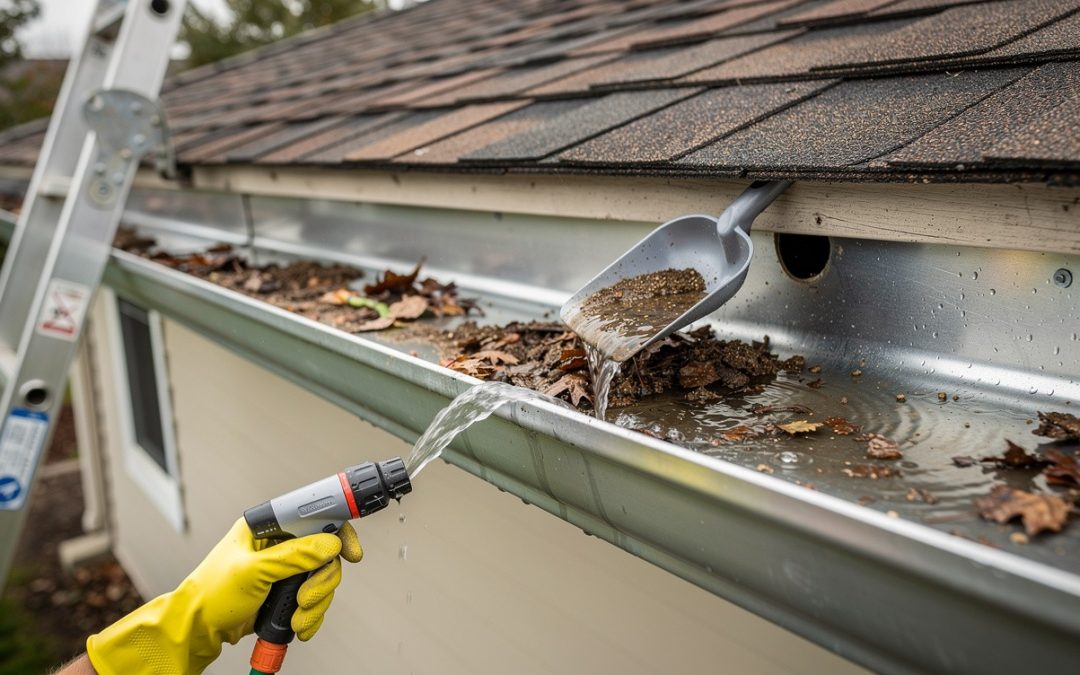
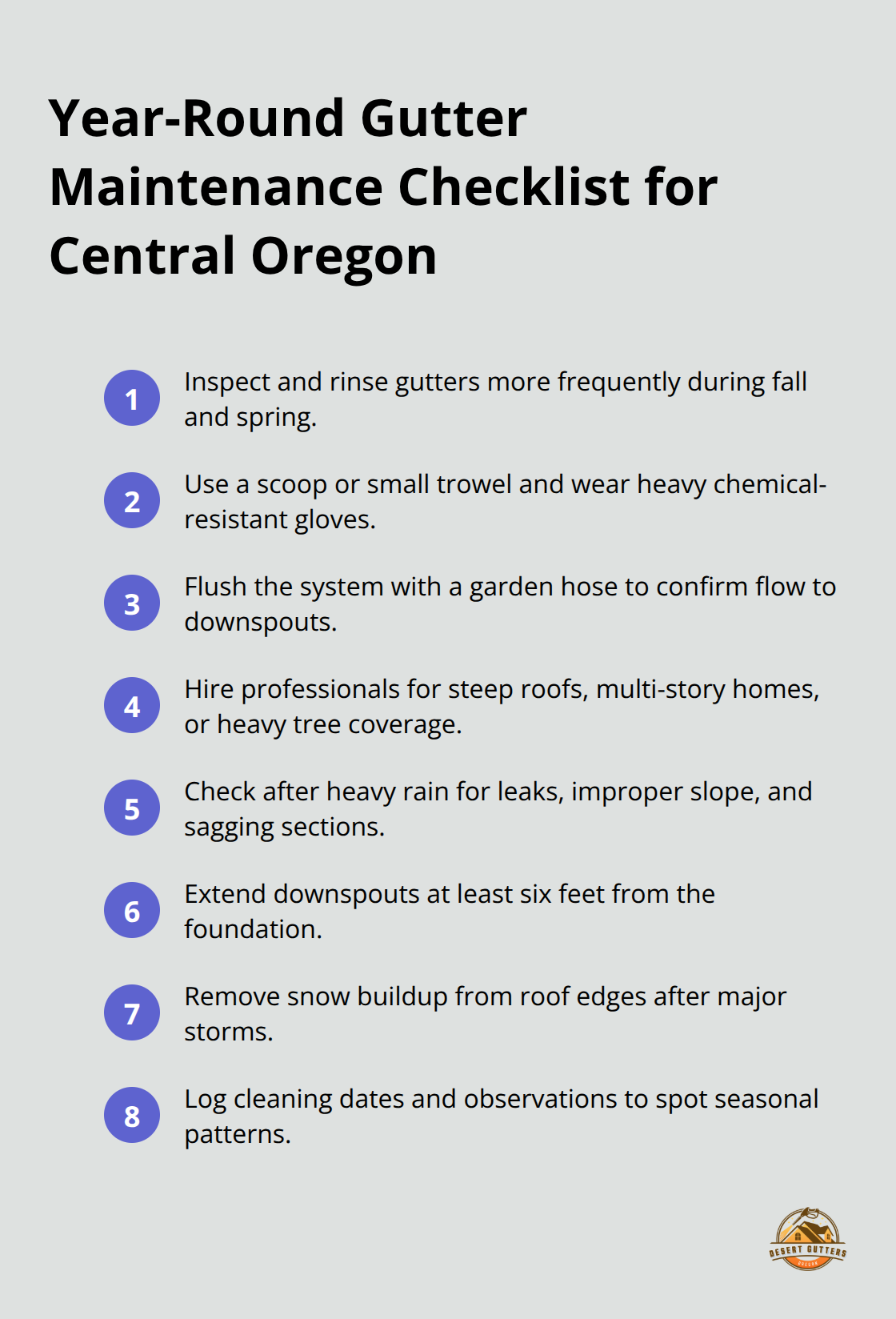
Maintaining gutters in Central Oregon requires a different approach than standard seasonal maintenance because pine needles fall year-round and weather patterns shift unpredictably. During fall and spring, when needle drop accelerates, you need to inspect and rinse the gutters once per year rather than monthly, especially if you have multiple pine trees on your property. Use a gutter scoop or small trowel to remove debris by hand while wearing heavy chemical-resistant gloves to protect against sharp aluminum edges. After you clear the debris, flush the system with a garden hose to verify water flows freely toward downspouts.
For properties with steep roofs, multiple stories, or extensive tree coverage, this DIY approach becomes dangerous and inefficient. Many Central Oregon homeowners hire professional cleaning during peak needle season to handle the work safely and thoroughly.
Inspect for Leaks, Cracks, and Sagging Sections
Check your gutters for leaks and cracks immediately after heavy rain when water exposure reveals problems. Look for standing water that indicates improper slope or blockages, and inspect fascia boards for water stains that signal overflow. Sagging sections need attention fast because the weight of debris and water pulls gutters away from your home, creating gaps where water penetrates behind boards and into your roof structure.
Tighten hangers and brackets that have loosened, or contact a professional if sections sag severely since reinstalling gutters requires proper tools and expertise. These inspections take only minutes but prevent thousands in water damage when you catch problems early.
Address Ice Dams Before Winter Storms Hit Hard
Winter in Central Oregon demands specific attention to ice dam formation. Before the first hard freeze, ensure gutters are completely clear of debris and verify downspouts extend at least six feet from your foundation so melting snow drains away safely. After heavy snowfall, remove snow buildup from roof edges to reduce ice dam risk, though this task often requires professional equipment and safety harnesses on steep high-desert homes.
If you notice icicles forming along your gutters or water pooling on your roof during winter, you likely have an ice dam developing. Professional snow removal prevents the roof leaks and interior water damage that follow. Document your maintenance dates and observations in a simple log so you know when your gutters were last cleaned and can spot patterns in debris accumulation across seasons (this record helps you schedule future cleanings before problems emerge and proves valuable if you ever need to file an insurance claim for water damage).
With these maintenance tasks completed throughout the year, your gutters stay functional and protect your home from the damage that neglect causes. The next section covers the specific problems that emerge when maintenance lapses and how to prevent them from taking hold.
What Damage Do Clogged and Broken Gutters Cause
Siding and Landscaping Take Immediate Damage
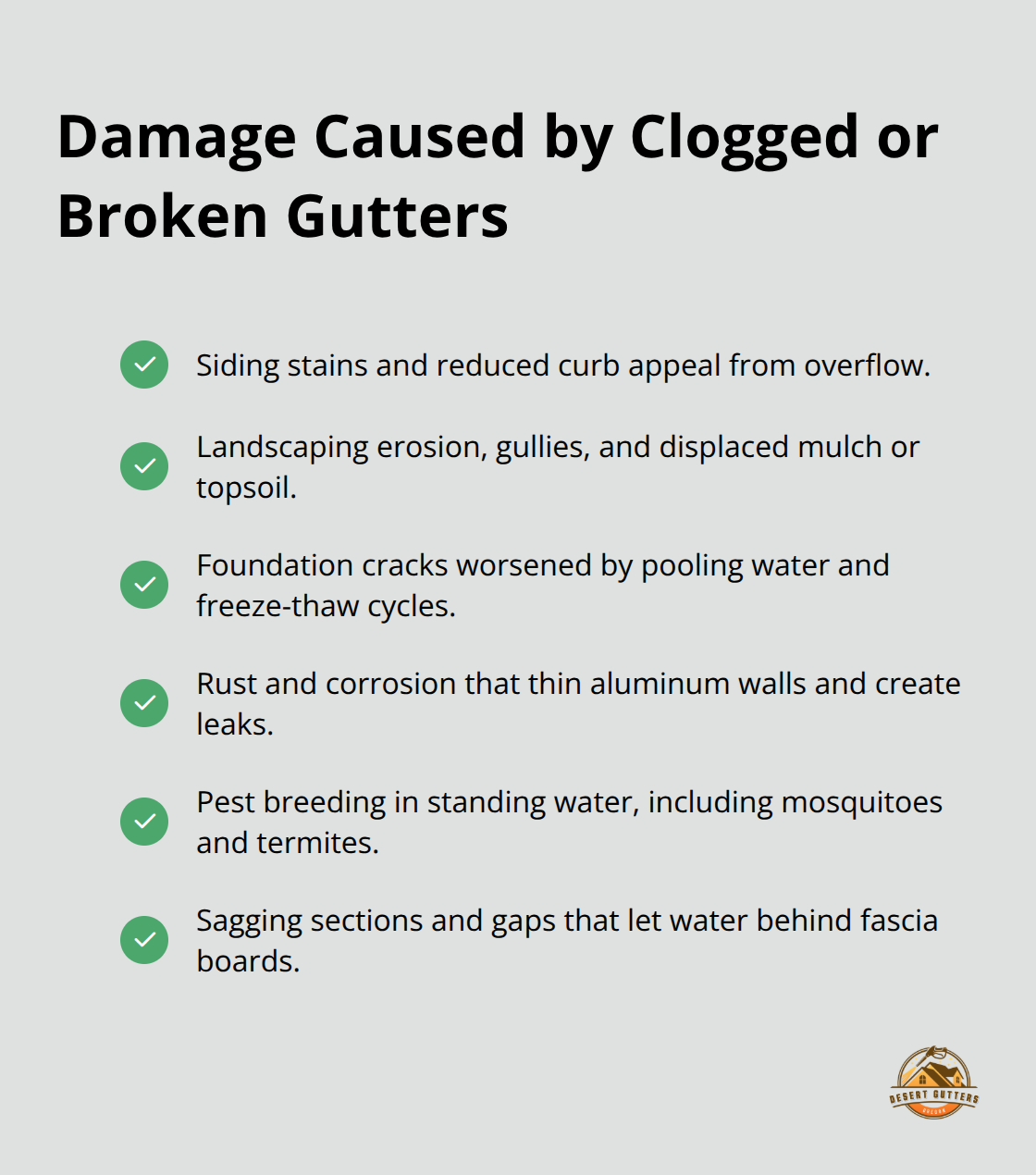
Water cascading over your gutters destroys siding faster than you’d expect. When gutters overflow during Central Oregon’s intense spring snowmelt, water hits your exterior walls repeatedly, staining vinyl or wood siding within weeks and creating permanent discoloration that reduces your home’s curb appeal and resale value. Landscaping directly beneath overflow zones suffers even more severe damage-soil erodes rapidly as concentrated water streams pound the ground, washing away mulch and topsoil while creating gullies that destabilize plantings and hardscaping.
Foundation Cracks Expand Through Freeze-Thaw Cycles
Foundation damage follows quickly when water pools around your home’s base instead of draining away properly. Central Oregon’s freeze-thaw cycles accelerate this destruction by forcing water into cracks that expand when temperatures drop, widening fissures into structural problems. This damage compounds rapidly once it starts, making early intervention essential to protect your home’s structural integrity.
Rust and Corrosion Weaken Aluminum Gutters
Rust and corrosion attack aluminum gutters aggressively in the high-desert environment where intense UV radiation, low humidity, and mineral-laden dust accelerate oxidation. Standing water trapped behind debris buildup creates pockets where aluminum corrodes from the inside out, weakening the gutter walls until holes develop and water leaks behind your fascia boards. Central Oregon’s dry climate actually worsens this problem because the absence of consistent moisture prevents the protective oxide layer from forming properly on aluminum surfaces, leaving them vulnerable to accelerated degradation.
Improper Slope Causes Water to Stagnate
Improper gutter slope causes all these problems to compound-even a slight deviation allows water to stagnate instead of flowing toward downspouts. Standing water breeds mosquitoes and termites while eating away at gutter integrity. Sagging gutters indicate that slope has failed completely, and when this happens, water pools in valleys between high and low points, overwhelming your gutter system during rainstorms and forcing overflow that damages everything below.
Detect Slope Problems Before They Escalate
Check your gutters from the ground using binoculars to spot areas where water would pool, and measure the slope with a level if you suspect problems. Correcting slope early prevents the cascade of damage that transforms a simple maintenance issue into a foundation threat.
Final Thoughts
The gutter system maintenance tips we’ve covered throughout this guide work only when you implement them consistently. Pine needles, winter ice, and Central Oregon’s intense weather won’t wait for you to address maintenance, so establishing a reliable schedule protects your home far better than sporadic effort. Professional gutter cleaning twice yearly removes the debris that accumulates faster than most homeowners expect, especially during peak needle season when a single ponderosa pine sheds hundreds of thousands of needles across your roof.
Small repairs cost hundreds while large repairs cost thousands. A pinhole leak in your gutter becomes a foundation crack within one season if water seeps behind your fascia boards and into your home’s structure. Addressing these issues immediately when you spot them prevents the compounding damage that transforms a simple fix into a major reconstruction project, and winter snow removal deserves serious consideration if your property sits in a heavy snow zone or your roof pitch makes ice dam formation likely.
Central Oregon’s freeze-thaw cycles accelerate damage when snow and ice accumulate along your gutters, and professional removal prevents the roof leaks and interior water damage that follow. Contact Desert Gutters for professional gutter cleaning, repair, and seasonal snow removal specifically designed for high-desert homes facing these exact challenges. We offer free estimates and dependable local service that keeps your roofline flowing year-round.