
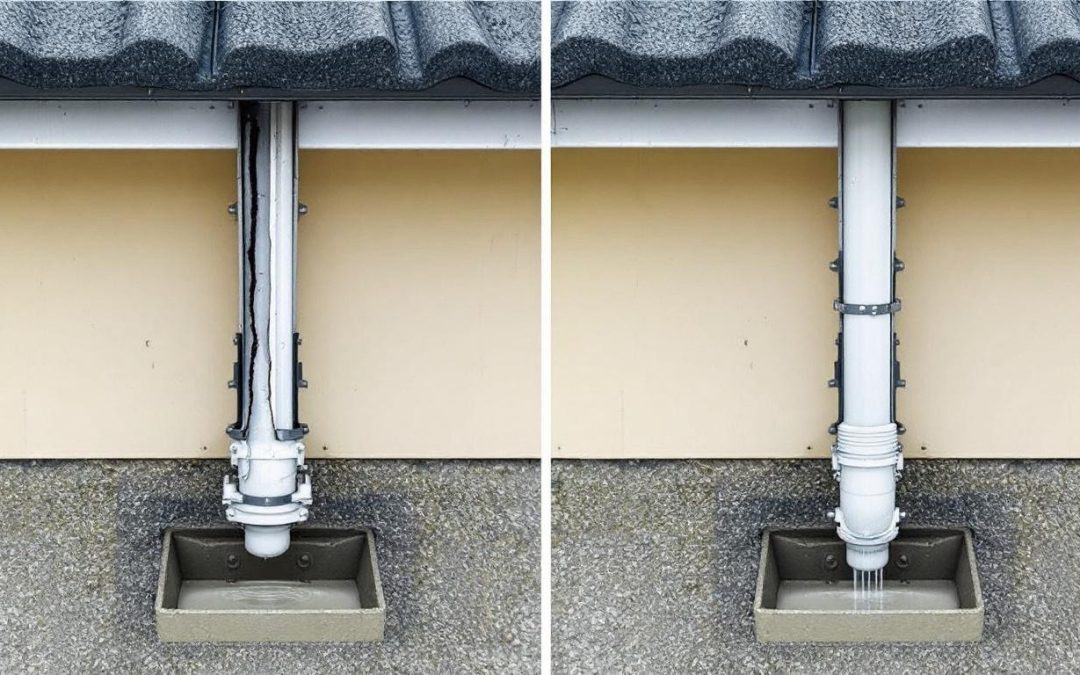
Your gutters and downspouts face constant threats from weather, debris, and seasonal changes. Damage to these systems can lead to costly water damage, foundation problems, and structural issues if left unaddressed.
This guide covers essential downspout damage prevention tips to keep your drainage system functioning properly. You’ll learn how to identify risks, implement protective measures, and maintain your downspouts year-round.
Common Causes of Downspout Damage
Impact from Falling Debris and Tree Branches
Downspout damage rarely happens overnight. Tree branches strike your gutters during storms, pine needles accumulate in sections, and freeze-thaw cycles crack aluminum or vinyl-all developing gradually and worsening without intervention.
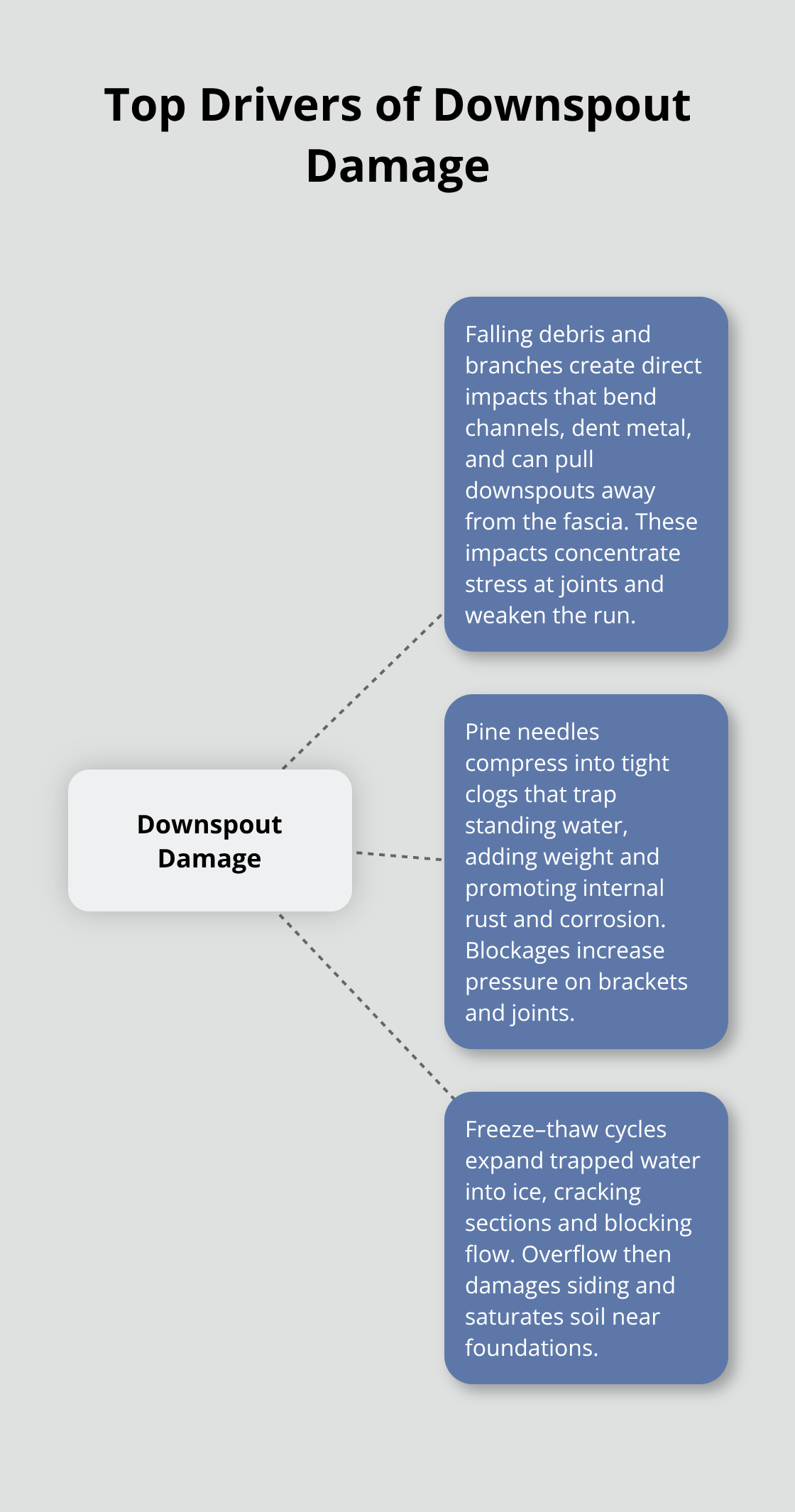
The most destructive threat in high-desert regions and areas with significant tree coverage comes from falling debris and overhanging branches. When branches land on downspouts, the impact can bend the channel, dent the metal, or pull the downspout away from the fascia board. These impact zones concentrate pressure on joints and weaken the structural integrity of the entire run.
Pine Needle Clogs and Seasonal Debris
Pine needles pose a different problem than branches. They compress into tight clogs that trap standing water inside downspouts, increasing weight and pressure on brackets while promoting rust and corrosion from within. Desert Gutters identifies pine-needle buildup as a primary cause of downspout failure in Central Oregon homes, requiring aggressive cleaning to prevent structural compromise. Seasonal debris-leaves, twigs, and nesting materials-creates blockages that force water to back up into gutters and overflow, which then saturates the exterior wall and foundation soil around your home.
Freeze-Thaw Cycles and Ice Accumulation
Freeze-thaw cycles present another serious concern, particularly in winter climates where water trapped inside downspout sections expands as it freezes, creating cracks that widen with each cycle. Ice accumulation blocks water flow entirely, forcing overflow that damages siding and saturates soil near foundations. These cycles repeat throughout winter, and each freeze-thaw event widens existing cracks and creates new weak points in your drainage system.
Why Early Action Matters
Downspouts that appear fine on the surface may have internal corrosion, micro-cracks, or loose joints developing beneath. The cost of addressing these issues early-through regular cleaning, bracket inspection, and prompt repairs-is far less than replacing entire downspout runs or managing foundation damage from failed drainage. Homes with mature trees nearby require more frequent inspection and cleaning schedules than those in open areas. If your property experiences heavy seasonal snowfall or sits in a region prone to ice dams, consider heat cables or insulated gutter systems as protective investments. Damage accumulates faster than most homeowners expect, which is why prevention strategies must start now rather than wait for visible failure.
How to Stop Downspout Damage Before It Starts
Establish a Consistent Cleaning and Inspection Schedule
A consistent cleaning and inspection schedule is the single most effective defense against downspout failure. Most homeowners clean gutters only once yearly, which is insufficient if your property has trees nearby or experiences heavy seasonal precipitation. Research shows that twice-yearly cleaning in late autumn and early spring prevents the majority of clogs that lead to overflow and structural damage. If pine needles or tree coverage dominates your area, move to three cleaning cycles annually, adding a mid-summer pass to catch rapid debris accumulation.
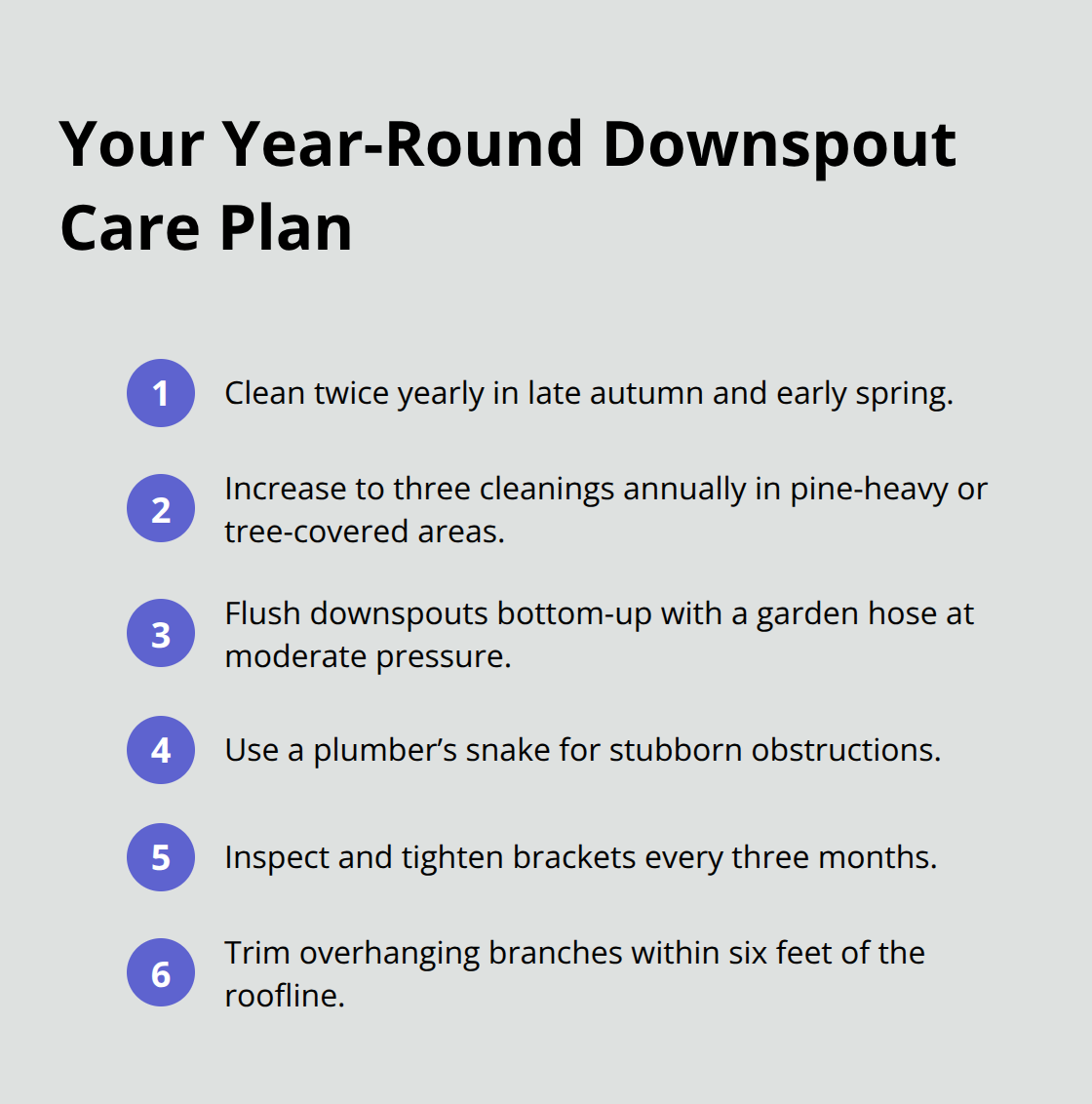
During each cleaning session, flush downspouts from the bottom upward with a garden hose at moderate pressure to clear compressed debris and reveal partial blockages before they worsen. A plumber’s snake removes stubborn obstructions that water pressure alone cannot dislodge. Inspect downspout brackets for loose fasteners every three months, tighten connections to eliminate movement that causes joint separation, and look for dents, cracks, or rust spots that indicate imminent failure points. Downspouts older than 20 years warrant professional inspection because seams deteriorate and metal fatigue accelerates with age, making replacement more cost-effective than repeated repairs.
Install Protective Barriers and Trim Vegetation
Gutter guards and downspout screens eliminate the root cause of many failures by preventing debris entry before clogs form. Metal mesh guards or foam inserts reduce cleaning frequency from multiple times yearly to once annually while protecting against pine needles, leaves, and twigs that accumulate fastest in fall and spring. Trimming overhanging branches within six feet of your roofline cuts debris input dramatically and removes the physical impact threat that dents downspouts during storms.
Branches that hang directly over gutters should be cut back aggressively, even if the tree appears healthy, because storm winds bend and snap branches unpredictably. This single action prevents both impact damage and the gradual needle and leaf fallout that clogs systems. Schedule tree trimming in late summer before autumn leaf drop accelerates, giving you a clean system heading into winter when freeze-thaw cycles pose maximum risk.
Protect Against Ice Dams and Winter Damage
If ice dams form in your climate, install heat cables along downspout runs to maintain water flow during cold snaps, preventing ice blockages that force overflow onto siding and foundation soil. These three strategies work together: guards reduce debris volume, trimming eliminates impact threats and ongoing needle accumulation, and regular cleaning catches what guards miss. This integrated approach creates a system that handles seasonal stress without deterioration and prepares your home for the maintenance challenges covered in the next section.
How to Fix Downspout Problems Before They Spread
Seal Leaking Joints Immediately
Small leaks at downspout seams demand immediate attention because water seeps through joints into fascia boards, siding, and foundation soil within weeks. Loose or mismatched joints cause most downspout leaks, and addressing them promptly prevents mold growth and structural damage that costs thousands to remediate. Inspect seams after heavy rain by running water through the system and watching for drips along the exterior wall. If you spot leaking joints, clean the area with a dry cloth, apply waterproof sealant or weatherproof tape to the affected seam, and allow it to cure fully before the next rainfall. For vinyl downspouts, silicone-based sealants work best because they remain flexible through temperature swings. Aluminum downspouts benefit from polyurethane sealants that bond more securely to metal surfaces. Do not rely on caulk alone for joints under constant water pressure; reinforce the seal with waterproof tape wrapped tightly around the connection point. Test the repair by flushing water through the downspout again to confirm the leak has stopped.
Tighten Loose Brackets and Fasteners
Brackets holding downspout sections require tightening every three months because vibration from wind, water weight, and thermal expansion gradually loosens fasteners. A loose bracket allows sections to shift and separate, creating gaps that leak and accelerate joint deterioration. Walk the length of each downspout run and tighten all visible fasteners with a wrench, checking that the pipe sits snugly against the fascia without gaps. If a bracket shows rust or corrosion, replace it immediately rather than attempting to salvage it, because compromised hardware fails suddenly under storm conditions.
Replace Damaged Sections Rather Than Patch
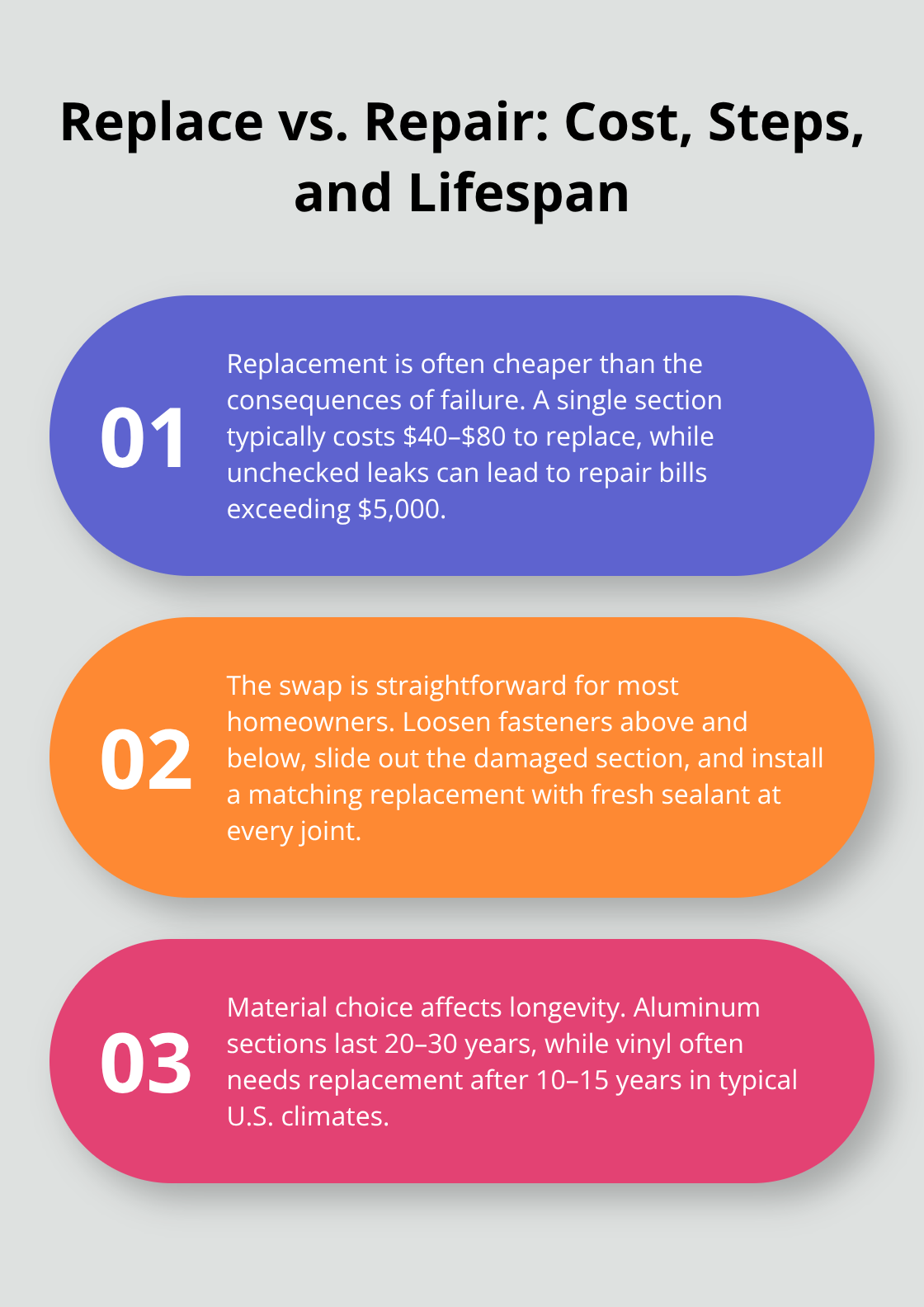
Downspout sections that show dents, cracks, or corrosion patterns cannot be reliably sealed and must be replaced rather than patched. A single damaged section costs 40 to 80 dollars to replace, while allowing it to fail leads to water damage repair bills exceeding 5,000 dollars in foundation or basement scenarios. Remove the damaged section by loosening fasteners above and below it, slide out the compromised pipe, and install a matching replacement with fresh sealant at all connection points. Aluminum sections last 20 to 30 years, but vinyl typically fails within 10 to 15 years, making material choice critical when replacing.
Copper downspouts outlast all other materials by decades but carry premium costs that only justify replacement in high-visibility areas or homes with significant water damage history. After installing replacement sections, flush the entire downspout system with a hose to verify water flows freely and no new leaks appear at fresh seams.
Get Professional Help for Complex Repairs
Desert Gutters provides professional repair services for Central Oregon homeowners facing downspout failures that exceed DIY capabilities, offering free estimates with dependable local expertise to restore your drainage system efficiently.
Final Thoughts
Downspout damage prevention tips work best when you implement them as an integrated system rather than isolated actions. A twice-yearly cleaning routine, protective barriers like gutter guards, and prompt repairs address the three primary threats your drainage system faces: debris accumulation, impact damage, and freeze-thaw cycles. Tightening brackets every three months and sealing small leaks immediately prevent water from infiltrating fascia boards and foundation soil where repair costs escalate rapidly.
A functioning drainage system protects far more than the gutters themselves-it directs water away from your foundation, preventing structural cracks, basement flooding, and mold growth that compromise home value and occupant health. When downspouts work correctly, water reaches safe discharge points at least four to six feet from your foundation, protecting landscaping from erosion and reducing wet spots that invite pest problems. Homes with well-maintained drainage systems experience fewer foundation repairs, less siding damage, and longer roof life because water no longer backs up under shingles or saturates exterior walls.
The investment in prevention pays dividends through avoided emergency repairs and extended component lifespan (aluminum downspouts last 20 to 30 years with proper maintenance, while vinyl systems typically function 10 to 15 years before replacement becomes necessary). If your property has mature trees, heavy seasonal precipitation, or a history of ice dams, professional assessment ensures your system matches your specific climate challenges. Contact Desert Gutters today to evaluate your downspout system and implement the protection strategies that keep your home safe from water damage year-round.