
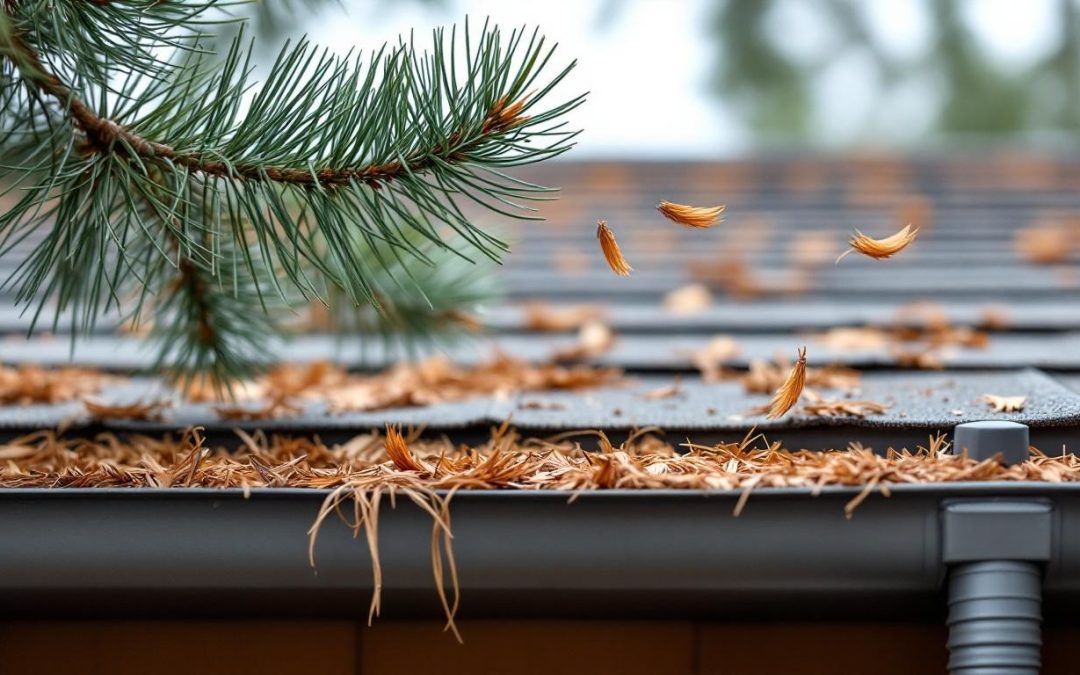
Central Oregon’s towering pines create a unique challenge for homeowners: pine needle shedding gutters that clog faster than traditional debris. When needles accumulate unchecked, they block water flow and trigger costly damage to your roof, fascia, and foundation.
The good news is that understanding why this happens-and knowing your prevention options-puts you in control. This guide walks you through the causes, consequences, and proven solutions to keep your gutters clear year-round.
Why Pine Needles Clog Gutters in Central Oregon
Seasonal Shedding Patterns in Central Oregon
Central Oregon’s evergreen forests shed needles year-round, but the problem intensifies dramatically during late summer through early winter when older needles turn brown and drop. White pines, the region’s dominant species, retain needles for approximately three years before they shed in autumn, meaning a single mature tree releases tens of thousands of needles annually. Unlike leaves that break down and wash away, pine needles possess a waxy cuticle that causes them to interlock into dense, fibrous mats inside your gutter channels. This Old House survey found that 31 percent of homeowners rate pine needles as their top debris problem, and Central Oregon homeowners face this challenge far more acutely than most regions. The needles do not simply pile up-they lock together and form a dam that completely blocks water flow, creating a clog that resists normal water pressure and rainfall runoff.

How Pine Needles Accumulate Faster Than Other Debris
Pine needles accumulate with remarkable speed because their physical structure makes them resistant to breakdown and water movement. Each needle interlocks with its neighbors, creating a mat so dense that water cannot penetrate or flush it away naturally. A single mature pine tree drops tens of thousands of needles each year, and when multiple trees surround your property, the volume overwhelms standard gutter capacity within weeks. The needles’ waxy coating prevents them from absorbing moisture and disintegrating like organic debris, so they remain intact and locked in place indefinitely. This structural persistence means that even moderate needle fall creates blockages that expand rapidly without intervention.
The High-Desert Climate’s Impact on Needle Buildup
Central Oregon’s high-desert climate amplifies needle accumulation in ways that standard maintenance cannot address. The region’s high-desert winds carry fine dust and needles that settle deep inside gutter channels, combined with intense summer heat and occasional heavy downpours, forcing needles deeper into gutters and compressing them into stubborn blockages. Dry conditions mean needles remain on your roof longer before they drop, concentrating seasonal shedding into shorter periods that overwhelm standard cleaning schedules. A twice-yearly cleaning routine, which works adequately in most climates, proves insufficient here-homeowners surrounded by pine trees need three to four cleanings annually to prevent overflow and water damage. The desert’s low humidity actually works against you because dry needles do not break down or shift easily; they stay locked in place until you physically remove them or flush them out with force. Without intervention, these mats expand into your downspouts, creating hidden blockages that cause water to back up even when gutters appear clear from ground level.
The combination of aggressive needle shedding, climate stress, and the needle’s physical properties makes Central Oregon homes uniquely vulnerable to gutter failure. Water that cannot drain properly begins to pool and seep into vulnerable areas of your roof and foundation. Understanding these accumulation patterns prepares you to recognize the damage that follows and the solutions that actually work in your climate.
What Damage Do Clogged Gutters Actually Cause
Roof and Fascia Damage from Water Pooling
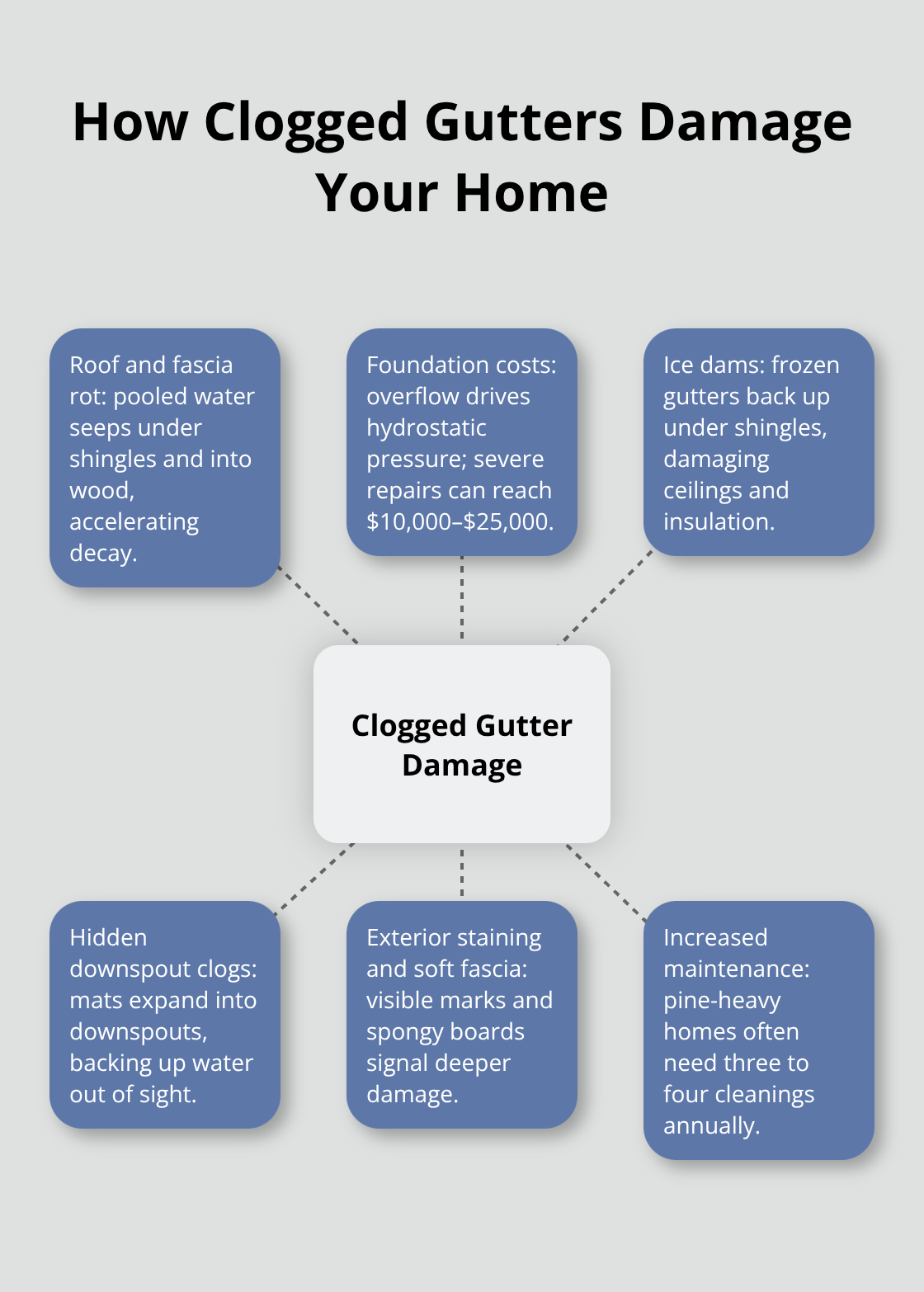
Clogged gutters transform from a minor annoyance into a serious structural threat when pine needles block water flow for weeks or months. Water that cannot drain properly backs up and pools along your roofline, seeping under shingles and into the wood structure beneath. Central Oregon’s intense summer heat and freeze-thaw cycles in winter accelerate this damage-water penetrates gaps, freezes, expands, and cracks the underlying decking and fascia boards. Once water reaches the wood framework, rot develops rapidly in the high-desert climate where temperature swings exceed 40 degrees between day and night.
Your fascia, the horizontal board connecting your gutters to the roofline, absorbs this water first and becomes soft and spongy within a single season of overflow. Professional repairs at this stage cost $500 to $2,000 per affected section because contractors must remove, dry, and replace the wood entirely. The damage spreads invisibly behind your gutters-staining appears on the exterior siding or soft spots emerge when you press the board, but the real destruction has already compromised your home’s structural envelope.
Foundation Damage and Basement Flooding
Foundation damage from improper drainage represents the costliest consequence of neglected gutters, with repair bills reaching $10,000 to $25,000 in severe cases. When gutters overflow, water cascades down the exterior walls and pools directly against your foundation perimeter, saturating the soil and creating hydrostatic pressure that forces moisture through foundation cracks and concrete joints. Central Oregon’s clay-heavy soils compound this problem-they absorb water slowly and hold it against your foundation for extended periods, especially in spring when snowmelt combines with clogged gutter overflow.
Basement flooding, mold growth in crawl spaces, and foundation settling follow within months of persistent water exposure. The damage accelerates during freeze-thaw cycles when water trapped in soil expands and contracts, shifting your foundation and creating new cracks that admit even more moisture.
Ice Dams and Winter Destruction
Ice dam formation during winter months adds another layer of destruction to Central Oregon homes. When gutters clog with pine needles and freeze, ice backs up under your shingles and creates a seal that traps snowmelt underneath. The water refreezes inside your attic space, causing ceiling damage, insulation deterioration, and moisture problems that persist long after spring thaw. This cycle repeats throughout winter, with each freeze-thaw event pushing water deeper into your home’s structure.
Central Oregon homeowners typically need three to four gutter cleanings annually to prevent these cascading failures, not the standard twice-yearly schedule recommended in milder climates. The intensity of needle shedding combined with winter weather patterns means that standard maintenance approaches leave your property vulnerable. Understanding what happens when you neglect this maintenance reveals why the right prevention strategy-whether through regular cleaning, professional service, or gutter protection-becomes essential to protecting your investment.
How to Stop Pine Needle Clogs Before They Damage Your Home
Cleaning Schedules vs. Guard Installation
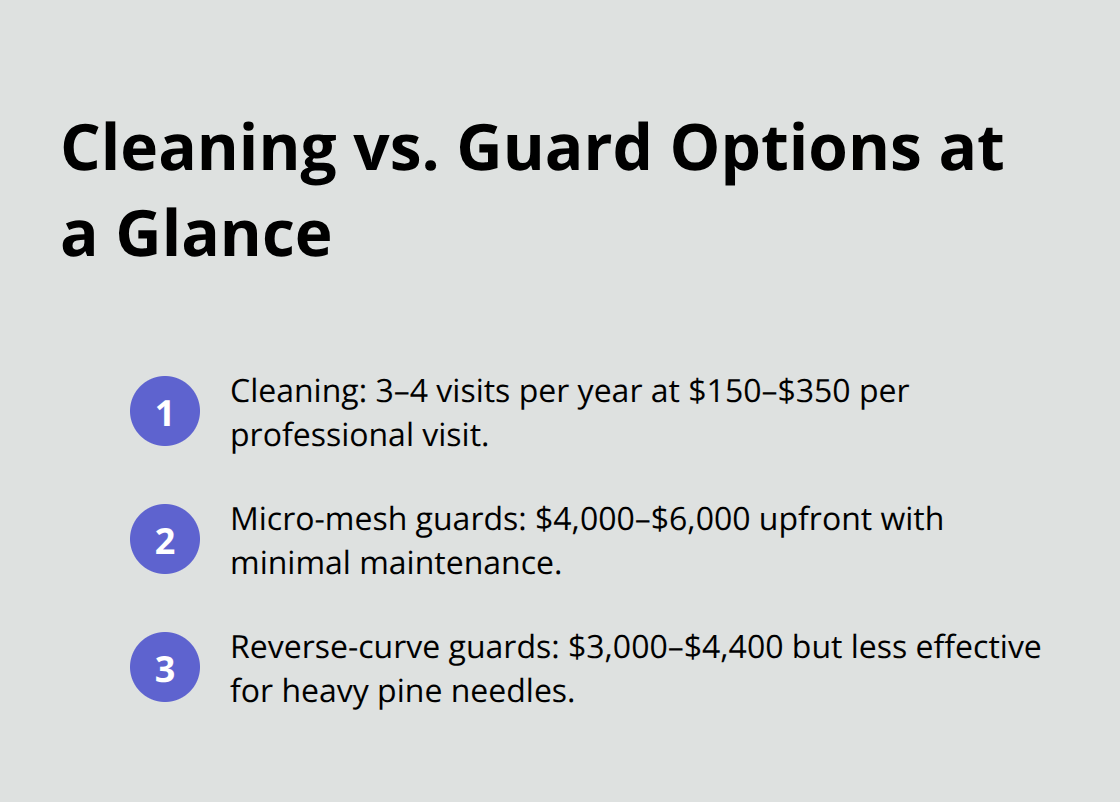
Central Oregon homeowners must choose between regular cleaning and professional-grade gutter guards, with each approach offering distinct trade-offs. Cleaning alone keeps gutters functional short-term but demands three to four visits annually for pine-heavy properties, costing $150 to $350 per professional visit. Micro-mesh gutter guards filter debris with holes as small as 30 to 50 microns while allowing water through, requiring minimal maintenance and delivering the strongest protection if you can afford the upfront investment of $4,000 to $6,000 for a typical home. Reverse-curve guards cost less at $3,000 to $4,400 but let needles bypass during heavy downpours, making them better suited for mixed tree types rather than pine-dominated properties.
The trap many Central Oregon homeowners fall into involves cheap foam or brush guards that cost $400 to $1,000 initially but clog within months and demand frequent professional cleanings. Over five years, these budget options ultimately cost thousands more than a quality system installed correctly from the start.
Why Professional Inspection Matters
Professional inspection reveals hidden damage before it becomes catastrophic, identifying soft fascia, foundation seepage, and downspout blockages that ground-level observation misses. Thorough seasonal assessments catch early warning signs like slight water staining or sagging sections, preventing the $10,000 to $25,000 foundation repairs that emerge when overflow goes unaddressed. For properties with mature pine trees, the most practical approach combines quarterly professional cleanings during peak shedding months with micro-mesh guards on high-risk sections, reducing annual cleaning frequency to one or two visits while virtually eliminating needle entry.
Trimming and Preventive Measures
Maintain at least 10 to 15 feet of clearance between tree branches and your roof line, a simple step that works immediately and costs far less than guard installation. This preventive measure reduces the volume of needles that reach your gutters before they accumulate into blockages. Strategic pruning also improves air circulation around your home and reduces fire hazard risk during dry periods.
Selecting the Right Solution for Your Property
No single solution works everywhere in Central Oregon-your specific combination of tree proximity, roof pitch, local weather patterns, and property size determines whether aggressive cleaning, guard installation, professional service, or a hybrid approach delivers the best protection and value for your home. Properties surrounded by dense pine forests benefit most from micro-mesh guards paired with seasonal professional maintenance, while homes with moderate tree coverage may find reverse-curve systems adequate. The most cost-effective strategy often involves combining multiple approaches: trimming branches to reduce input, installing guards on vulnerable sections, and scheduling professional cleanings during peak shedding months rather than relying on any single method alone.
Final Thoughts
Pine needle shedding gutters demand action before water damage transforms a manageable maintenance task into a costly structural crisis. The combination of aggressive seasonal needle drop, high-desert climate stress, and the needle’s physical properties creates accumulation patterns that standard approaches cannot fully address. Water pooling on your roof, foundation seepage, and ice dam formation during winter months demonstrate why neglecting this issue costs thousands in repairs-but proactive management prevents all of these problems.
Quality solutions transform pine needle shedding from a crisis into a predictable maintenance cycle. Regular cleaning schedules, professional-grade gutter guards, strategic tree trimming, and seasonal inspections work together to keep water flowing freely and protect your home’s structural integrity. The upfront investment in these approaches pays dividends through avoided foundation repairs, prevented roof damage, and reduced stress about seasonal weather patterns.
Contact Desert Gutters today for a professional evaluation tailored to your Central Oregon property. Our team assesses your specific situation and recommends the combination of cleaning, guard installation, and trimming that actually works in your region. Protect your investment from pine needle damage before the next shedding season arrives.
Trackbacks/Pingbacks