
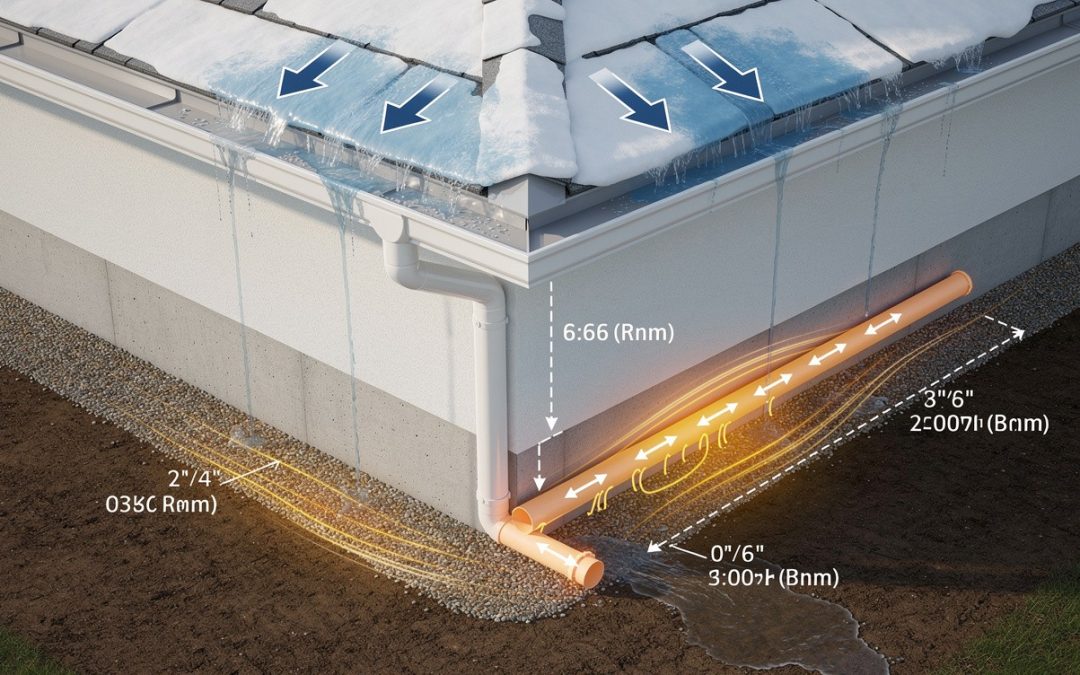
When spring arrives in high-desert regions, snowmelt and heavy runoff can overwhelm your home’s drainage system. Water pooling near your foundation creates serious risks, from structural damage to landscape erosion.
Understanding downspout extension requirements is essential for protecting your property. This guide covers everything you need to know about sizing, installing, and maintaining extensions that handle seasonal water volume effectively.
What Downspout Extensions Actually Do
Downspout extensions carry water away from your foundation after it leaves your gutter system. Rather than allowing water to dump directly at the base of your house, extensions channel roof runoff outward-typically four to ten feet depending on soil type and climate. In high-desert snowmelt regions, this distance matters enormously because spring melt produces concentrated water volume over short periods, and that water must clear your foundation’s hydrostatic-pressure zone entirely. Extensions come in several forms: hinged flip-up models that extend two to six feet, corrugated pipes reaching ten feet or more, rigid aluminum or PVC sections spanning four to six feet, and buried underground systems that move water twenty to thirty feet toward natural drainage points. Above-ground extensions cost far less and install quickly, but underground drainage proves most effective for serious snowmelt conditions because it moves water completely away from your property and your neighbors’ properties. The choice depends on your lot layout, soil composition, and local regulations-which increasingly require that downspouts disconnect from sanitary sewers and discharge onto ground surface without crossing adjoining property lines.
Soil Type Determines Your Minimum Distance
Clay soils demand aggressive drainage planning. When saturated, clay near your foundation can exert approximately five thousand psi of pressure against your walls, forcing moisture through tiny cracks and into basements. This means clay-heavy properties in Central Oregon require eight to ten feet of extension minimum, and underground drainage becomes the prudent choice for serious protection. Loamy soils perform better at six to eight feet, while sandy or gravelly soils allow shorter four to six foot extensions since water infiltrates faster. Measure distance from the outside edge of your foundation wall, not from your gutter or siding, to ensure water truly clears the pressure zone. If your yard slopes toward your house, add extension length or switch to underground drainage because gravity works against you.
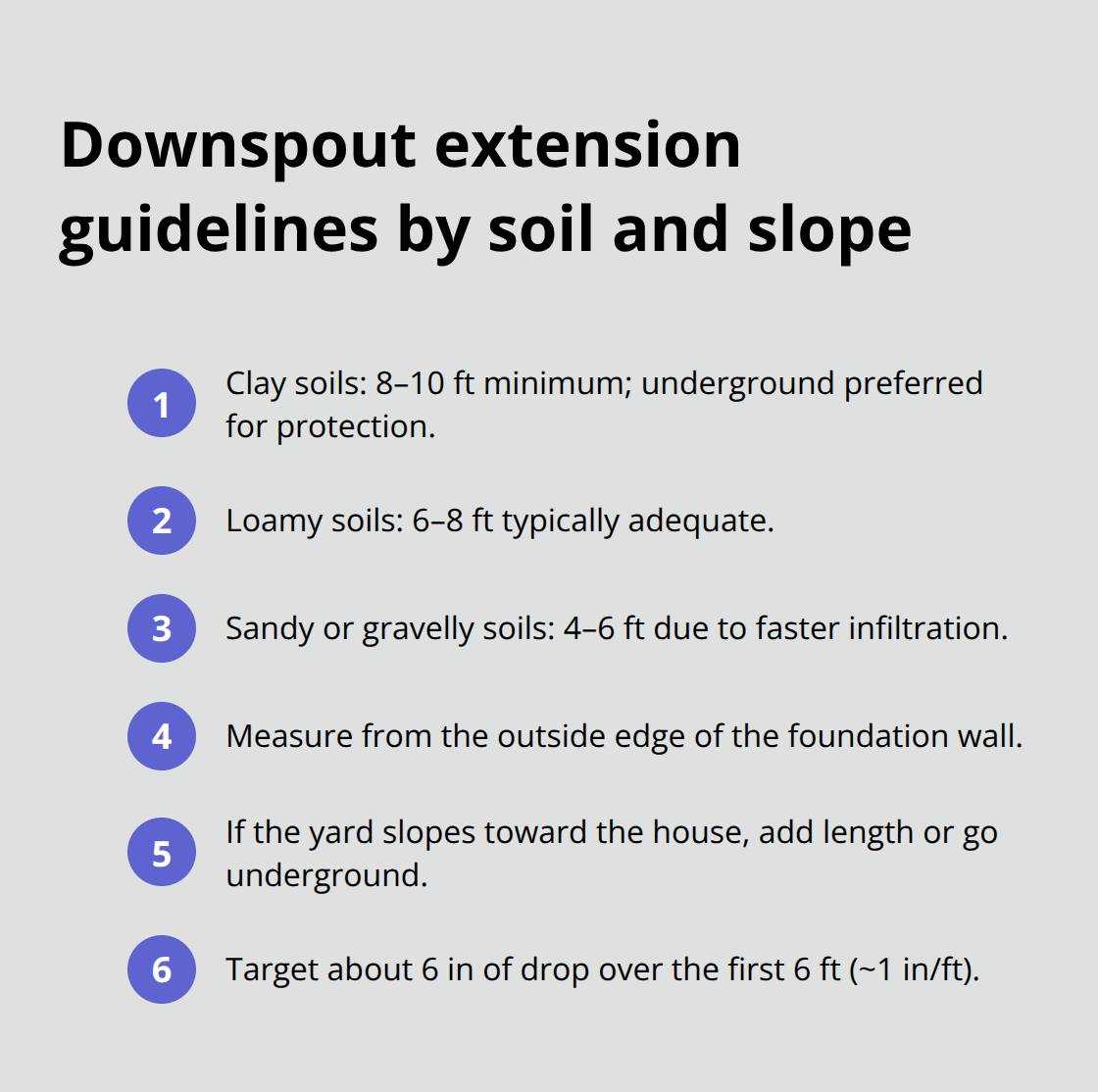
Try for approximately six inches of elevation drop over the first six feet away from your foundation, roughly one inch per foot of horizontal distance.
Local Codes Shape Your Installation
Bellwood’s Code of Ordinances and similar municipal regulations across the region prohibit downspouts from discharging into sanitary sewers. Water must flow onto ground surface, never within twelve inches of your property line, and never toward walkways where it creates ice hazards or obstructs pedestrian passage. Many jurisdictions require that rear and side downspouts pipe to front downspouts, which then discharge into street storm-sewer intakes. Noncompliance triggers penalties and forced remediation at your expense. Before you trench for underground drainage, call 811 to locate buried utilities and prevent accidental damage. Professional installation ensures compliance while protecting your home and community from water damage, foundation problems, and the pollutant loads that snowmelt carries-road salt, metals, and nutrients that accumulate in winter snowpack and release rapidly during spring thaw.
What Happens Next: Sizing Your Extensions
Your soil type and local codes establish the foundation for your extension plan, but the actual sizing process requires careful measurement of your property’s unique conditions. The next chapter walks you through determining the right extension length for your specific lot, evaluating whether buried or above-ground options suit your landscape, and understanding the installation methods that deliver reliable performance through multiple snowmelt seasons.
Why Spring Snowmelt Overwhelms High-Desert Drainage
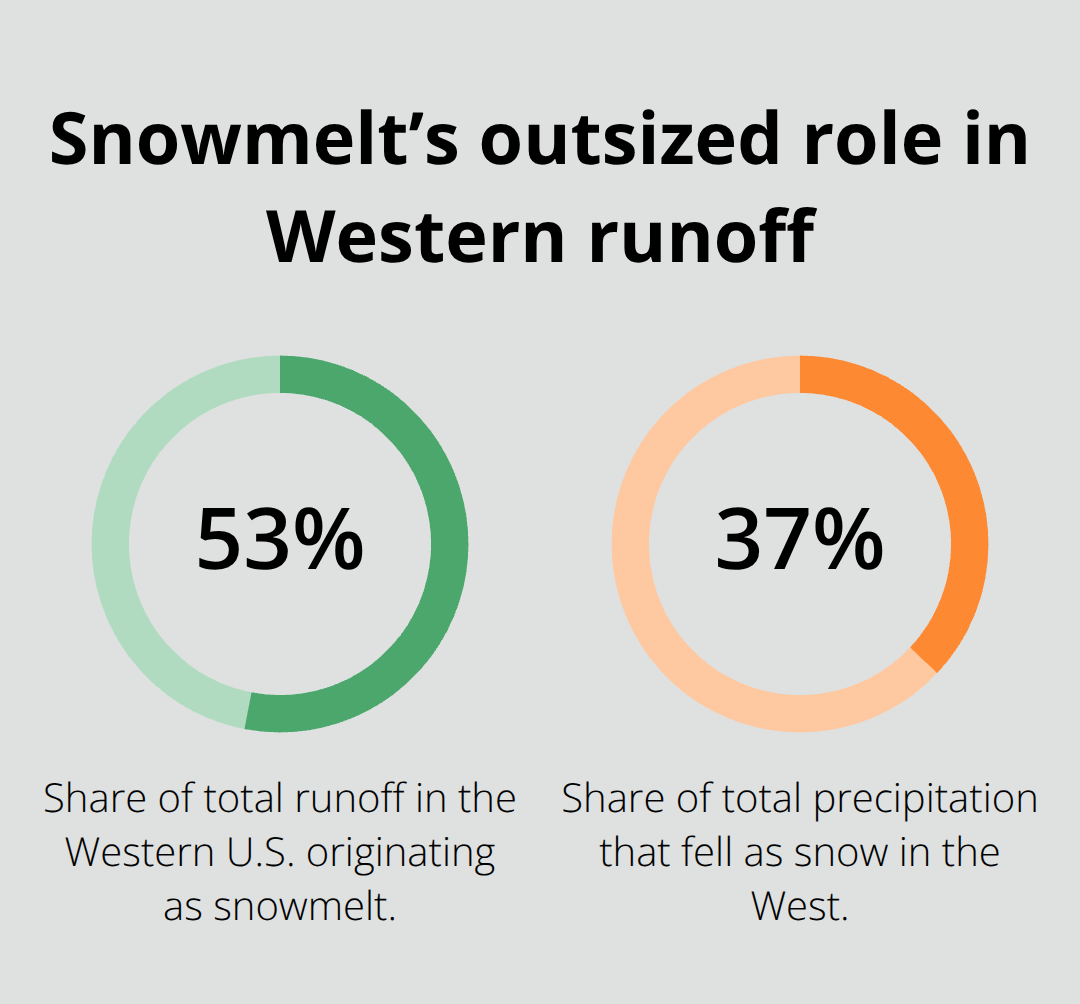
53% of total runoff in the West originated as snowmelt, even though only 37% of the precipitation fell as snow.
A single inch of snowmelt generates roughly the same runoff as a heavy rainstorm, but unlike rain that falls gradually over hours, snowmelt concentrates discharge into days or weeks. The Minnesota Stormwater Manual confirms that spring melt peaks often account for the largest portion of annual runoff volume, and in regions with freeze-thaw cycles, that peak arrives exactly when your foundation is most vulnerable. A typical high-desert roof collects 1,000 to 2,000 gallons of water per inch of melt, and with Central Oregon snowpack averaging 200 to 400 inches of accumulated snow depending on elevation, your drainage system faces potential discharge rates of 200,000 to 400,000 gallons during a rapid melt cycle. Without adequate downspout extensions, this water collects at your foundation perimeter where it infiltrates soil, saturates clay layers, and forces hydrostatic pressure against your basement walls. High-desert soil remains partially frozen when melt begins, which prevents water from infiltrating naturally and forces it to pool near your foundation instead. If your lot slopes toward your house-common in subdivisions carved from native terrain-gravity compounds the problem and directs runoff directly toward your foundation rather than away from it.
When Pooling Water Becomes Foundation Damage
Water pooling within three feet of your foundation wall creates immediate structural risk. Saturation triggers foundation cracks within months, not years, because clay soils expand dramatically when wet and exert pressure against concrete or block walls. Basements flood not from dramatic breaches but from slow seepage through micro-cracks that widen under sustained hydrostatic pressure. Mold colonies establish themselves within 48 hours of moisture presence and spread through insulation and framing where they remain dormant until warm weather accelerates growth. Efflorescence-the white chalky deposits on basement walls-signals that water actively migrates through your foundation, carrying salts and minerals that accumulate as water evaporates. This process weakens concrete over time and creates permanent staining that no amount of cleaning removes. Peeling paint, soft drywall, and structural decay follow. Snowmelt carries concentrated pollutants including road salt, metals, and accumulated nutrients that intensify water’s corrosive effect on foundation materials. Your property’s proximity to roads matters significantly: homes within 25 feet of pavement receive higher pollutant loads in meltwater runoff, which accelerates foundation deterioration beyond normal freeze-thaw stress.
Planning Extensions for Peak Discharge Rates
High-desert snowmelt timing demands extensions sized for peak discharge, not average conditions. Most springs see rapid melt over 10 to 14 days when daytime temperatures exceed 50 degrees Fahrenheit while nights still freeze. This freeze-thaw cycling creates a first flush of concentrated meltwater containing the winter’s accumulated pollutants and salts, followed by sustained higher flows as deeper snow layers melt. Extensions must handle this peak period without overflow or backup into gutters.
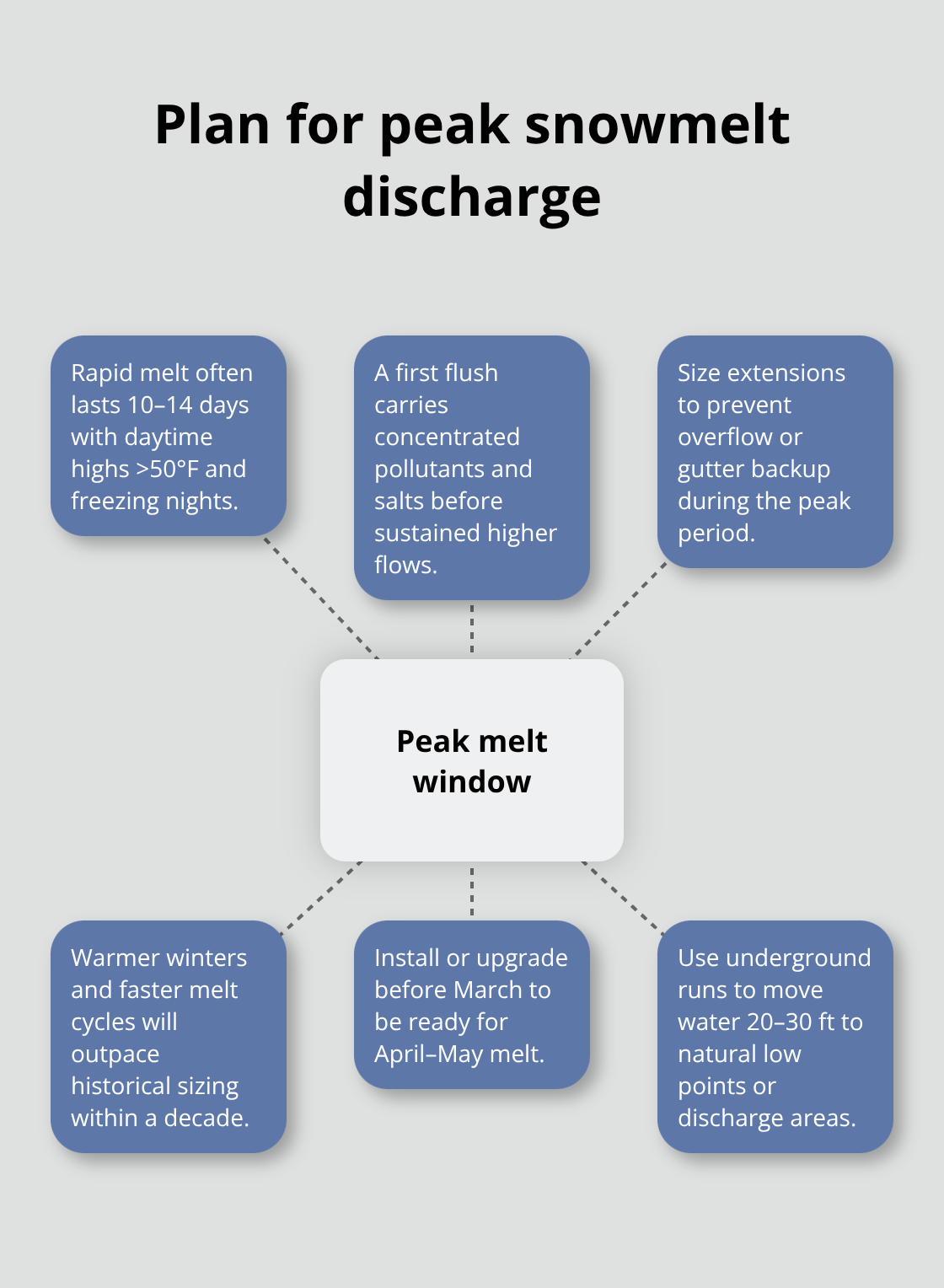
Climate projections for the region indicate warmer winters and faster melt cycles ahead, which means extensions sized for historical conditions will prove inadequate within a decade. Try for eight to ten feet of extension minimum if your soil is clay-dominant, which describes most Central Oregon lots. If your yard slopes toward your home, add underground drainage rather than relying on extended above-ground systems that create visible water discharge points. Underground systems move water 20 to 30 feet from your foundation toward natural low points or designated discharge areas, which eliminates pooling entirely. Install or upgrade your system before March to ensure everything functions during April and May melt. Late spring installation leaves you vulnerable to the season’s heaviest discharge periods and forces emergency repairs when contractors are fully booked.
The next chapter walks you through the practical steps of determining the right extension length for your specific lot, evaluating whether buried or above-ground options suit your landscape, and understanding the installation methods that deliver reliable performance through multiple snowmelt seasons.
Sizing Extensions to Your Soil and Slope
Start with a tape measure and a basic understanding of your lot’s soil composition. Clay-dominant properties in Central Oregon require eight to ten feet of extension minimum, measured from the outside edge of your foundation wall to the discharge point. Loamy soils perform adequately at six to eight feet, while sandy or gravelly soils allow four to six feet since water infiltrates faster and doesn’t accumulate near your foundation. Measure horizontally from the foundation, not diagonally or along the ground surface, because water flows outward, not downward. If you don’t know your soil type, dig a hole twelve inches deep near your downspout and observe how water drains after a heavy rain. Clay holds water and drains slowly over hours; loam drains within minutes; sand and gravel drain almost immediately. Next, evaluate your yard’s slope by standing at your foundation and looking outward. If the ground slopes toward your house, you need either ten-foot extensions or underground drainage because gravity works against you. Try for approximately 1/2 inch per foot over a minimum distance of 10 feet away from your foundation, which creates natural outflow without pooling. If your lot slopes away from the house naturally, you can reduce extension length two feet and still achieve adequate drainage. Measure your roof’s footprint and calculate how many downspouts service each section. A typical 1,500-square-foot roof generates 1,000 to 2,000 gallons per inch of snowmelt, so if four downspouts share the load, each handles 250 to 500 gallons during peak melt. This volume matters when you choose between above-ground and underground systems because undersized extensions create overflow and backup.
Underground Systems Move Water Away from Your Foundation
Underground systems move water twenty to thirty feet from your foundation toward natural drainage points or designated discharge areas, which eliminates pooling entirely and complies with local codes that restrict downspout discharge within twelve inches of property lines. Dig a trench six inches wide and slope it consistently at one-eighth to one-quarter inch per foot (meaning a thirty-foot run drops three to eight inches total). Use non-perforated Schedule 40 PVC or ABS pipe in three to four inch diameter sizes, which prevents root intrusion and handles high-volume discharge. Start connections at the downspout end and avoid gluing that portion initially so you can disconnect later if needed for maintenance. Extend the downspout outward about four feet above ground before joining pipes, which redirects initial melt away from your foundation and reduces saturation of soil immediately adjacent to your walls.
Test and Install Your Underground System Properly
Test-fit all piping before gluing by laying pieces in the trench to confirm fit and slope, then verify slope with a level or measurements. After assembly, run water through the downspouts to confirm drainage before backfilling. Install a cleanout every forty feet along the line and add a pop-up emitter or catch basin at the discharge end so you can inspect flow during spring melt. Call 811 before trenching to locate buried utilities and prevent accidental damage. Professional installation typically takes one to two days and costs significantly less than foundation repairs caused by pooling water.
Above-Ground Extensions Work for Certain Conditions
Above-ground extensions work adequately for sandy soils or properties that slope away from the house, but they create visible discharge points and require seasonal adjustment as snow accumulates. Hinged flip-up models extend two to six feet and fold up when not needed, while corrugated pipes reach ten feet or more but require support structures. For serious snowmelt protection in clay soils, underground drainage proves worth the investment because it handles peak discharge rates without overflow and protects your foundation for decades.
Final Thoughts
Protecting your high-desert home from snowmelt damage requires understanding downspout extension requirements specific to your soil type, yard slope, and local codes. Clay-dominant properties demand eight to ten feet of extension or underground drainage to prevent foundation saturation and the costly damage that follows. Sandy soils perform adequately at shorter distances, but slope matters equally: if your lot tilts toward your house, no above-ground extension reaches far enough to prevent pooling.
Underground systems eliminate this problem entirely by moving water twenty to thirty feet away from your foundation toward natural discharge points, which complies with municipal regulations and protects both your property and your neighbors’ properties from water damage and ice hazards. Spring snowmelt arrives predictably in April and May, and extensions installed after March face the season’s heaviest discharge rates when contractors are fully booked and emergency repairs cost substantially more than planned upgrades. Before you begin trenching, call 811 to locate buried utilities and verify local codes regarding discharge points and property-line restrictions.
A local gutter specialist can evaluate your soil composition, measure your yard’s slope, calculate your roof’s peak discharge volume, and recommend whether above-ground or underground extensions suit your specific conditions. Professional installation typically completes within one to two days and costs far less than foundation repairs, basement flooding, mold remediation, or structural decay caused by sustained water pooling. Schedule a site evaluation before winter ends to confirm your extension length and system type, then complete installation before spring melt begins.