
Water damage around your home’s foundation is one of the costliest problems homeowners face. Poor downspout drainage allows rainwater to accumulate near your foundation walls, leading to erosion, basement flooding, and structural damage.
A proper downspout rainwater routing plan directs water safely away from your home’s foundation and landscaping. This guide walks you through proven solutions, maintenance strategies, and expert tips to protect your property for years to come.
What Happens When Downspouts Don’t Work
Water Penetration and Foundation Damage
Downspout failure creates a cascade of expensive problems that start small but escalate quickly. When water discharges directly at your foundation or pools nearby, it penetrates the soil surrounding your home’s base, increasing hydrostatic pressure against basement walls and creating pathways for moisture intrusion. In high-desert climates like Central Oregon, this risk intensifies during spring snowmelt and intense storm seasons, when sudden volume surges overwhelm inadequate drainage systems.
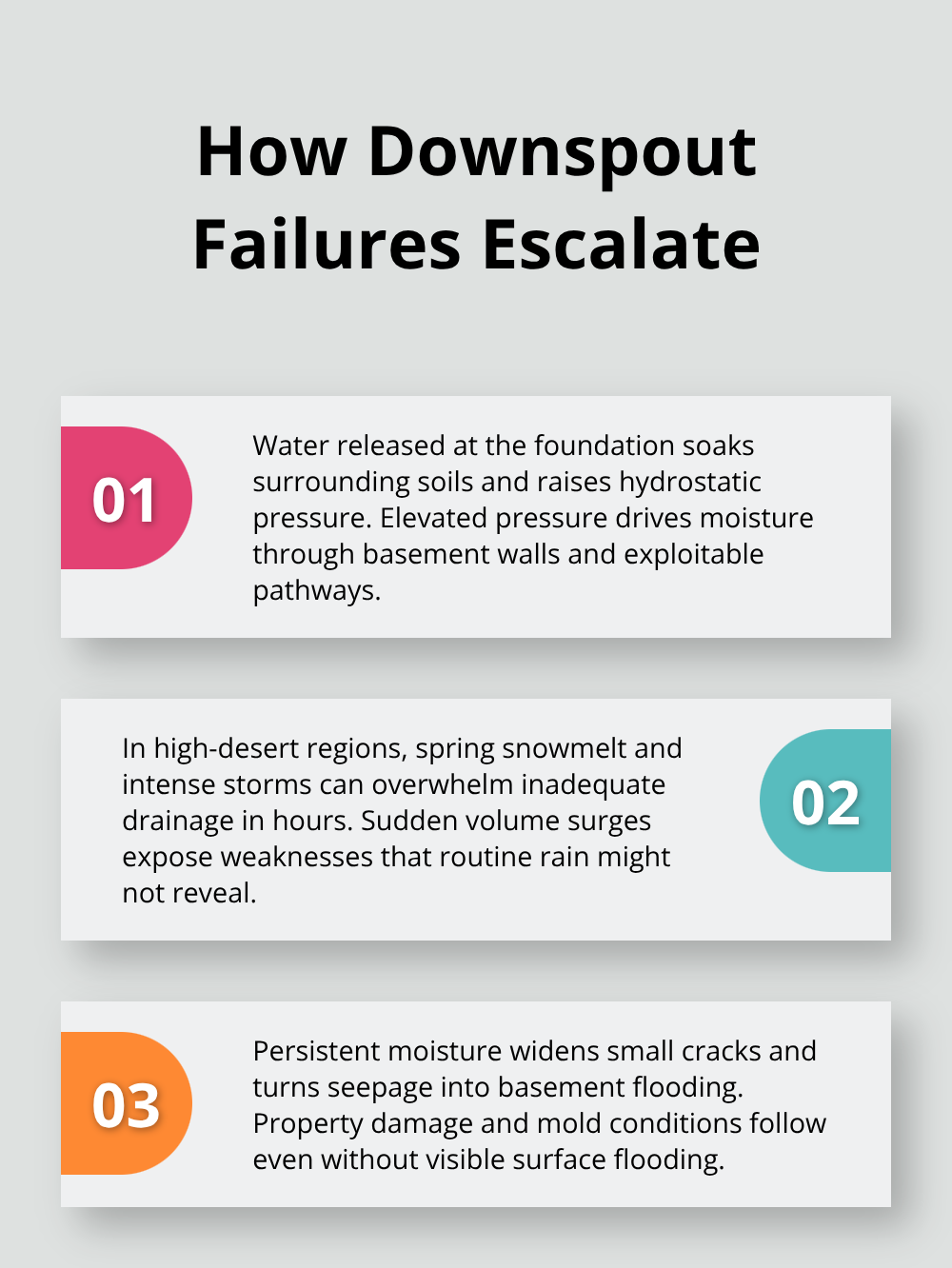
The foundation itself cracks under sustained moisture exposure, and even minor seepage compounds into serious basement flooding that damages personal property and creates mold conditions.
Visible Landscape Deterioration
Soil erosion around the foundation becomes visible within weeks-bare spots appear where mulch washes away, settling cracks concrete patios, and gullies form along the perimeter where water concentrates. Landscape damage extends beyond aesthetics; compromised soil stability affects the structural integrity of decks, patios, and retaining walls built near affected areas. The real cost emerges when foundation repairs become necessary.
The Danger of Standing Water
Standing water near foundation walls poses the most dangerous condition because it refuses to drain naturally in compacted soils. Even when gutters function correctly and roof pitch appears adequate, water still pools if downspouts terminate too close to the home or if landscape grading slopes toward the foundation rather than away from it. Basement moisture problems frequently start this way-homeowners don’t realize their downspout discharge location creates a persistent wet zone directly beneath their living space.
How Seepage Damages Your Home
The water doesn’t need to flood visibly to cause damage; steady moisture seepage through basement walls leads to efflorescence, peeling paint, rust on metal items, and the musty smell that signals active mold growth. In regions with freeze-thaw cycles, this moisture expands seasonally, widening existing cracks and accelerating structural deterioration. Preventing water concentration near the foundation requires both proper downspout extension and careful attention to how water actually moves through your specific soil composition and landscape.
Understanding these failure patterns helps you recognize early warning signs before serious damage occurs. The next section explores the proven solutions that stop water before it reaches your foundation.
Stop Water Before It Reaches Your Foundation
Extend Downspouts Away From Your Foundation
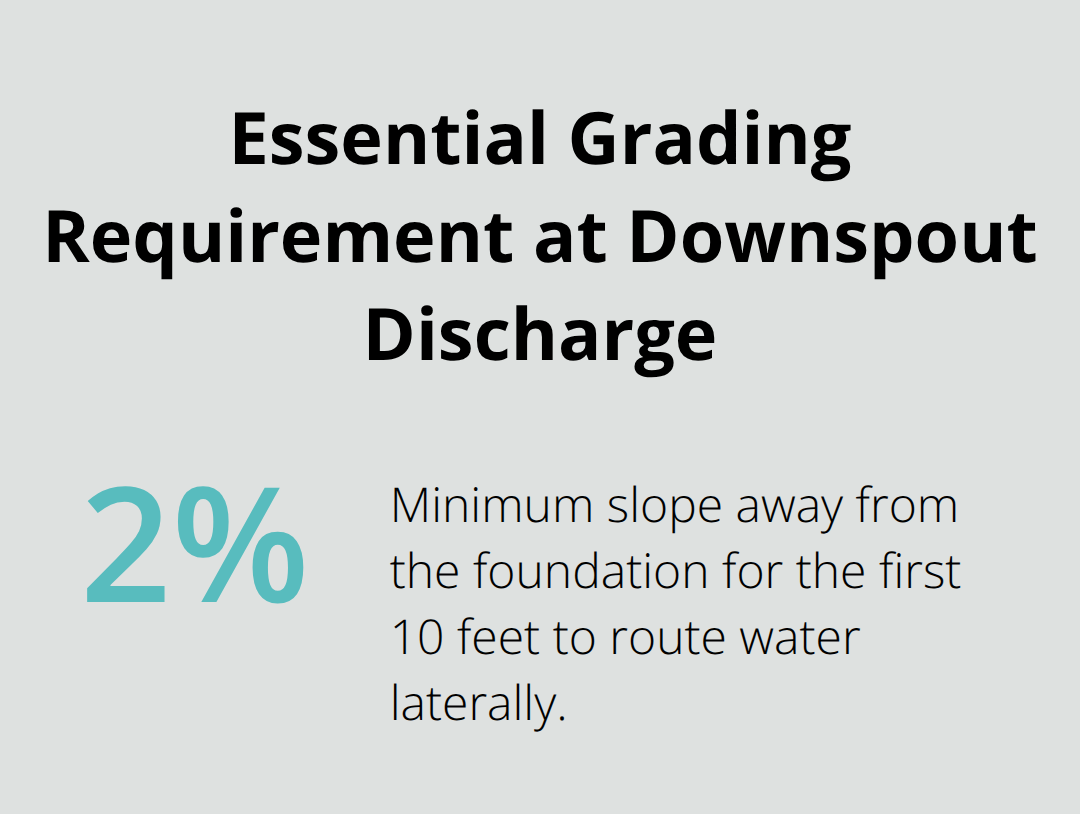
The most effective downspout routing strategies work with gravity and existing landscape features rather than fighting them. You must extend downspouts at least 6 feet away from your foundation wall as a first critical step, though many homeowners discover this distance proves insufficient in compacted soils or during heavy precipitation events. A 4-inch downspout discharges roughly 600 gallons of water per hour during moderate rainfall, which means even a 6-foot extension can create a wet zone if the terrain slopes back toward your home or if underlying soil cannot absorb the volume. The solution involves combining extension distance with proper grading-the ground must slope away from your foundation at least 2 percent grade for the first 10 feet, directing water laterally rather than allowing it to percolate downward into your foundation zone.
Route Water Under Decks and Structures
For decks or structures that prevent standard downspout extensions, you can route the downspout under the deck using rigid or flexible piping that terminates at gravel or landscaped drainage areas. This approach requires careful slope calculation to prevent standing water in buried sections. The piping must maintain consistent downward pitch toward the discharge point, and you should inspect the system annually to ensure no settling has created low spots where water collects.
Install Underground Drainage Systems
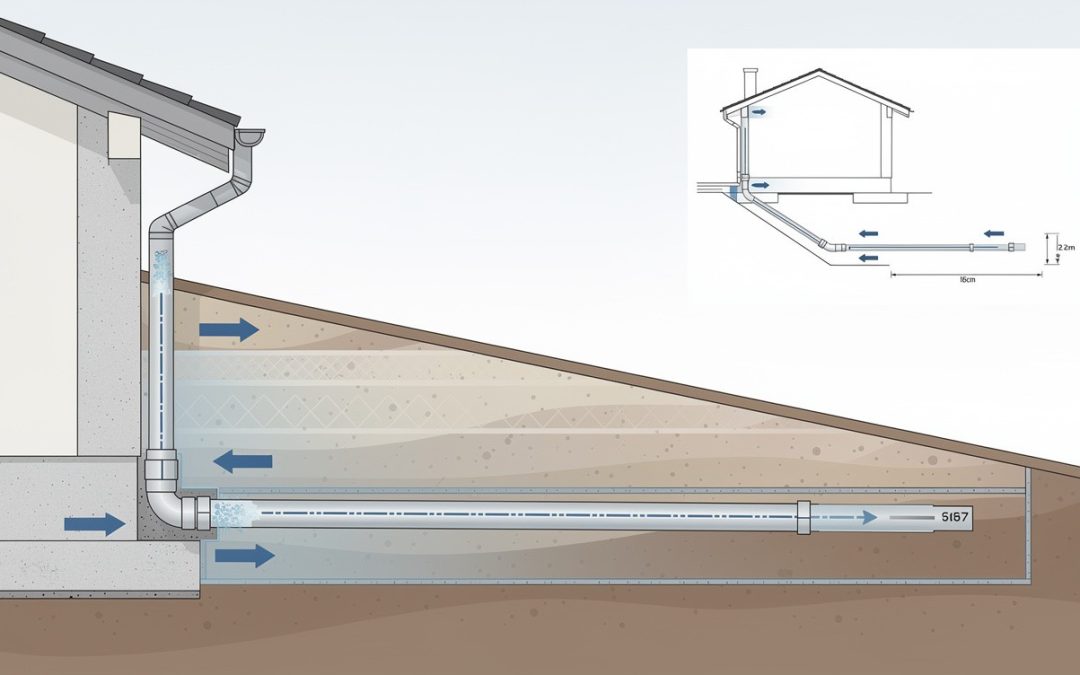
Underground drainage systems eliminate the visual problem of exposed downspout extensions while providing superior water management for serious moisture conditions. A typical buried system combines a catch basin near the gutter discharge point with 4-inch perforated PVC pipe running toward a pop-up emitter or daylight discharge point in your yard. This approach works particularly well in compacted volcanic soils where surface water refuses to drain naturally, as the perforated pipe allows water to disperse laterally through the soil column rather than concentrating at a single discharge point. Professional installation typically costs between $3,500 and $5,000 depending on trench length and soil conditions.
Capture and Absorb Water With Barrels and Permeable Surfaces
Rain barrels capture first-flush water for landscape irrigation, reducing the volume entering your drainage system during moderate storms. You must provide overflow provisions during heavy precipitation-a standard 55-gallon barrel fills in roughly 15 minutes during intense rainfall. Permeable surfaces like gravel, mulch, or permeable pavers in your discharge zone dramatically improve infiltration rates compared to compacted soil or concrete, essentially creating a mini-drainage field that absorbs water rather than channeling it further away from your foundation.
These routing solutions address the immediate water discharge problem, but long-term protection requires attention to how seasonal changes and debris affect your entire system. The next section explores maintenance strategies that keep your downspout plan working effectively year-round.
Keep Your Drainage System Working Year-Round
Clear Gutters Twice Yearly to Prevent Blockages
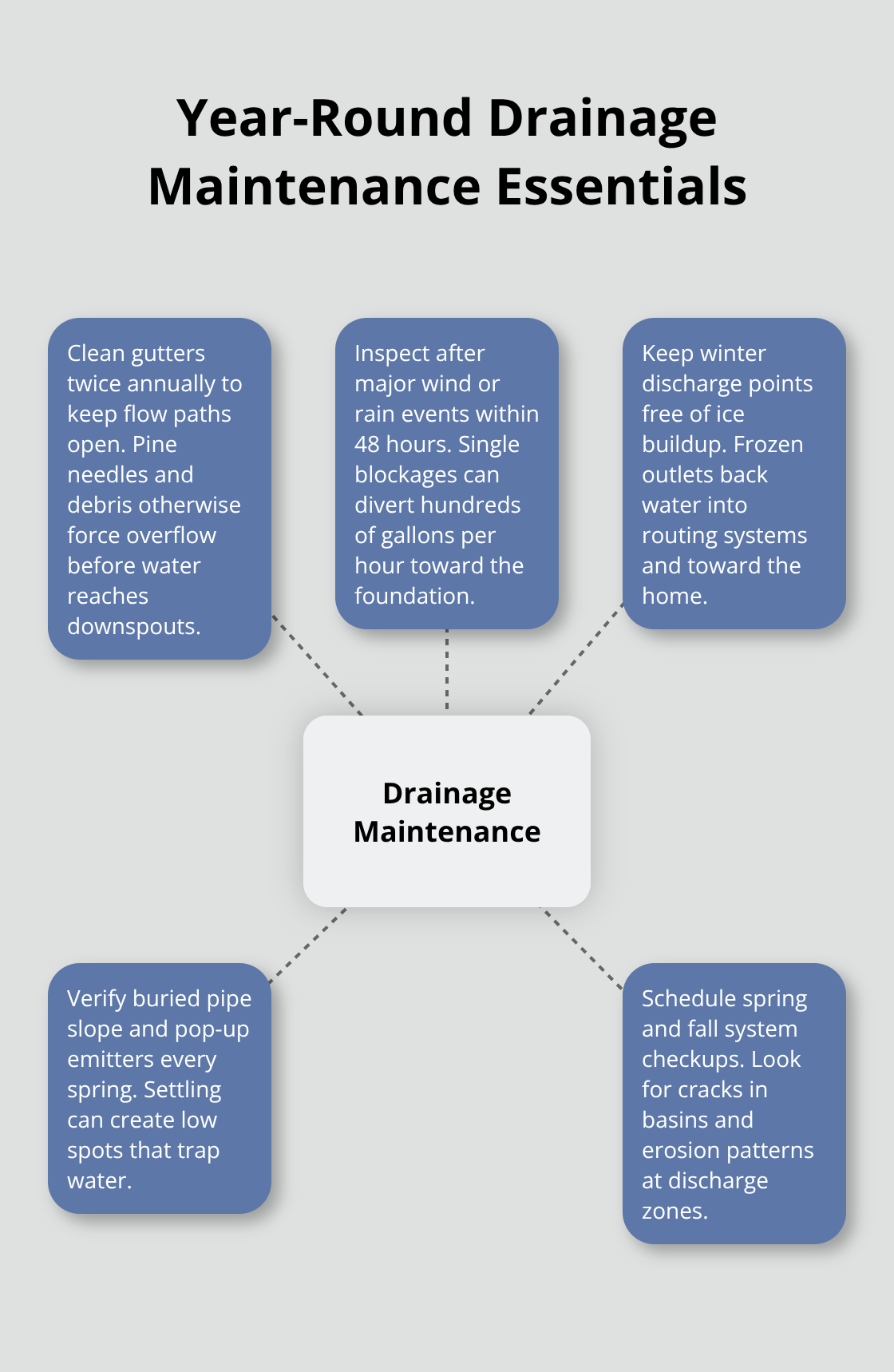
Your downspout routing plan only functions effectively when gutters remain clear and seasonal challenges don’t overwhelm the system. Pine needles, debris, and seasonal snowmelt create specific maintenance demands that most homeowners underestimate until water starts backing up during critical periods. In Central Oregon and similar high-desert regions, gutter cleaning becomes essential twice yearly because pine needle accumulation blocks water flow before it even reaches your downspouts, forcing overflow that defeats your entire routing strategy. A clogged gutter system renders even the best underground drainage installation useless since water never reaches the pipes you paid to install. Spring cleaning after winter debris settles and fall cleaning before heavy precipitation seasons arrive protect your system most effectively, with additional inspections after severe windstorms that dump branches and needles rapidly. During heavy rainfall events, a single debris blockage can redirect hundreds of gallons per hour away from your downspout system and directly onto your foundation, so inspect gutters within 48 hours after storms if your area experiences sudden downpours.
Address Ice Dams and Winter Discharge Points
Ice dams form when heat from inside the house warms the roof enough to melt snow, which then runs down to the colder eaves and refreezes, but this same ice buildup can also block downspout discharge points entirely, backing water into your foundation routing system. Attic insulation directly influences ice dam formation since inadequate insulation allows excessive heat loss that melts snow unevenly across the roof. If your downspout system discharges into gravel or landscape areas during winter, frozen discharge points create backup conditions that push water toward your foundation rather than away from it. Inspect downspout discharge areas monthly during freeze-thaw cycles to ensure water can exit freely rather than accumulating in ice formations.
Monitor Spring Snowmelt and Seasonal Volume Surges
Spring snowmelt presents the highest volume challenge of the entire year, with sudden temperature swings pushing enormous water quantities through your system within hours. Verify that all buried piping maintains proper slope and that pop-up emitters sit in areas where frozen ground won’t prevent water discharge. Annual damage inspections should occur in early spring after snowmelt and again in fall before winter arrives, looking specifically for settling that has disrupted the slope in buried sections, cracks in catch basins, and erosion patterns around discharge points that indicate water concentration rather than dispersal.
Final Thoughts
A proper downspout rainwater routing plan protects your foundation from the costliest water damage problems homeowners face. The strategies in this guide-extending downspouts away from your foundation, installing underground drainage systems, and maintaining your system year-round-work together to redirect water safely and keep moisture out of your basement. Each component matters: gutters must stay clear, grading must slope away from your home, and discharge points must remain functional through seasonal changes.
Your specific situation depends on local soil conditions, climate patterns, and existing landscape features that only a professional assessment can fully evaluate. Central Oregon’s volcanic soils drain differently than clay-heavy regions, and freeze-thaw cycles create unique challenges that require tailored solutions (a qualified drainage contractor can measure your roof area, calculate expected water volume, and assess your soil’s infiltration capacity). Building permits and local codes also vary significantly by region, and professional installers understand these requirements while homeowners often overlook them.
The investment in proper water management now prevents foundation repairs that cost tens of thousands of dollars later. Start with a consultation from a local drainage specialist who understands your region’s specific challenges and can design a downspout rainwater routing plan tailored to your property. Your foundation’s long-term stability depends on getting water away from it, and that protection begins with professional guidance in your unique environment.