
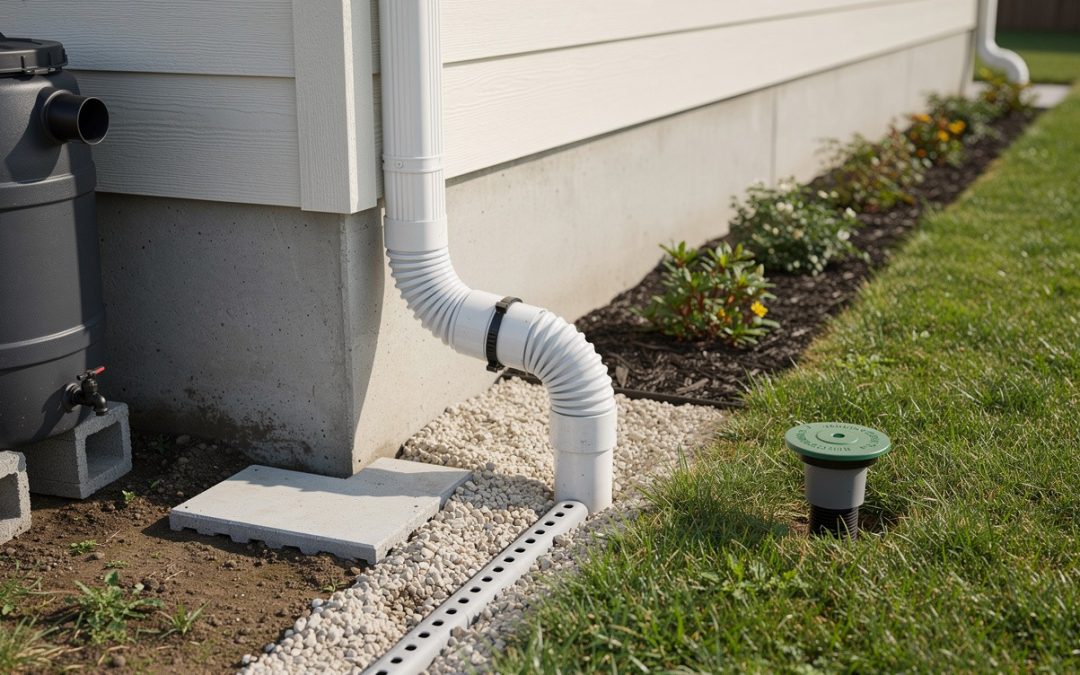
Most homeowners think a standard downspout extension is their only option for managing water runoff. The truth is, downspout extension alternatives exist that work better for Central Oregon’s unique climate and soil conditions.
At Desert Gutters, we’ve seen how the right drainage solution protects foundations and prevents costly water damage. This guide walks you through the best options available for your property.
Underground Drainage Systems
Underground drainage pipes move water far from your foundation through buried channels that slope away from the house. When properly installed, these systems use 4-inch smooth-wall PVC pipe (SDR-35 or triple-wall construction) to transport roof runoff efficiently and prevent silt buildup. The slope matters tremendously-even small grades work if you maintain them consistently. Most systems terminate in a dry well after 10 to 15 feet, which typically measures 3 to 4 feet wide depending on your soil type and roof size.
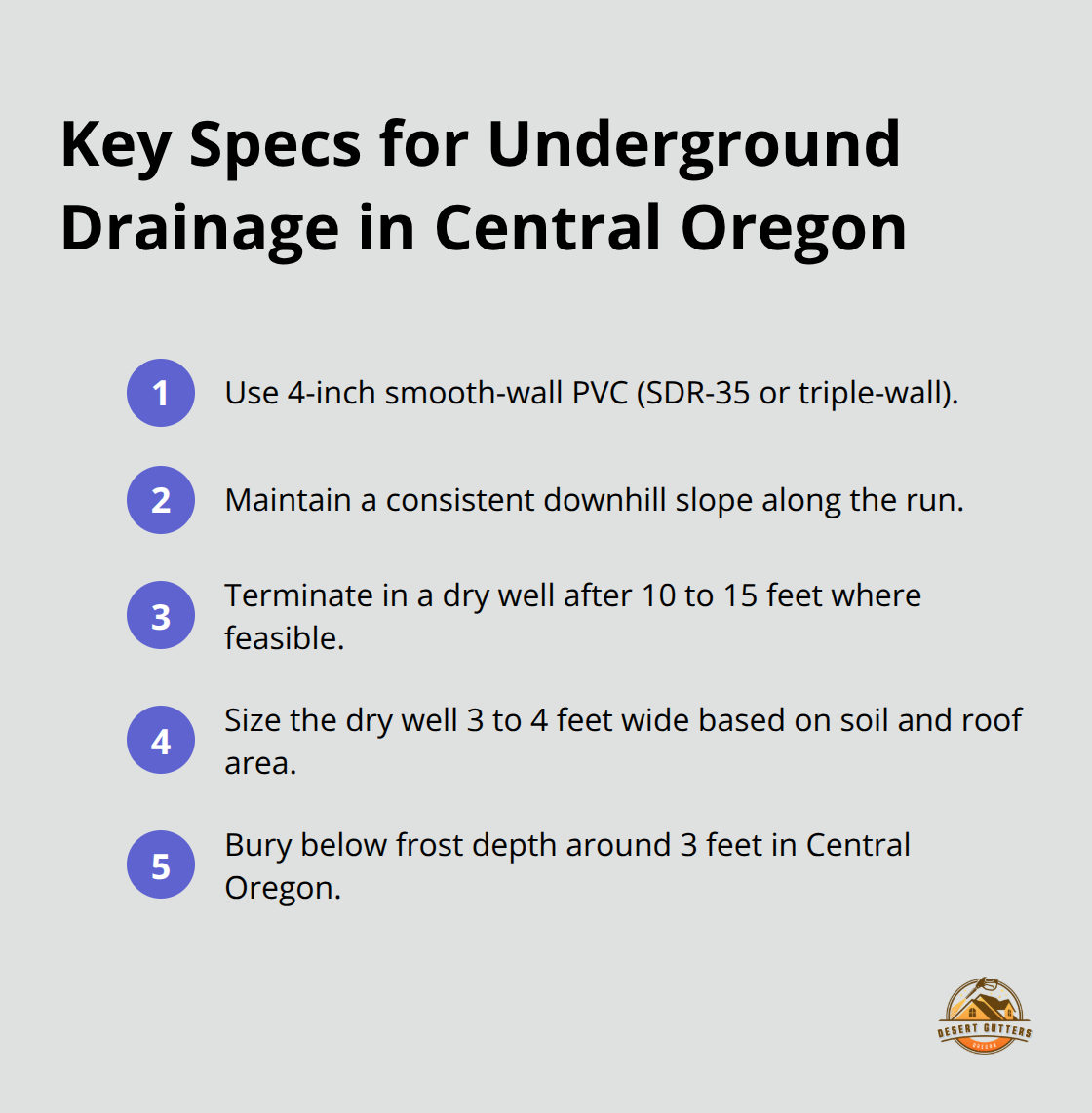
Central Oregon’s volcanic soils drain quickly, which makes underground systems perform well here, though you need to account for the frost depth, often around 3 feet, when you plan burial depth.
Routing Around Septic Systems
If your property has a septic system, routing becomes more complex. Never connect a downspout to a sanitary sewer line-this causes serious problems. Instead, hand-dig carefully around the sanitary line or route the extension beneath the septic line itself while you maintain proper slope. For sites where burial isn’t possible, bury the downspout extension about 6 inches under the surface and hand-dig around the line to avoid damage. If your yard slopes, you can extend the downspout along the yard and discharge in daylight at the far edge while you keep consistent pitch away from the foundation. Professional help makes sense here if you’re uncertain about line locations or depths.
Material Choices That Work
Avoid black corrugated flexible pipe for underground runs-its ridges create friction and trap water, which reduces flow velocity and increases clogging risk. Plan your underground route with as few bends as possible to ease future cleaning and minimize blockages. When you do need turns, use large-radius bends instead of sharp angles. Include a clean-out or accessible segment so you can snake or clear the line later if debris accumulates. For trenching under obstacles like sidewalks, bury the pipe and terminate with a pop-up emitter in the lawn to disperse water safely rather than wash away mulch or create erosion holes.
Climate Considerations for Central Oregon
Central Oregon’s high-desert climate means proper termination prevents moisture damage, erosion, and potential basement flooding. The volcanic soils that dominate the region drain quickly, which gives underground systems a natural advantage over other solutions. However, this same rapid drainage means you must plan your discharge point carefully-water that moves too fast can cause erosion at the outlet. A pop-up emitter or dry well catches this velocity and disperses water gradually across a wider area.
Surface drainage solutions offer another path forward when underground systems don’t fit your property’s layout or budget.
Surface Drainage Solutions
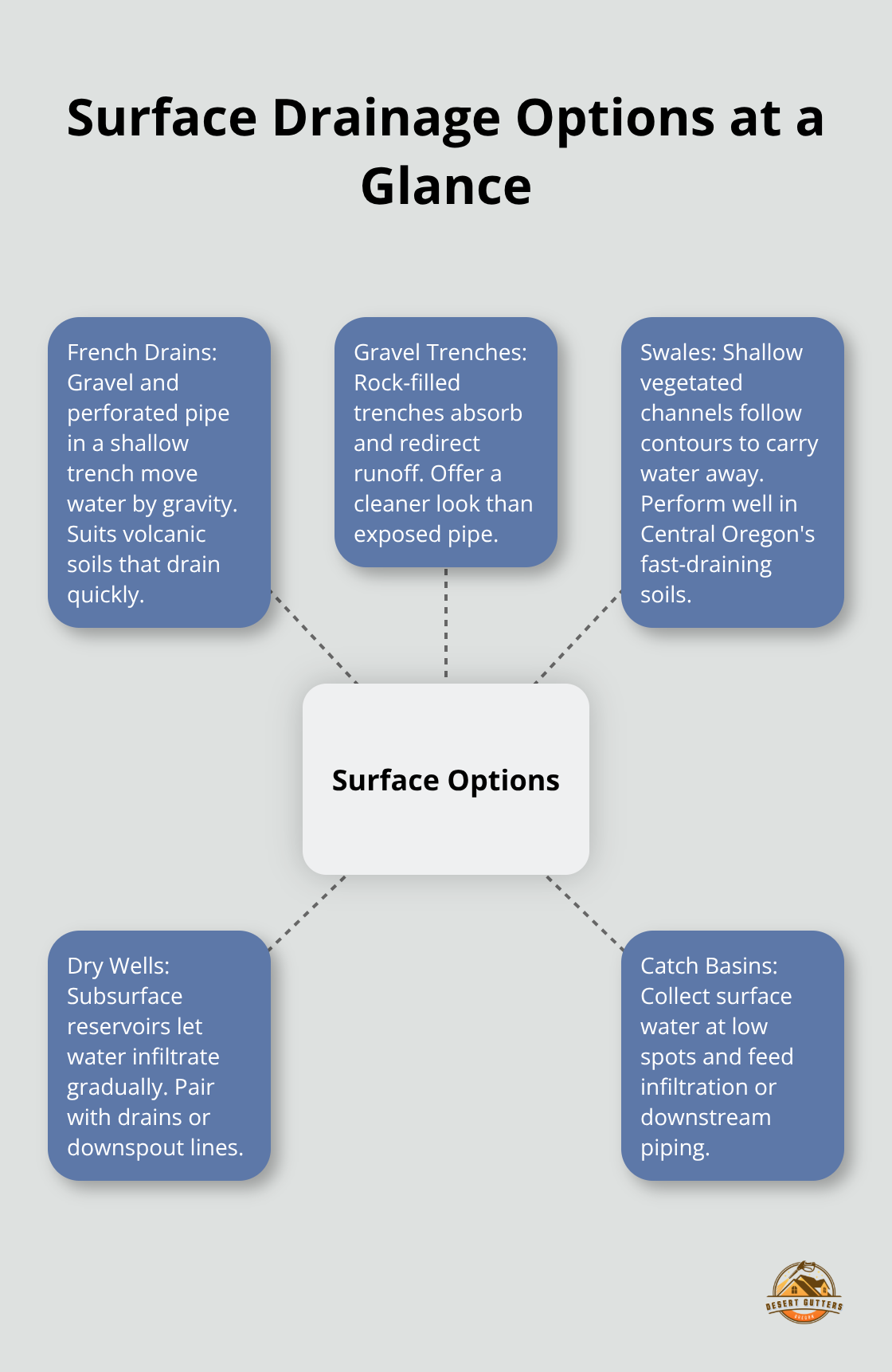
French drains redirect water away from your foundation through gravel and perforated pipe buried in a shallow trench. Central Oregon’s volcanic soils favor this approach because they drain quickly, allowing water to move through the system efficiently rather than pool near your home. A French drain typically runs along the perimeter of your foundation or across problem areas where water collects, sloping gently away from the house to guide water toward a designated discharge point or dry well. This system handles moderate rainfall without requiring electricity or maintenance traps-water simply flows downhill through gravity alone. Gravel-based systems work similarly, using rock-filled trenches to absorb and redirect runoff while improving aesthetics compared to plastic pipes.
Dry Wells and Catch Basins
Dry wells and catch basins serve as endpoints for both underground pipes and surface drainage, creating underground reservoirs that absorb water into the soil rather than directing it away. A typical dry well accepts water from downspout extensions, allowing the soil to infiltrate the water gradually and reducing strain on surrounding areas. Catch basins work differently-they sit at ground level or just below the surface and collect water from swales or graded areas, then either infiltrate locally or feed water to a secondary system.
Swales and Grading Strategies
For sloped yards, the most practical approach combines grading with strategic swale placement to create natural channels that move water away from foundations while blending into your landscape. Swales are shallow, vegetated ditches that follow the contours of your property, and they work exceptionally well in Central Oregon because the volcanic soil drains quickly, preventing the standing water problems that plague clay-heavy regions. This drainage method requires occasional raking and vegetation management, whereas dry wells demand no upkeep once installed, making them the lower-maintenance choice for most homeowners.
Comparing these surface solutions to underground systems reveals important tradeoffs that affect your decision based on property layout, budget, and long-term maintenance expectations.
Comparing Alternatives to Traditional Downspout Extensions
Cost Differences Between Solutions
Underground systems demand higher upfront investment than surface alternatives, typically running $1,500 to $3,500 depending on pipe length, soil conditions, and whether you need professional excavation around septic lines. French drains cost less-usually $800 to $2,000-because they require shallower trenching and simpler materials.
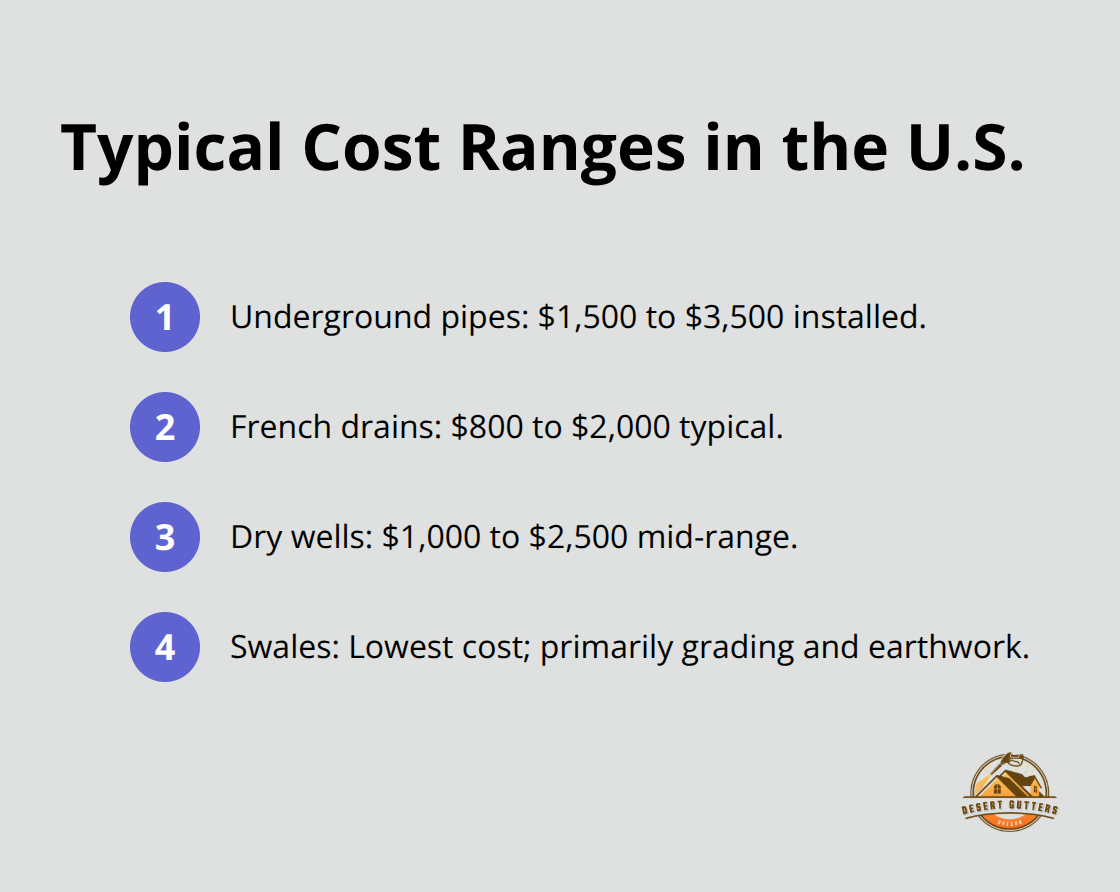
Dry wells fall in the middle at $1,000 to $2,500, while swales cost the least since they rely on grading alone and may need only minor earthwork. However, cost alone misleads you about true value.
Maintenance Requirements for Each Option
Underground systems with pop-up emitters rarely need attention after installation, making them maintenance-free for years. French drains require occasional inspection to confirm water still moves freely through the gravel, and swales demand seasonal raking to clear debris and prevent vegetation from choking the channel. Dry wells perform best when you keep the surrounding area clear of sediment, so periodic inspection prevents the inlet from clogging. In Central Oregon’s climate, where pine needles accumulate rapidly and intense summer thunderstorms dump water fast, the lowest-cost option often becomes the highest-maintenance burden over ten years.
Effectiveness in Central Oregon’s High-Desert Climate
Underground pipes excel in our volcanic soils because water drains quickly through them without pooling, but they fail completely if sediment clogs the line-then you must dig up your yard to snake or replace pipe. French drains work well here too because our porous soils absorb water readily, yet they underperform if gravel settles and compacts over time, reducing flow. Swales work reliably in sloped terrain but become useless on flat properties where water won’t move. Dry wells are your most forgiving choice for Central Oregon because volcanic soil’s natural drainage means water infiltrates consistently without the standing-water problems that plague clay regions elsewhere.
Choosing Based on Your Property’s Conditions
If your property sits on poor-draining soil or has minimal slope, dry wells cost more initially but save money long-term by eliminating the maintenance headaches that plague French drains and swales. Underground systems work best for properties where you can bury pipe at proper depth and slope, but dry wells deserve serious consideration if digging near septic lines or utilities creates complications.
Final Thoughts
The right downspout extension alternative depends on what your property actually needs, not what sounds cheapest upfront. Central Oregon’s volcanic soils and high-desert climate create conditions where certain solutions outperform others, and choosing poorly wastes money on maintenance or repairs down the road. Underground systems work best when you have space to bury pipe at proper depth and slope, especially if your property sits far from septic lines and utilities.
The real mistake happens when homeowners install a solution without understanding their soil conditions, property slope, or local frost depth. A system that works perfectly for your neighbor’s property might fail on yours because the underlying conditions differ. At Desert Gutters, we work with Central Oregon properties every day and understand how pine needles, volcanic soils, and intense summer storms affect drainage performance.
Before you invest in any drainage solution, have a professional assess your property’s actual conditions. Frost depth, soil permeability, septic line location, and slope all influence which option protects your foundation best. Professional gutter cleaning and repair prevents overflow problems before they start, keeping water flowing properly through your system and away from your home.