
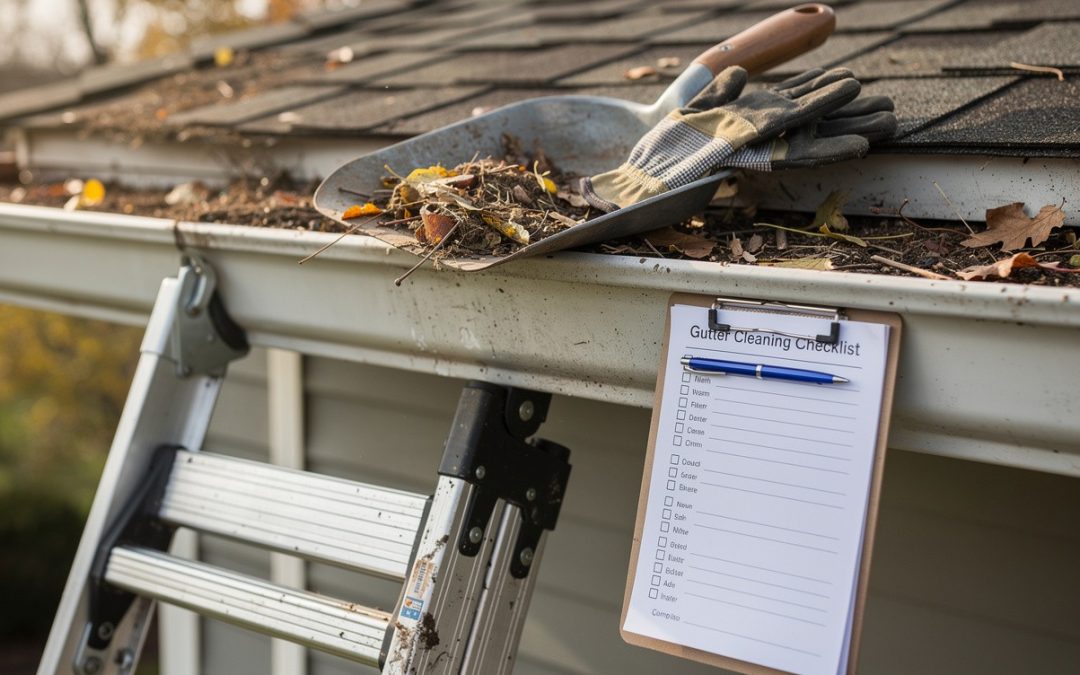
Your gutters work hard year-round, but most homeowners ignore them until problems start. We at Desert Gutters know that a simple gutter maintenance checklist prevents expensive damage and keeps your home protected.
Seasonal maintenance takes just a few hours but saves thousands in repairs. This guide walks you through what to check each season.
Spring Cleanup After Winter Damage
Assess Winter’s Impact on Your Gutters
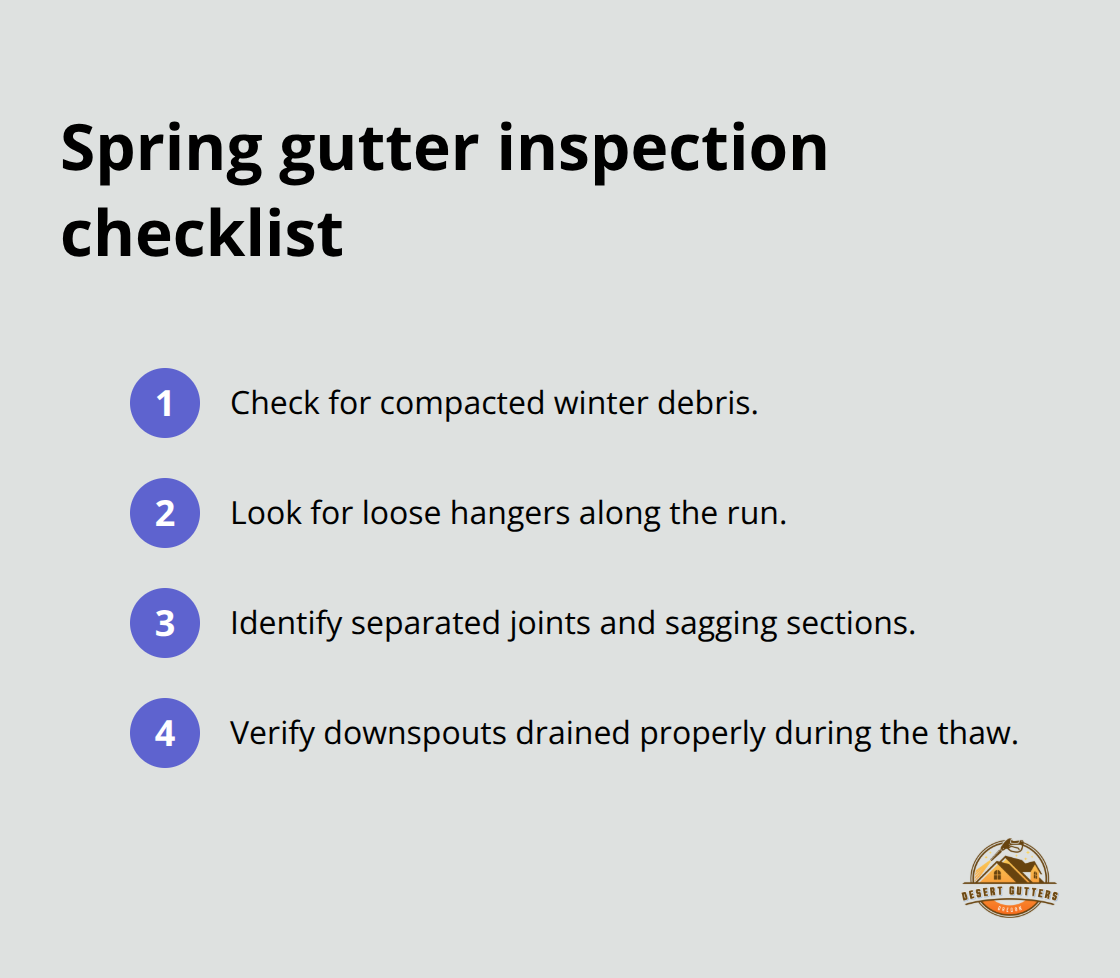
Spring brings the critical moment to assess what winter left behind. Snow, ice, and freeze-thaw cycles loosen gutter fasteners, separate seams, and compact debris that blocks water flow. You should inspect for compacted winter debris, loose hangers, separated joints, and downspouts that failed to drain properly during the thaw. Most homeowners wait until visible water damage appears, but that’s reactive thinking.
We recommend inspecting within two weeks of your last freeze to catch problems before spring rains arrive.
Remove Debris and Test Water Flow
A plastic gutter scoop, bucket, garden hose with a trigger nozzle, and a small hand brush work through each section systematically. Start at problem zones like corners and outlets where debris compacts most heavily. Work in sections rather than rushing the entire run, and lay a tarp beneath to contain the mess and protect landscaping. After you remove debris, flush each section with water to check for even flow toward outlets and verify that downspouts discharge water away from the foundation. This flushing step reveals hidden leaks at joints that look fine when dry.
Identify Damage and Plan Repairs
Tighten any reachable fasteners you find loose during cleaning, and mark sagging sections or separated joints for repair before the next rain. Watch specifically for granules and shingle fragments in the debris (these signal roof wear that could lead to leaks if gutters fail to drain properly). Test downspout discharge by running water through the system and observing where it exits. Water should flow at least 4–6 feet away from your foundation to protect the basement and prevent erosion.
Handle Heavy Debris Areas and Professional Help
If your home sits on a slope or has mature trees nearby dropping pine needles and seed pods, plan for a second spring cleaning in late May or early June. Areas with heavy pine buildup need three cleanings annually instead of the standard twice-yearly schedule. For multi-story homes, steep rooflines, or situations where ladder safety feels uncertain, professional inspection offers real value. A trained crew spots hidden leaks, tests flow under controlled conditions, and flags roof-edge problems before the next storm arrives. Once you’ve addressed spring damage, summer brings a different set of maintenance priorities that keep your gutters functioning through heat and heavy storms.
Summer Gutter Protection and Repairs
Early Summer Debris and Storm Damage
Summer brings specific threats that damage gutter systems before fall arrives. Early summer roofs and roof valleys feed gutters with pine needles, catkins, pollen, cones, and grit that accumulate faster than spring debris. After major storms, inspect your gutters for debris buildup and lifted sections that summer heat and wind loosen. Check flashing around chimneys, skylights, and vents where water seeps into gutters during monsoons or heavy downpours, and repair gaps immediately.
Tree Maintenance and Debris Reduction
Overhanging tree branches drop needles constantly and create shade that keeps gutters damp, promoting rust and weakening fasteners. Trim branches back 6 to 10 feet from your roofline to reduce debris load and improve air circulation. This simple step cuts your cleaning frequency and extends the life of fasteners and seams. Proper clearance also allows air to dry gutters faster after rain, preventing the moisture buildup that accelerates deterioration.
Inspect for Sagging and Misalignment
Sagging or misaligned sections become obvious during summer when you can safely access them without ice or snow. If gutters sag more than 1/8 to 1/4 inch per 10 feet of run, water pools and debris accumulates, speeding deterioration. Loose hangers cause this sagging, and tightening them takes minutes but prevents foundation water damage that costs thousands to repair. Walk the full length of your gutters and test each hanger for movement.
Gutter Guards and Downspout Management
Gutter guards reduce but don’t eliminate summer maintenance. Solid covers block most debris but require annual cleaning at seams and downspout entries where pine needles concentrate. Mesh guards allow small particles through, creating sediment that traps water and accelerates rust.
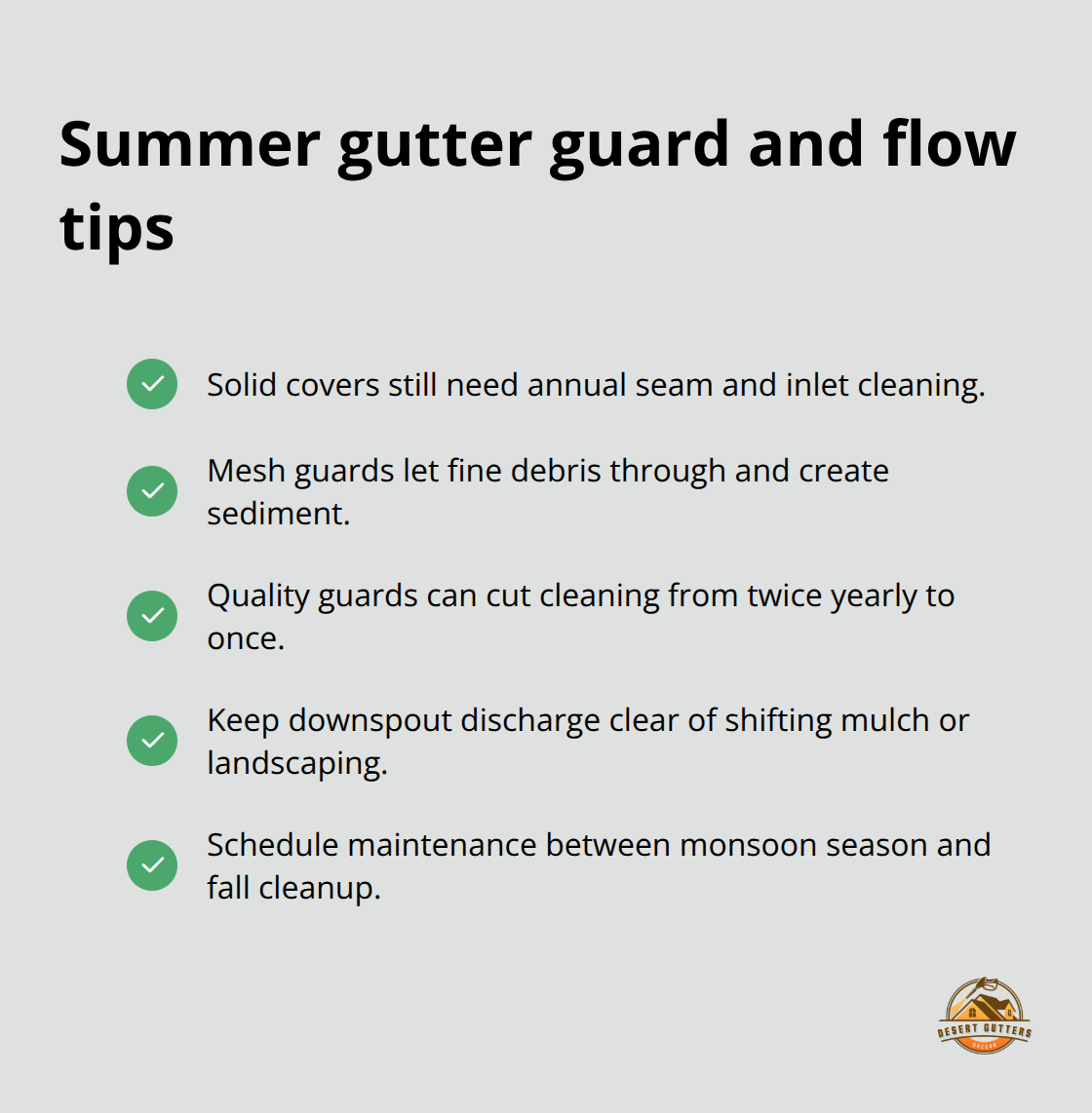
Quality guards from reputable manufacturers cost more upfront but reduce cleaning frequency from twice yearly to once yearly in most cases. Position downspouts to discharge water away from the foundation as you verified in spring, and confirm discharge remains clear of mulch or landscaping that shifted during summer. A summer maintenance window between monsoon season and fall cleanup prevents problems from compounding into winter, when ice dams form in gutters already weakened by three months of neglect. As temperatures drop and leaves begin to fall, your focus shifts to preparing gutters for the freeze-thaw cycles and heavy debris loads that define fall and winter maintenance.
Fall and Winter Gutter Preparation
Clear Gutters Before the First Hard Freeze
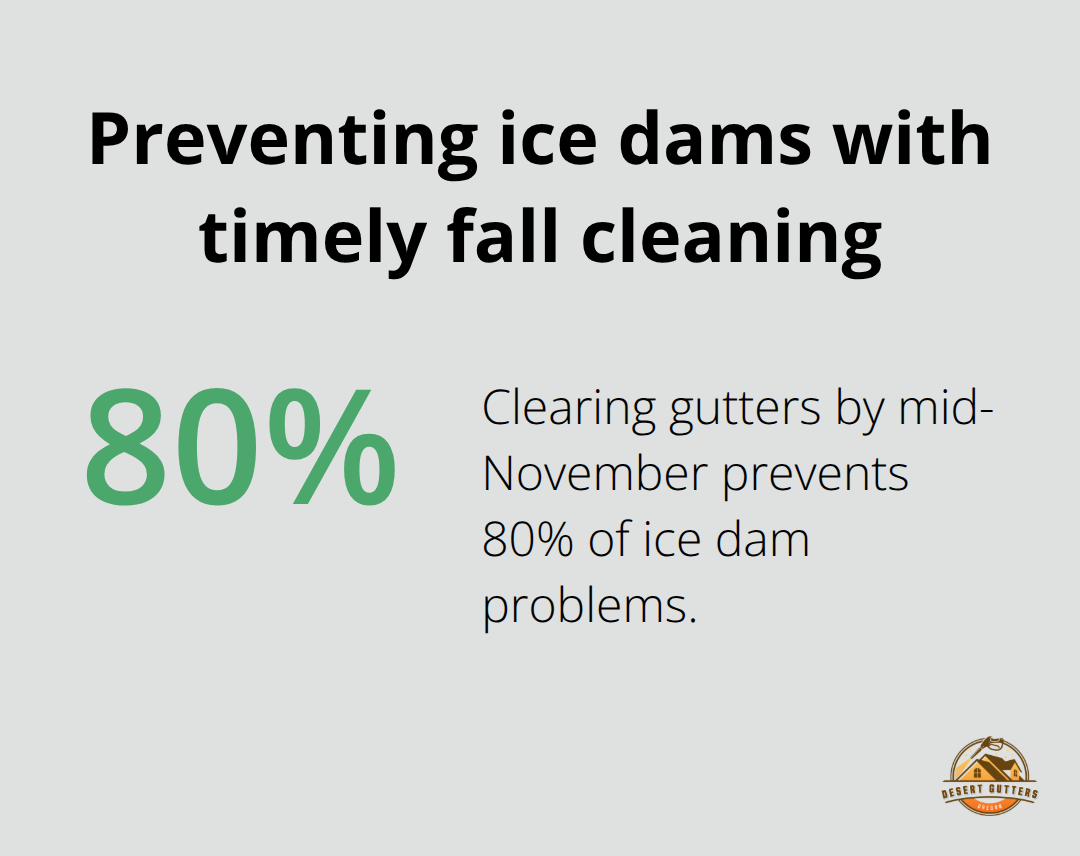
Fall cleanup arrives in late October or early November for most zones, and this timing matters more than most homeowners realize. Leaves and pine needles clog gutters precisely when you need them working hardest-during freeze-thaw cycles that start as temperatures drop. A blocked gutter traps water that freezes solid, creating ice dams that back water under your roof shingles and into your attic. The National Weather Service warns that ice dams cause thousands of dollars in interior water damage annually, yet most occur in gutters that simply weren’t cleared before the first hard freeze. Clear your gutters by mid-November, not December. This single action prevents 80 percent of ice dam problems that plague unprepared homes.
Start at the highest point and work downward, removing every leaf, needle, and twig from the full gutter run and every outlet. Use a plastic scoop to avoid damaging the gutter surface, and pay special attention to corners where debris compacts into solid blockages. After you remove visible debris, flush the entire system with a garden hose to confirm water flows freely toward downspouts and exits far from your foundation.
Test and Clear Downspouts Thoroughly
Downspouts demand equal attention before winter arrives, since a blocked downspout defeats the entire purpose of clearing gutters above it. Pour water into each downspout opening and listen for smooth flow; if water backs up or trickles out slowly, debris blocks the line. A plumbing snake or high-pressure water can clear most blockages, but heavy buildup sometimes requires professional removal to avoid damage. Once downspouts run clear, extend discharge pipes or splash blocks to direct water at least 3-4 feet away from your foundation-distance matters when frozen ground prevents water from soaking away naturally.
Inspect Fasteners and Joints for Winter Stress
Watch for sagging gutters and loose hangers during fall cleanup, since winter snow weight will stress weakened fasteners and separate seams further. Tighten any loose hangers you find, and mark separated joints for repair before snow arrives. The freeze-thaw cycles of winter will worsen any existing problems, turning minor leaks into structural damage. If you notice icicles forming along your gutter line, water backing up behind blockages, or water pooling near your foundation on sunny afternoons, these signal trouble that demands immediate attention. Professional inspection catches these problems before winter compounds them, and many contractors offer fall discounts for pre-winter service that pays for itself in prevented damage.
Final Thoughts
Seasonal gutter maintenance protects your home from water damage, foundation erosion, and costly repairs that start small but compound quickly. A gutter maintenance checklist applied four times yearly catches problems before they become emergencies-spring inspection reveals winter damage, summer trimming reduces debris load, fall clearing stops ice dams, and winter monitoring catches pooling water that signals blockages. Most homeowners can handle basic cleaning with a plastic scoop, bucket, and garden hose, but multi-story homes, steep rooflines, heavy pine buildup, or uncertain ladder safety all point toward calling a professional.
Water that spills over gutters during rain, sections that sag noticeably, or separated joints that leak demand professional repair before the problem spreads to your roof and foundation. We at Desert Gutters understand high-desert conditions that accelerate gutter deterioration-pine needles, sudden downpours, and freeze-thaw cycles create maintenance demands that standard twice-yearly cleaning often can’t meet. Desert Gutters provides professional gutter cleaning, repair, and seasonal snow removal specifically designed for Central Oregon homes.
A free estimate and customized maintenance schedule take the guesswork out of seasonal care and keep your gutters clear year-round. Your home’s protection depends on gutters that work, so commit to seasonal inspection and address problems promptly. Call professionals when the job exceeds safe DIY limits, and you’ll keep water flowing away from your foundation and your repair bills low.