
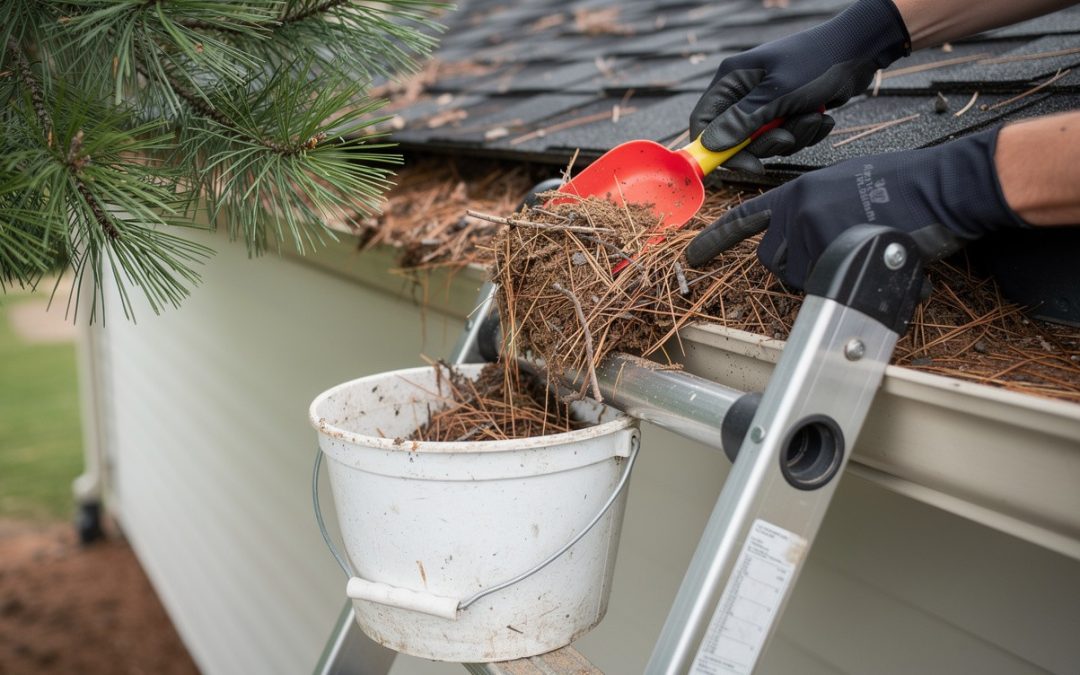
Central Oregon’s pine forests create a specific problem for homeowners: pine needle clogged gutters that accumulate faster than most realize. During peak seasons, needles pile up so quickly that gutters overflow within weeks, threatening your roof and foundation.
We at Desert Gutters have seen this damage firsthand, and it’s entirely preventable with the right approach. This guide walks you through quick fixes and lasting solutions tailored to our high-desert climate.
Why Pine Needles Clog Central Oregon Gutters
Pine Needles Fall Year-Round, Not Just in Autumn
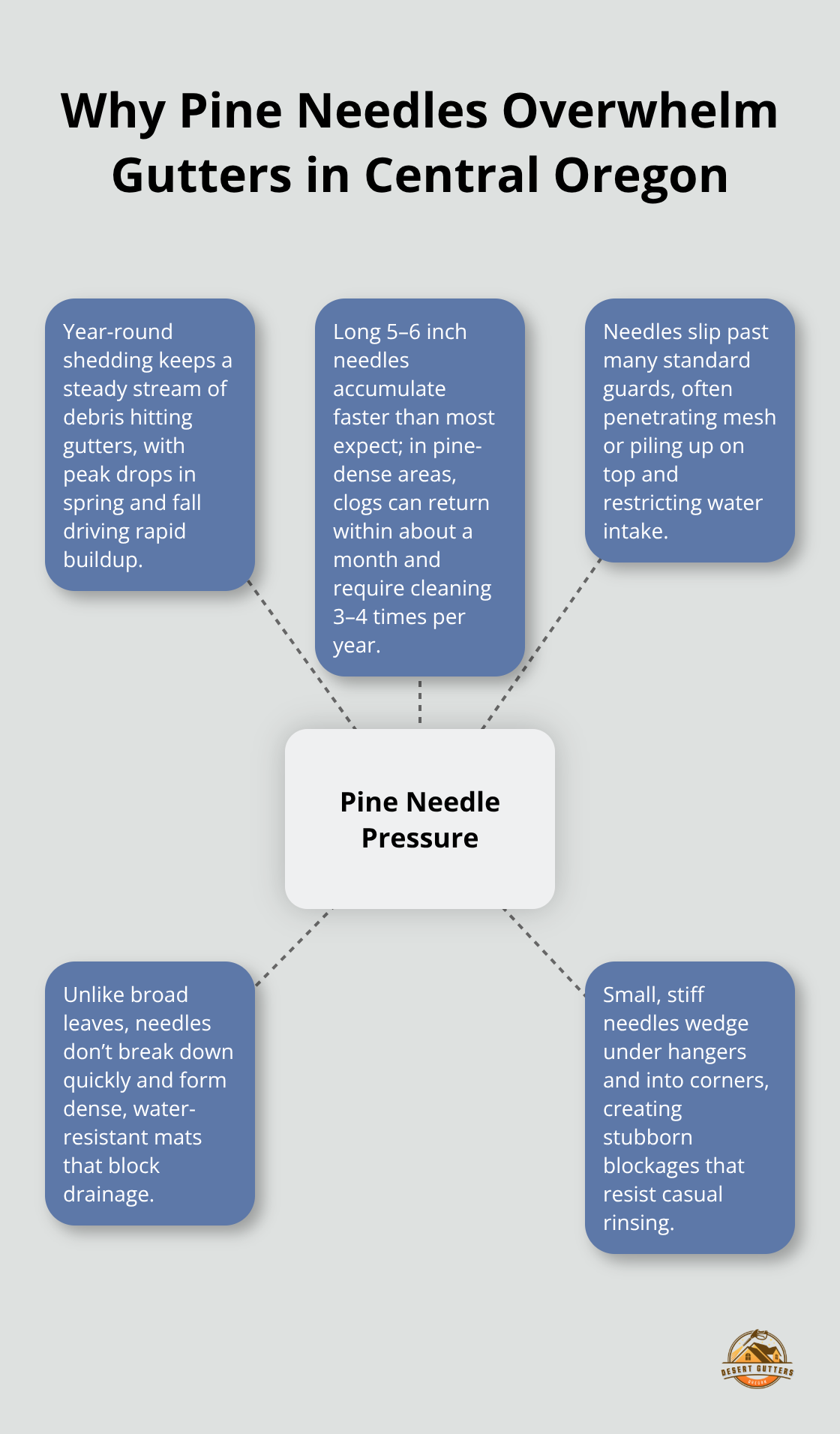
Central Oregon’s pine forests shed needles year-round, creating constant pressure on gutters. Long-needle pines drop 5 to 6 inch needles that accumulate faster than most homeowners expect, particularly during spring and fall when trees actively shed. In properties surrounded by tall pines, gutters clog within about a month after cleaning, forcing homeowners to clean gutters roughly 3 to 4 times per year. Pine needles are small enough to bypass many standard gutter guards, slipping through mesh designs or accumulating on top of protective barriers. Unlike leaves that decompose, needles remain intact and create dense, water-resistant mats that block drainage completely.
Water Damage Accelerates When Gutters Back Up
Overflowing gutters damage homes systematically. Water that escapes gutters runs down siding, saturating wood and accelerating rot in fascia boards and trim. Foundation damage happens when water pools around your home’s perimeter instead of flowing away through downspouts, creating hydrostatic pressure that forces moisture into basements and crawl spaces. Roofs suffer when gutters back up because standing water seeps under shingles, compromising the underlayment and creating conditions for wood rot and mold. Central Oregon’s freeze-thaw cycles make this worse; trapped water expands when it freezes, widening gaps and accelerating deterioration. Homeowners who wait to address clogs often face repair bills ranging from $900 to $52,000 for foundation work or roof replacement.
Trimming Trees Reduces Needle Input Significantly
The most effective long-term fix involves removing or trimming branches that overhang your roof. Cutting back pine limbs reduces needle input by 50 to 70 percent, immediately lowering cleaning frequency. If tree removal isn’t possible, upgrading gutters during replacement to 6-inch systems with larger downspouts significantly improves debris handling. Adding a second downspout per gutter run distributes water flow and reduces clog risk substantially. Proper gutter slope also matters-gutters should slope from the middle toward the ends at roughly a quarter inch per 10 feet, funneling water away instead of allowing pooling where needles accumulate.
These structural improvements address the root problem rather than treating symptoms. With pine needle pressure constant in Central Oregon, the next section covers quick fixes that work when prevention alone isn’t enough.
Quick Fixes That Actually Work for Pine Needle Clogs
Ground-Level Cleaning Tools Eliminate Ladder Risk
Ground-level cleaning tools eliminate the hazard of ladder work while handling pine needle removal effectively. A gutter cleaning tool with angled tongs and a 14-inch grasp lets you stand safely on the ground, reach high gutters through an ordinary extension pole, and pull debris from tight spots under gutter hangers where needles accumulate densely. These tools work especially well on wet leaves and muck, the exact conditions Central Oregon homeowners face during peak needle seasons. The lightweight design reduces fatigue during long cleaning sessions, and compatibility with extension poles you likely already own makes this approach budget-friendly. On dry days, a leaf blower accelerates the process significantly-clearing loose needles from gutter tops before detailed removal cuts total cleaning time substantially.

For very tall homes exceeding 30 feet, ground-level tools reduce fall risk substantially compared to ladder-based cleaning, making seasonal maintenance safer and more manageable for aging homeowners or those uncomfortable with heights.
Gutter Guards: What Works and What Doesn’t
Gutter guards reduce but do not eliminate maintenance entirely in pine-heavy environments. Mesh-style guards frequently clog with needles themselves and obstruct water flow during heavy rain, making them poor choices for Central Oregon properties surrounded by tall pines. Perforated aluminum guards with balanced filtration perform better than mesh, offering fair-to-good protection while maintaining water drainage, though they still require occasional top-of-guard brushing when needle accumulation blocks water intake. Solid or helmet-style guards seal the gutter completely but demand careful installation to prevent water intrusion under shingles, a risk worth discussing with installers before committing. Foam and brush inserts trap debris and fail quickly against continuous pine needle pressure, so avoid these entirely. If you test guards on a limited section first, monitor performance across different weather conditions before full installation, allowing you to assess whether the upfront cost justifies reduced climbing frequency.
Professional Cleaning Handles Severe Buildup
Professional cleaning services handle severe clogs and ongoing maintenance without personal risk, particularly valuable when pine needle pressure forces cleaning at least three times yearly. Desert Gutters provides professional gutter cleaning tailored to Central Oregon’s debris patterns, addressing pine needle buildup before it causes overflow damage and offers free estimates so you understand costs upfront before committing to seasonal service. With professional maintenance handling the heavy lifting, you shift focus to the prevention strategies that truly stop clogs from forming in the first place.
Prevention Strategies for Debris-Heavy Seasons
Match Your Cleaning Schedule to Central Oregon’s Needle Patterns
Central Oregon’s needle pressure demands a maintenance calendar that matches seasonal shedding patterns, not a generic once-a-year approach. Homeowners in pine-dense areas should clean gutters in late spring after the spring needle drop peaks and again in early fall before autumn shedding intensifies, with a third cleaning in late fall if trees remain heavily laden. Properties surrounded by tall pines benefit from monthly inspections during peak seasons-simply checking for needle accumulation after heavy wind events prevents the backlog that turns a 30-minute job into a 2-hour ordeal. Waiting until gutters visibly overflow wastes time and invites water damage; catching buildup early keeps drainage flowing and reduces the physical demand of removal. Ground-level tools make frequent checks manageable without the commitment of professional visits, letting you address small accumulations before they become severe clogs.
Trim Branches to Cut Needle Input at the Source
Trimming branches that overhang your roof cuts needle input at the source, immediately lowering cleaning frequency and extending the interval between maintenance sessions. Remove or cut back limbs to at least 6 to 8 feet from the roof edge, creating a buffer zone where needles fall clear of gutters entirely. For properties where tree removal isn’t feasible, upgrading to 6-inch gutters with larger downspouts during your next replacement improves debris handling substantially, and adding a second downspout per gutter run distributes water flow so clogs form less frequently.

Optimize Gutter Slope and Drainage Flow
Gutter slope matters more than many homeowners realize-gutters should slope approximately one-quarter inch per 10 feet from the middle toward downspouts, funneling water away instead of allowing pooling where pine needles mat and block drainage. Proper slope prevents standing water that traps needles and creates dense blockages resistant to removal. This simple adjustment costs nothing if you address it during gutter replacement but pays dividends throughout the year.
Evaluate Guards Realistically for Your Conditions
When evaluating gutter guards, avoid mesh designs that clog with needles themselves; perforated aluminum guards with balanced filtration perform fairly well in Central Oregon conditions, though they still require occasional top-of-guard brushing. Test guards on a limited section first, monitoring performance through different weather before committing to full installation, since upfront costs only justify the expense if you genuinely reduce climbing frequency. No guard eliminates maintenance entirely in high-needle environments, so choose systems that manage small debris while preserving water flow rather than expecting maintenance-free performance.
Final Thoughts
Pine needle clogged gutters damage Central Oregon homes systematically, but the problem is entirely manageable with the right combination of maintenance and professional support. Year-round needle shedding forces homeowners to clean gutters three to four times annually in pine-dense areas, and delayed action invites water damage that costs thousands to repair. The fixes outlined here work because they address the problem at multiple levels: trimming branches cuts needle input at the source, upgrading gutters improves drainage capacity, ground-level tools make frequent cleaning safer and faster, and gutter guards reduce but don’t eliminate maintenance burden.
Professional gutter maintenance removes the guesswork and physical risk from seasonal cleaning. Rather than climbing ladders multiple times yearly or worrying whether guards will perform adequately, professional service handles debris removal before overflow occurs and catches problems early when they’re inexpensive to fix. We at Desert Gutters understand Central Oregon’s specific challenges because we work in these conditions year-round, addressing pine needle buildup, sudden downpours, and seasonal snow removal that protects your roof and foundation from water damage and erosion.
Contact Desert Gutters for a free estimate tailored to your home’s specific needs and local debris patterns. We’ll assess your gutter condition, discuss whether professional cleaning, repairs, or seasonal maintenance best fits your situation, and provide transparent pricing before any work starts. Your home’s protection starts with clear gutters, and we’re here to keep them that way.