
Your gutters work hard year-round, but most homeowners only think about them when water starts pouring over the sides. We at Desert Gutters know that a solid residential gutter maintenance plan prevents costly damage before it starts.
The truth is simple: gutters fail when they’re neglected, not when they’re maintained. This guide walks you through what needs to happen in spring, summer, fall, and beyond to keep your home protected.
Spring Gutter Restoration
Spring is when winter’s damage becomes visible, and this is the moment to act decisively. Snow, ice, and freeze-thaw cycles stress gutters in ways that summer never does. Gutters pull away from fascia boards, sections crack from ice expansion, and debris packs so tightly that water cannot flow. The National Association of Home Builders states that proper roof and gutter maintenance can extend a roof’s life by up to 50%, and spring is where that maintenance begins.

Remove Winter Debris and Ice Dam Damage
Start by clearing all winter debris, including leaves, twigs, and dirt that accumulated under snow. Packed debris traps moisture against metal, accelerating rust and corrosion. Next, inspect for ice dam damage. Ice dams are most common in northern climates and occur when heavy snow buildup melts during the day and then refreezes when temperatures drop overnight. Look for separated gutter sections, bent hangers, or pulled-away downspouts.
These aren’t minor issues. Water flowing behind the gutter instead of through it damages fascia and soffit boards, and eventually the home’s interior walls and insulation. Test water flow with a garden hose once you’ve cleared debris. Water should move smoothly through downspouts with no overflow or pooling. If water backs up, the pitch is wrong, or a section is sagging.
Address Sagging Sections and Loose Fasteners
Sagging gutters typically result from fasteners pulling loose under the weight of ice and water, or from hangers corroded by winter salt exposure. Re-secure loose gutters by checking every hanger and fastener along the run. If fasteners are corroded or stripped, replace them immediately rather than tightening existing ones repeatedly.
This preventive step stops small problems from becoming expensive replacements. A single loose fastener allows movement that stresses adjacent connections, creating a domino effect of failure across the entire run.
Seal Leaks Before Spring Rains Arrive
Leaks are equally urgent in spring. Small pinhole leaks and sealant failures expand rapidly as spring rains arrive. Inspect seams, downspout connections, and areas where sections join. It’s crucial to carry out any repairs and apply patches and seals immediately, before moisture accumulates and causes serious damage to the house.
Spring is the ideal time to make these repairs before summer storms test your system’s integrity. Once you’ve addressed winter damage and confirmed your gutters flow properly, summer brings a different set of challenges that require attention.
Summer Gutter Care and Protection
Summer brings a different maintenance challenge than spring, and this is when most homeowners make a critical mistake: they assume their gutters are fine because winter is over. Pine needles, pollen, seed pods, and summer dust accumulate rapidly in high-desert climates, and standing water in partially clogged gutters becomes a breeding ground for algae and rust. Homeowners who skip summer maintenance often face emergency cleanings in late August when sudden monsoon storms hit. Summer is when you prevent fall and winter failures by staying ahead of debris buildup and confirming your drainage system actually works under pressure.
Inspect for Water Damage and Visible Problems
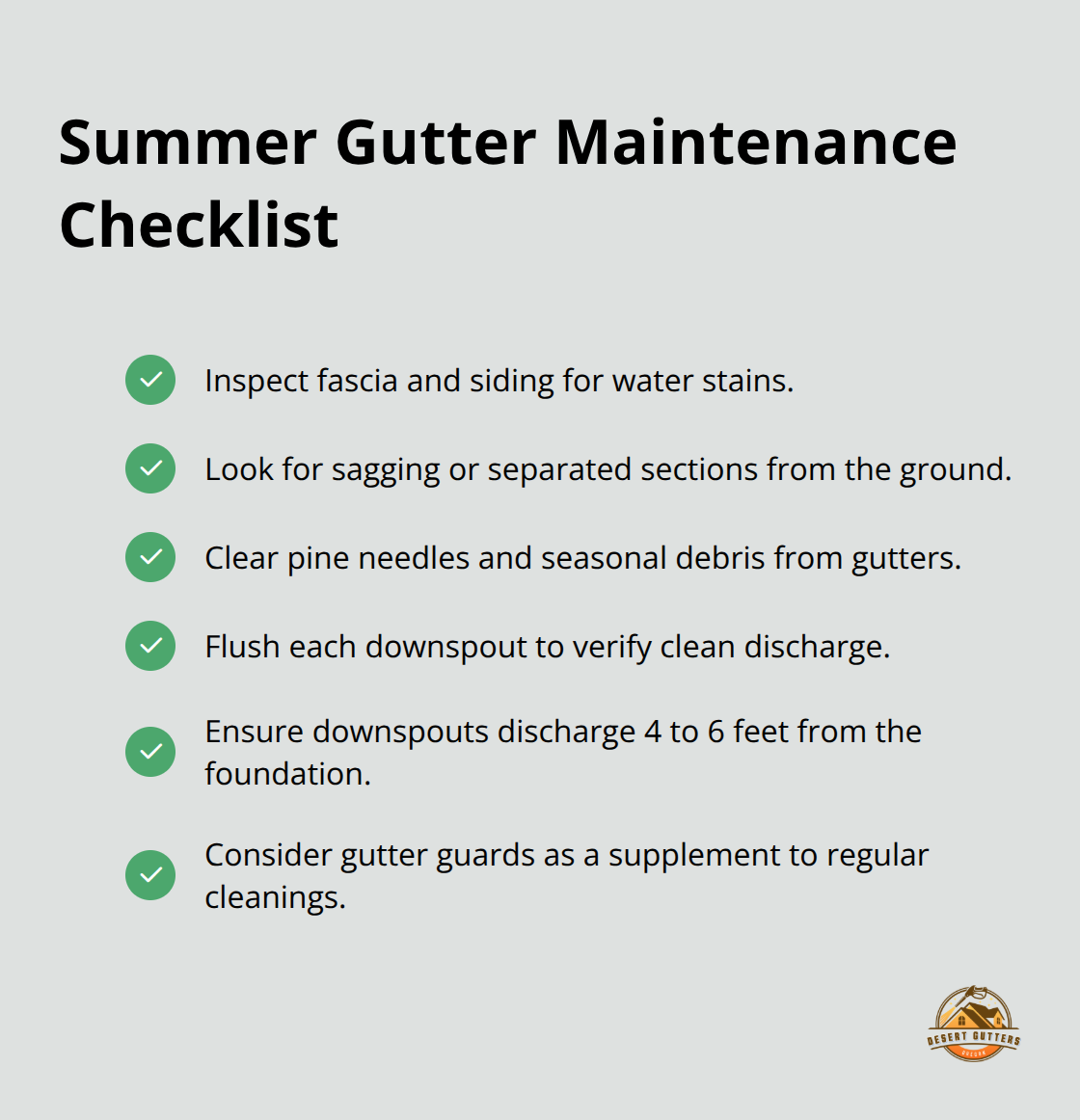
Start with a ground-level visual inspection before any climbing. Look for water stains on your fascia or siding-these indicate chronic leaks where water escapes behind the gutter instead of flowing through it. Check for visible sagging, separated sections, or plant growth inside the gutter from the ground. If water stains are present, a professional inspection is necessary because interior damage may already be underway.
Clear Pine Needles and Seasonal Debris
Pine needles pack tightly and block water flow far more effectively than leaves do. Clear all pine needles, dirt, and seasonal debris from gutter channels and downspouts. Flush each downspout with a garden hose to confirm water exits cleanly at the base and doesn’t pool near your foundation.
Verify Downspout Drainage Away From Your Foundation
Improper downspout drainage sends water directly against your home’s foundation, and even a few inches of misdirected flow causes soil erosion and basement seepage over time. If water pools or flows toward the foundation, add or extend downspout extensions so water discharges at least 4 to 6 feet away. This simple adjustment protects your foundation from costly damage that accumulates silently over seasons.
Consider Gutter Guards for Heavy Tree Coverage
Gutter guards reduce but do not eliminate the need for cleaning-they typically prevent large debris from entering while still allowing pine needles and fine material to accumulate on top (especially in high-desert regions with heavy pine coverage). If you install guards, plan for a professional cleaning once or twice yearly rather than relying on guards to eliminate maintenance entirely. Guards work best when combined with a regular maintenance schedule, not as a replacement for it.
As summer transitions into fall, your gutters face their most demanding season. Heavy rains and leaf drop create conditions that test whether your system can handle volume and velocity.
Fall Gutter Cleaning Before Storm Season
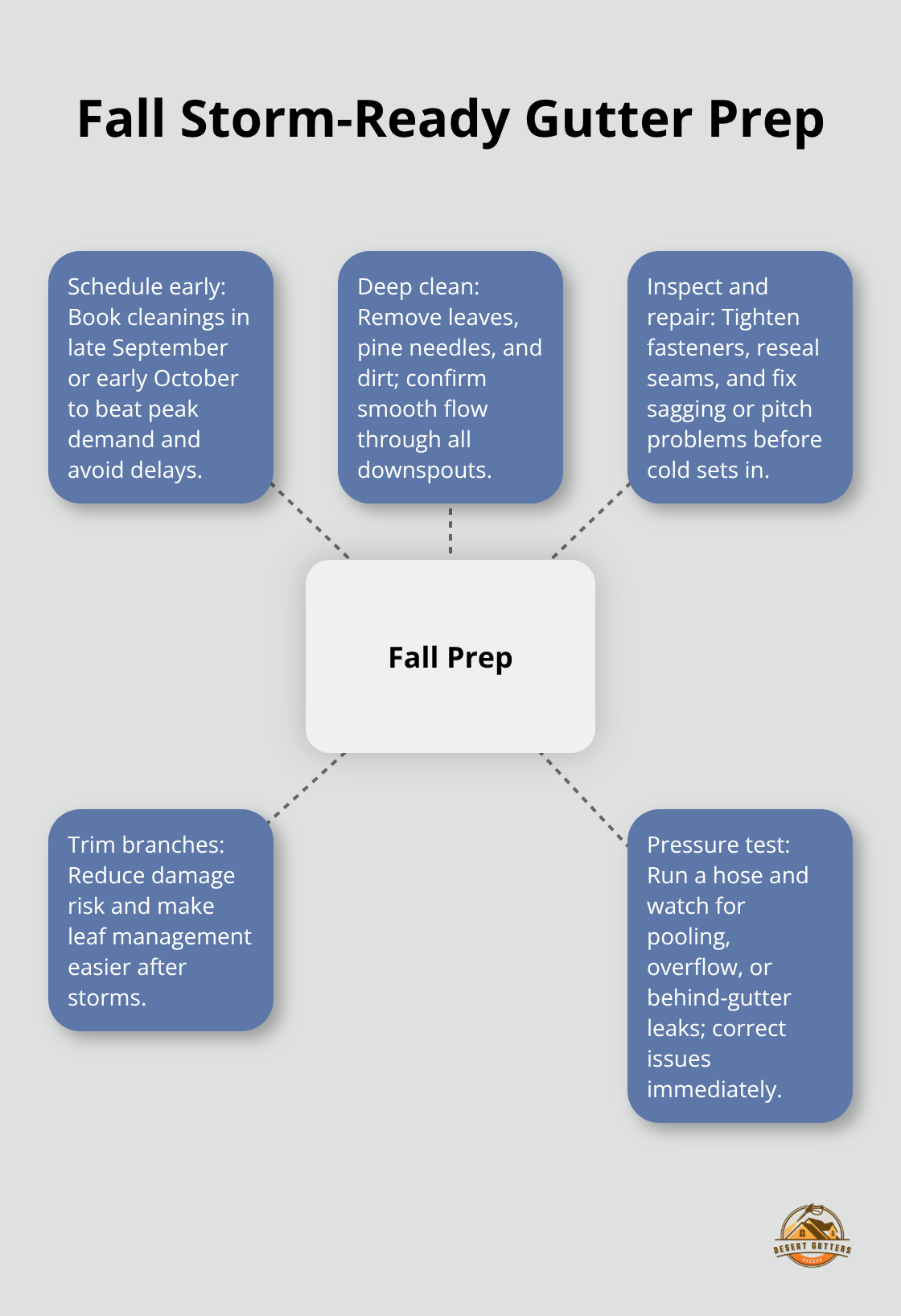
Fall is when most homeowners finally pay attention to gutters, but by then many have already missed the critical window. Peak fall season typically spans 5 to 6 weeks, with the last week of November and first weeks of December seeing the highest demand for professional cleaning services. Scheduling your fall cleaning in late September or early October puts you ahead of the rush and ensures your system is ready before heavy autumn rains and winter snow arrive. Waiting until November guarantees longer wait times and the risk that storms hit before your gutters are cleared.
Schedule Early to Beat the Rush
Professional contractors book solid during peak season, and homeowners who delay often scramble to find available services. Those who act in October sleep soundly through November storms, while those who wait face extended timelines and potential water damage during the interim. A deep fall cleaning isn’t optional maintenance-it’s the difference between a protected home and one facing water damage, foundation erosion, and ice dam formation.
Remove All Debris and Test Water Flow
Start your fall cleaning by removing all leaf debris, pine needles, and dirt accumulated since summer. In high-desert climates with heavy pine coverage, pine needles pack so densely that water cannot flow even when the gutter appears partially clear. Flush each section with a garden hose to confirm water moves freely through downspouts and exits away from your foundation. Water should move smoothly without pooling or backing up at any point along the run.
Inspect for Damage and Weak Points
While cleaning, inspect for loose fasteners, separated seams, and areas where sealant has failed-fall rains will exploit these weak points immediately. Look for water stains on fascia or siding that indicate chronic leaks where water escapes behind the gutter. Check for visible sagging or separated sections that signal fastener or pitch problems. Address all issues before winter arrives, as cold temperatures and moisture accelerate corrosion and structural failure.
Trim Branches and Test Under Pressure
Trim any overhanging branches that hang directly over your roof or gutters; falling branches during autumn storms can damage gutters, and leaf drop from trimmed branches is far easier to manage than cleaning around living limbs. Test your entire drainage system under pressure by running a hose through gutters and watching where water exits. If water pools, overflows at the front edge, or drips behind the gutter, the pitch is incorrect or a section is sagging-both problems demand repair before winter. Absolute confidence that your system handles heavy rainfall without overflow or misdirection prevents the emergency calls that come during December downpours.
Final Thoughts on Year-Round Gutter Protection
A residential gutter maintenance plan requires four seasonal checkpoints that stop problems before they become expensive repairs. Spring exposes winter damage, summer prevents fall failures, fall prepares your system for winter stress, and winter monitoring stops ice dams from forming. This cycle repeats because gutters face different threats in each season, and skipping any quarter leaves your home vulnerable to water damage that accumulates silently.
The cost of neglecting gutters hits hard. Water damage to fascia, soffit, and foundation repair runs into thousands of dollars, and a single ice dam that forces water behind your gutter can saturate insulation and drywall for months of remediation. The National Association of Home Builders confirmed that proper maintenance extends roof life by up to 50%, but that benefit only happens if you maintain your gutters consistently throughout the year.
Small problems demand immediate attention because a loose fastener becomes a separated section, a pinhole leak becomes water damage behind the gutter, and a sagging run becomes complete failure under winter snow. We at Desert Gutters understand that high-desert homes face unique challenges (pine needle accumulation, sudden monsoon storms, freeze-thaw cycles), which is why Desert Gutters offers professional gutter cleaning and seasonal maintenance specifically designed for Central Oregon homes.