
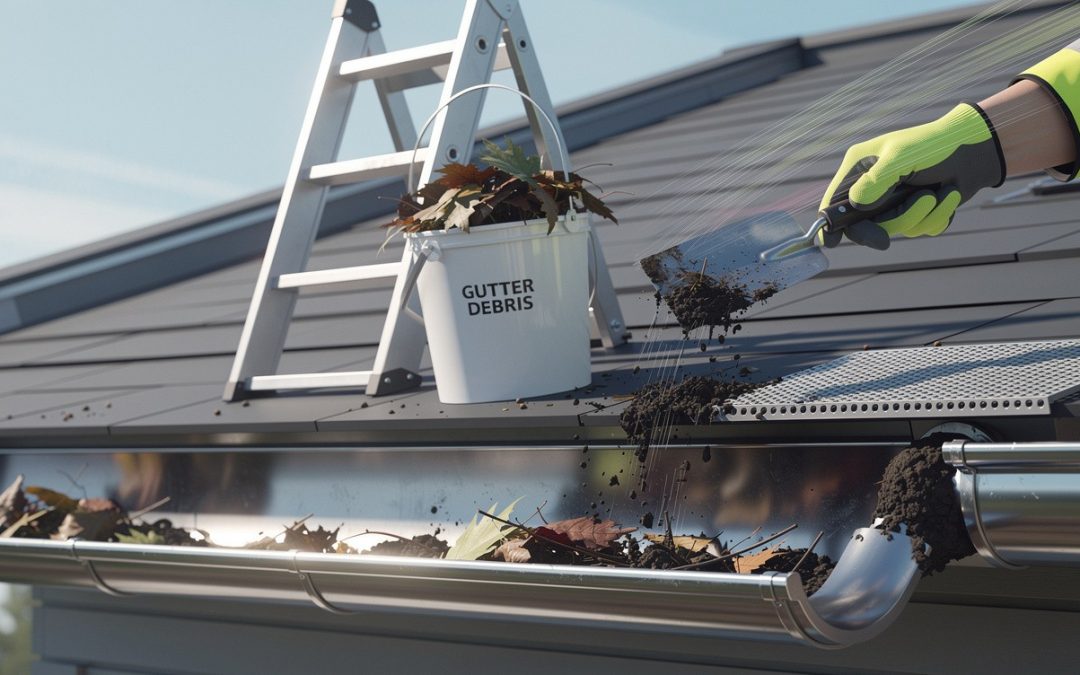
Clogged gutters are one of the fastest ways to damage your home’s foundation, roof, and landscaping. In Central Oregon’s high desert, pine needles and debris accumulate quickly, turning a simple maintenance task into an expensive repair bill.
We at Desert Gutters have seen firsthand how neglect leads to water damage that costs thousands to fix. This clogged gutter maintenance guide walks you through cleaning, inspection, and prevention strategies that actually work.
How Clogged Gutters Damage Your Central Oregon Home
Pine Needles Create Persistent Blockages
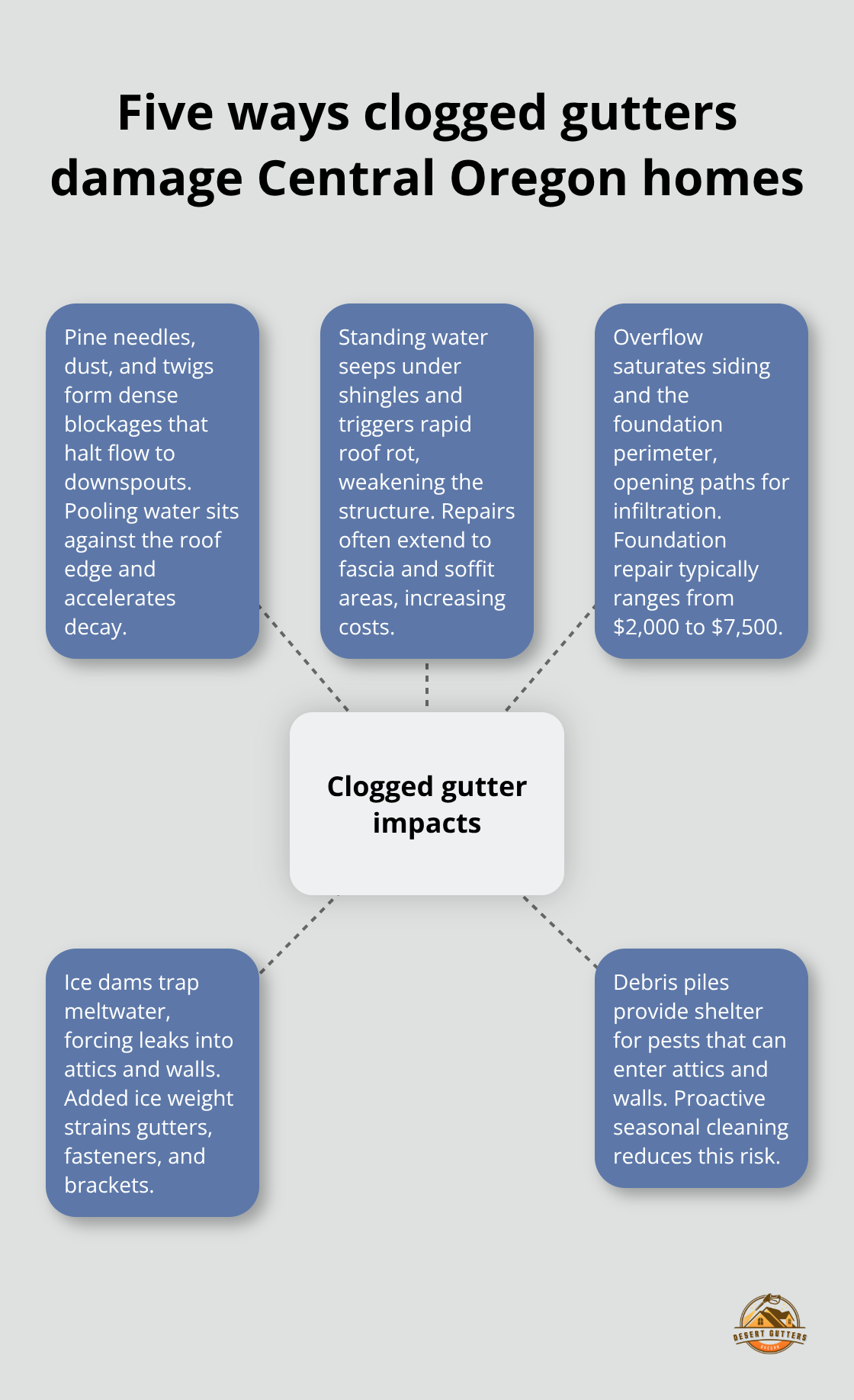
Pine needles from the surrounding forest fall into your gutters year-round, but Central Oregon’s high desert intensifies the problem. During late fall and early spring, needle accumulation happens faster than most homeowners expect. Debris buildup combines with dust and twigs to create blockages that stop water from flowing toward downspouts. When water cannot drain, it pools inside the gutter system and sits against your roof edge.
Standing Water Causes Roof and Structural Rot
This standing water backs up onto your roof deck, where it seeps under shingles and into the wood structure beneath. Roof rot develops quickly in this environment, weakening the structural integrity of your home. The damage spreads to fascia boards and soffit areas, where moisture promotes decay that costs $2,000 to $5,000 to repair once it reaches the wood framing.
Foundation Damage Starts with Water Overflow
Water overflow from clogged gutters spills down your exterior walls, saturating the siding and foundation. This constant moisture exposure accelerates erosion around your foundation perimeter, creating gaps where water enters your basement or crawl space. Foundation damage from water infiltration ranks among the most expensive home repairs, with foundation repair costs typically ranging between $2,000 and $7,500.
Winter Ice Dams Trap Meltwater
Winter conditions in Central Oregon make clogged gutters even more dangerous. When temperatures drop and gutters remain clogged with debris and water, ice dams form along your roofline. Ice dams develop when melted snow from your roof cannot drain through blocked gutters, so it refreezes at the edge and creates a barrier that traps additional meltwater. This trapped water backs up under your roof shingles and leaks into your attic and interior walls. The cycle repeats throughout winter, creating layers of ice that weigh heavily on gutters and damage fasteners and brackets.
Pests Find Shelter in Debris
Clogged gutters also attract rodents and pests seeking shelter in the debris buildup, introducing another problem into your home’s exterior envelope. Once pests establish themselves in your gutter system, they can access your attic and interior walls. Professional seasonal cleaning before heavy snow arrives removes this risk and protects your home from multiple threats at once.
Clean Your Gutters the Right Way
Start with the Downspout
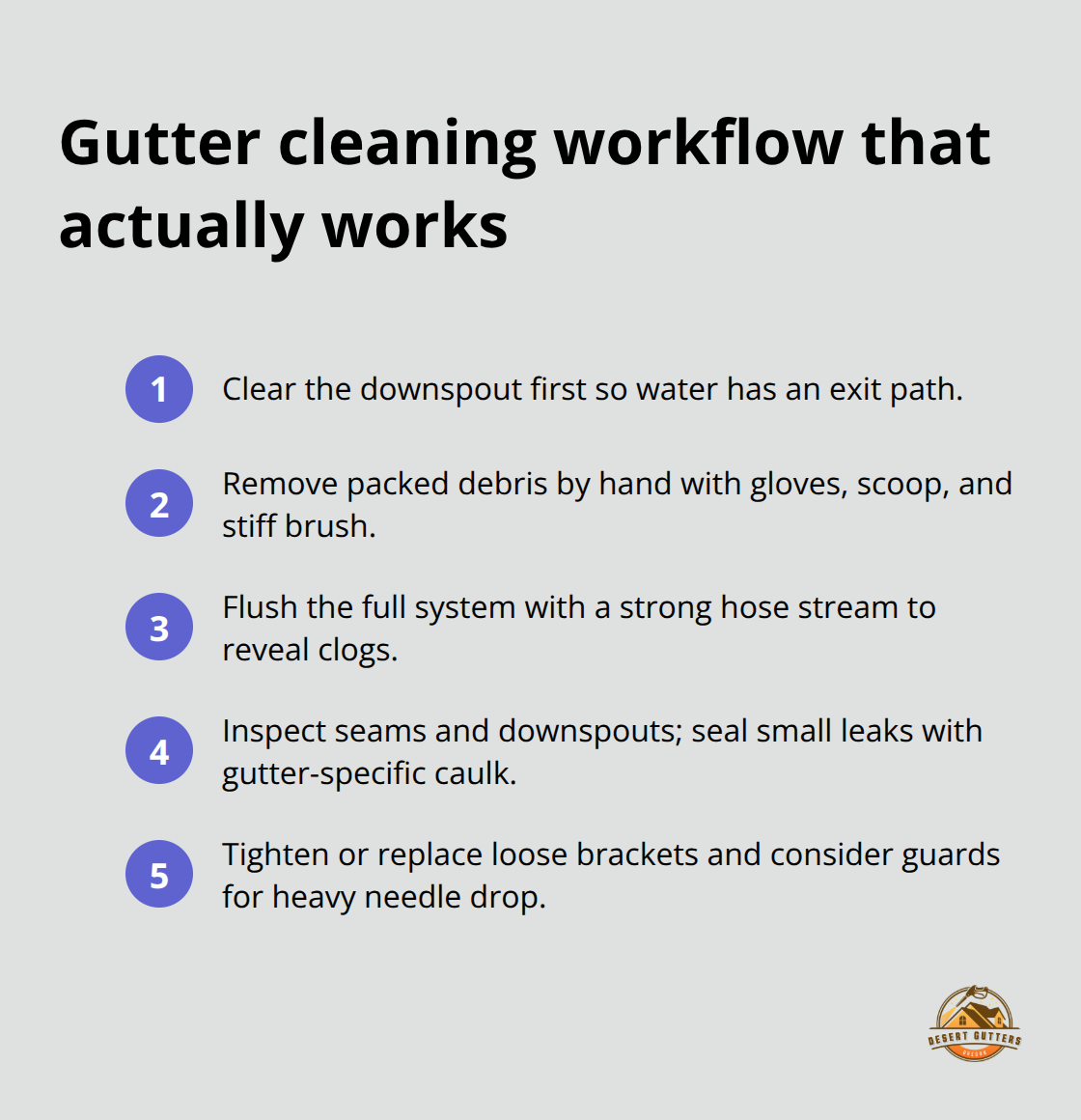
Clear the downspout first, not the gutter itself. Water cannot drain properly if the downspout is blocked, so remove debris at the base of the downspout and flush it with a garden hose. If water does not flow freely, use a plumber’s snake to break through stubborn clogs inside the downspout. Once the downspout drains clearly, you can move to the gutter with confidence that water will exit the system properly.
Remove Debris by Hand
Wear work gloves and use a gutter scoop or stiff brush to physically remove pine needles, twigs, and debris by hand, starting at one end and working toward the downspout. A headlamp or flashlight helps you see debris in shaded areas where pine needles accumulate most heavily. For Central Oregon properties with heavy tree cover, hand removal is more effective than pressure washing alone because pine needles pack tightly and require direct removal. This direct approach clears blockages that water pressure alone cannot shift.
Flush and Test the System
After clearing debris by hand, flush the entire gutter system with a strong stream from your garden hose. This step reveals remaining blockages and confirms that water flows freely toward the downspout. Watch for pooling water or slow drainage, which signals a partial clog that needs additional attention. If water backs up at any point, use the plumber’s snake again to clear the obstruction.
Inspect Downspouts and Seams
Inspect your downspouts carefully after flushing because water backing up into the gutter often indicates a downspout problem rather than gutter clogging. Downspout extensions should direct water at least six feet away from your foundation; if water pools near your foundation after cleaning, add or reposition extensions to prevent saturation and foundation damage. Check all seams and joints in your gutter system for leaks by observing water flow during the flush test. Small leaks at seams respond well to gutter-specific caulk, not silicone, which fails in Central Oregon’s temperature fluctuations.
Secure Fasteners and Plan for Guards
Inspect gutter fasteners and brackets for looseness or sagging, which traps water and debris and creates new blockage points. Tighten any loose fasteners and replace damaged brackets to maintain proper slope toward downspouts. If you have many pine trees overhead or your gutters clogged again within two months of your last cleaning, install gutter guards to reduce debris entry and extend the time between cleanings. Gutter guards cost $3.50 to $10 per linear foot and significantly reduce the frequency of hand cleaning needed in high-debris environments. When guards are in place and fasteners are secure, your system is ready for the seasonal demands ahead.
Preventative Maintenance Keeps Gutters Working Year-Round
Timing Your Cleanings to Central Oregon’s Weather
Central Oregon’s weather patterns demand a cleaning schedule tied to seasonal transitions, not arbitrary calendar dates. Clean your gutters in mid-April after spring winds settle and pine needle drop slows, then again in late October before the first heavy snow arrives. This two-cleaning minimum prevents the worst damage, but properties surrounded by dense pine forests need a third cleaning in early July when summer heat accelerates needle shedding.
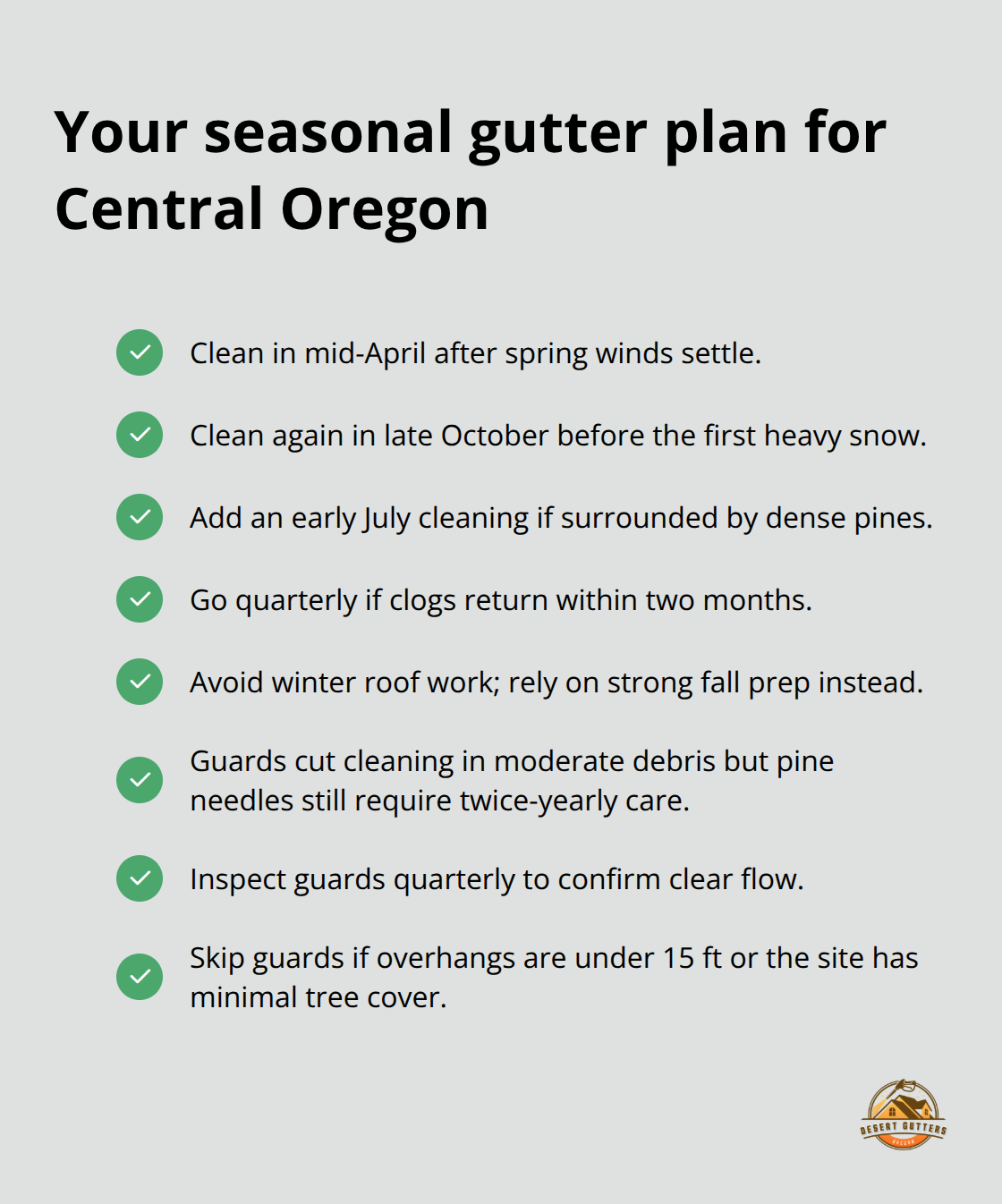
If your gutters clogged again within two months of your last cleaning, quarterly maintenance is not excessive-it is necessary. Track your cleaning dates and note what triggered each blockage so you can adjust timing based on actual conditions at your property rather than guessing.
Winter cleaning in Central Oregon is risky; ice and snow make roof access dangerous, so aggressive fall preparation prevents the need for winter work.
Gutter Guards Reduce Cleaning Frequency
Gutter guards reduce cleaning frequency dramatically but require honest assessment of your property’s debris load. Guards filter most leaves and twigs while allowing water through, cutting hand-cleaning work in moderate debris environments. However, pine needles are thinner than most guards are designed to stop, so even with guards installed, properties under heavy tree cover still need cleaning twice yearly.
After installing guards, inspect them quarterly to confirm water flows freely and debris has not accumulated on top of the mesh. Skip the guards entirely if your roof overhangs are under 15 feet or your property sits in open terrain with minimal tree coverage; the cost is not justified when debris load is low.
Annual Inspections Catch Problems Early
Annual inspections catch problems early by detecting damage before it cascades throughout your roofline system. These inspections cost far less than repairing foundation cracks or replacing rotted fascia boards, making them the smartest investment in your gutter system’s longevity.
Final Thoughts
Clogged gutters damage your home faster than most homeowners realize, and the costs mount quickly once water infiltration reaches your foundation or roof framing. Water pooling in your gutters backs up onto your roof, seeps into your foundation, and creates conditions for ice dams that trap meltwater inside your walls. Foundation damage or rotted fascia boards cost between $2,000 and $7,500 to repair, while this clogged gutter maintenance guide shows you how to prevent that damage through regular cleaning and proper inspection.
The real savings come from staying ahead of the problem. Cleaning your gutters twice yearly costs nothing but your time and effort, while annual inspections catch loose fasteners and small leaks before they become structural failures. Gutter guards reduce your cleaning workload in moderate debris environments, though Central Oregon’s pine needle problem means even guarded systems need attention twice yearly.
Professional maintenance removes the guesswork and physical risk from gutter care. Desert Gutters specializes in protecting high-desert homes from water damage, ice dams, and erosion through professional cleaning, repair, and seasonal snow removal. We understand Central Oregon’s unique challenges with pine needle accumulation and sudden weather shifts, and we provide free estimates that keep your gutters clear and your foundation dry year-round.