
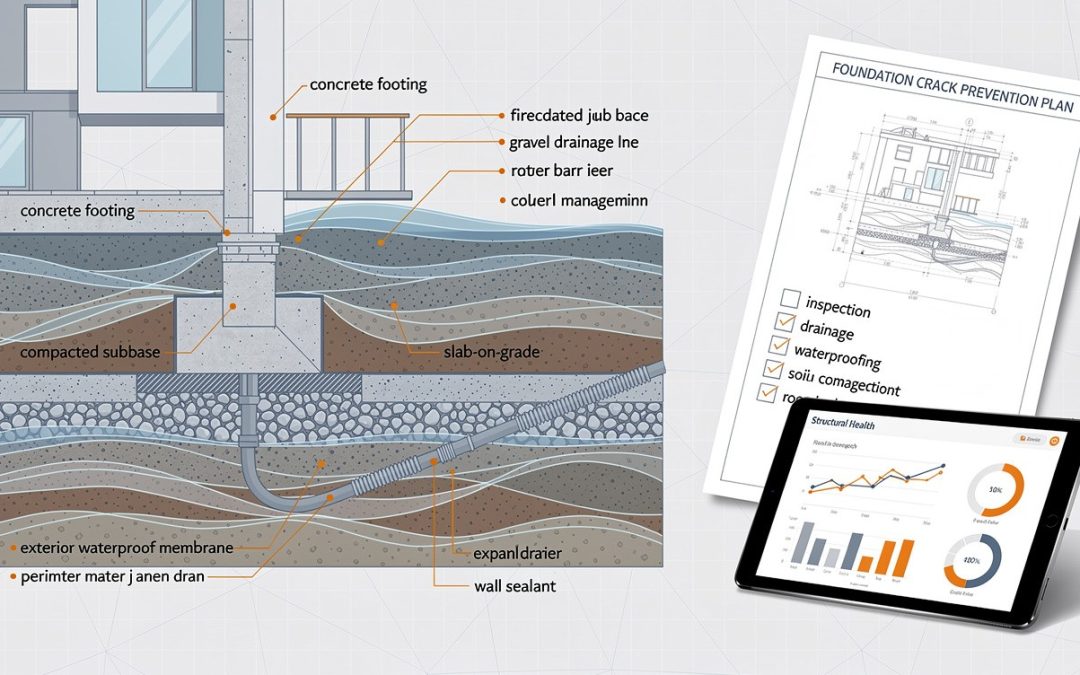
Foundation cracks start small, but they spread fast. Water seeps in, soil shifts, and temperatures swing-all working against your home’s structural integrity.
At Desert Gutters, we’ve seen how preventable most foundation damage really is. A solid foundation crack prevention plan stops problems before they become expensive repairs.
What Actually Causes Foundation Cracks
Water Damage and Poor Drainage Systems
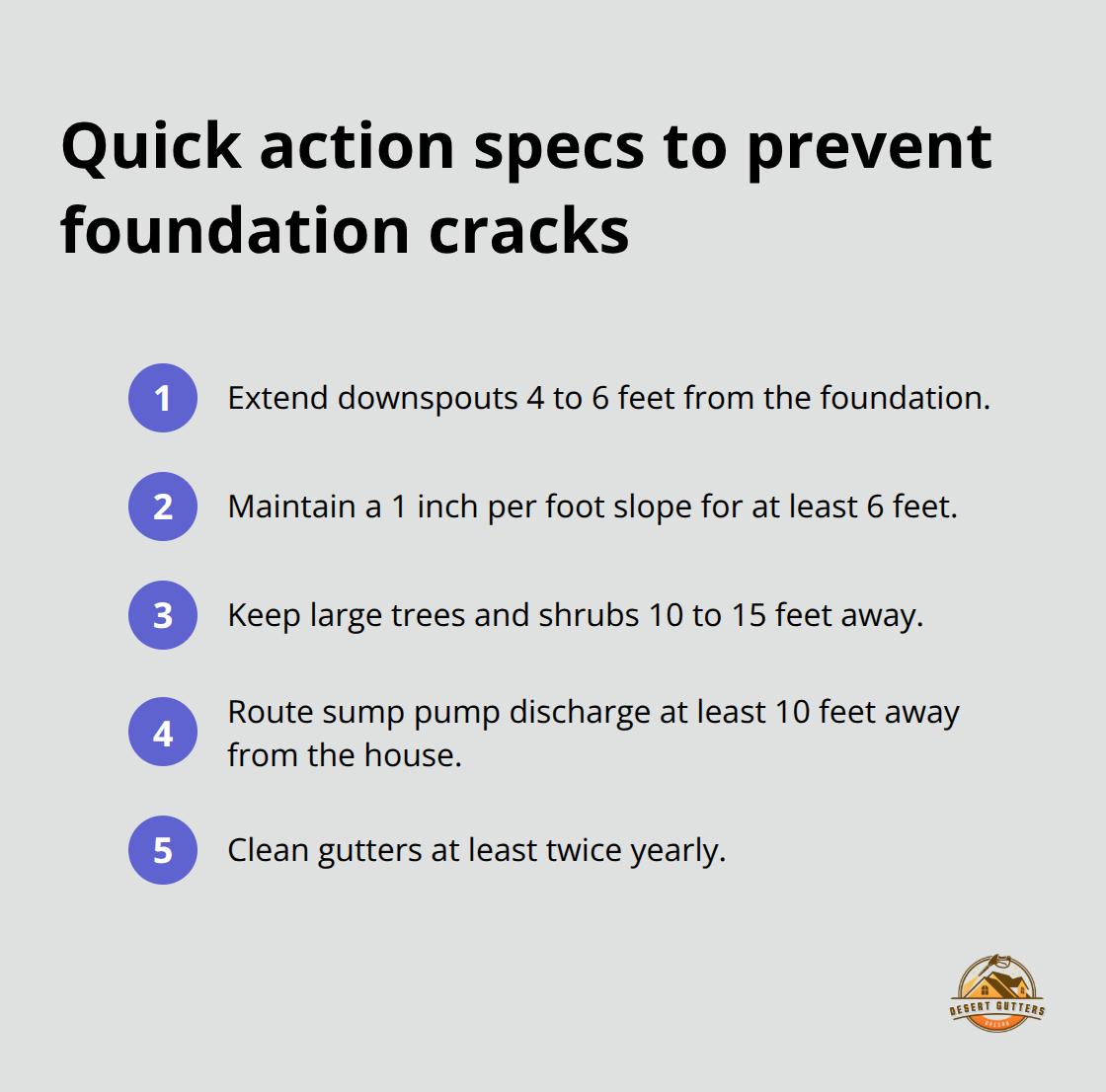
Water stands as the primary culprit behind most foundation damage, and poor drainage systems amplify the problem significantly. When gutters overflow or downspouts dump water too close to your foundation, that water saturates the soil around your footings. Expansive clay soils swell when wet and shrink when dry-creating constant pressure against your foundation walls. Homeowners who ignore clogged gutters or undersized downspouts watch water pool near the foundation, and within months cracks appear. The fix is straightforward: extend downspouts at least 4 to 6 feet away from your foundation and ensure gutters drain completely during heavy rain. Ground-penetrating radar and moisture meters measure soil saturation levels around your foundation, giving you hard data on whether drainage works properly.
Soil Movement and Settlement
Soil movement and temperature swings compound the damage significantly. Clay soils expand and contract with moisture cycles, while freeze-thaw cycles in cold climates crack concrete as water trapped inside the material expands when frozen. Vertical cracks often signal normal settling and aren’t always alarming, but horizontal cracks indicate serious lateral pressure from waterlogged soil and demand immediate professional attention. Tree roots destabilize soil and increase crack risk, so keep large trees and shrubs at least 10 to 15 feet from your foundation. Stair-step cracks in brick or block foundations signal shifting or settlement and require soil assessment from a geotechnical professional.
Recognizing Crack Severity
Foundation health depends on controlling moisture first, then managing soil stability and temperature stress. Regular inspections after extreme weather events catch early signs before cracks widen and allow water infiltration, basement flooding, or mold growth that degrades indoor air quality and reduces energy efficiency. Hairline cracks under 1/16 inch wide typically result from shrinkage, but cracks wider than 1/4 inch or those showing visible widening warrant professional evaluation to prevent pest entry, radon gas infiltration, and long-term structural compromise. Understanding what you’re looking at helps you act before minor issues transform into expensive repairs that threaten your home’s value and safety.
Stop Foundation Damage Before It Starts
Your Gutter System Is Your First Defense
Prevention beats expensive repairs every time, and the most effective prevention starts with controlling water around your foundation. Your gutter system is the first line of defense-clogged or improperly installed gutters dump water directly onto soil around your footings, which then saturates expansive clay and triggers the cracking cycle you’re trying to avoid. Clean gutters at least twice yearly, or more often if you have heavy pine-needle buildup like homes across Central Oregon experience. Downspouts must extend 4 to 6 feet away from your foundation, not 2 feet or 3 feet. That extra distance keeps water from pooling near your footings where it pressurizes soil and forces cracks to widen. Extend undersized downspouts with splash blocks or underground drainage pipes that direct water further away.
Measure Your Soil Moisture to Verify Drainage Works
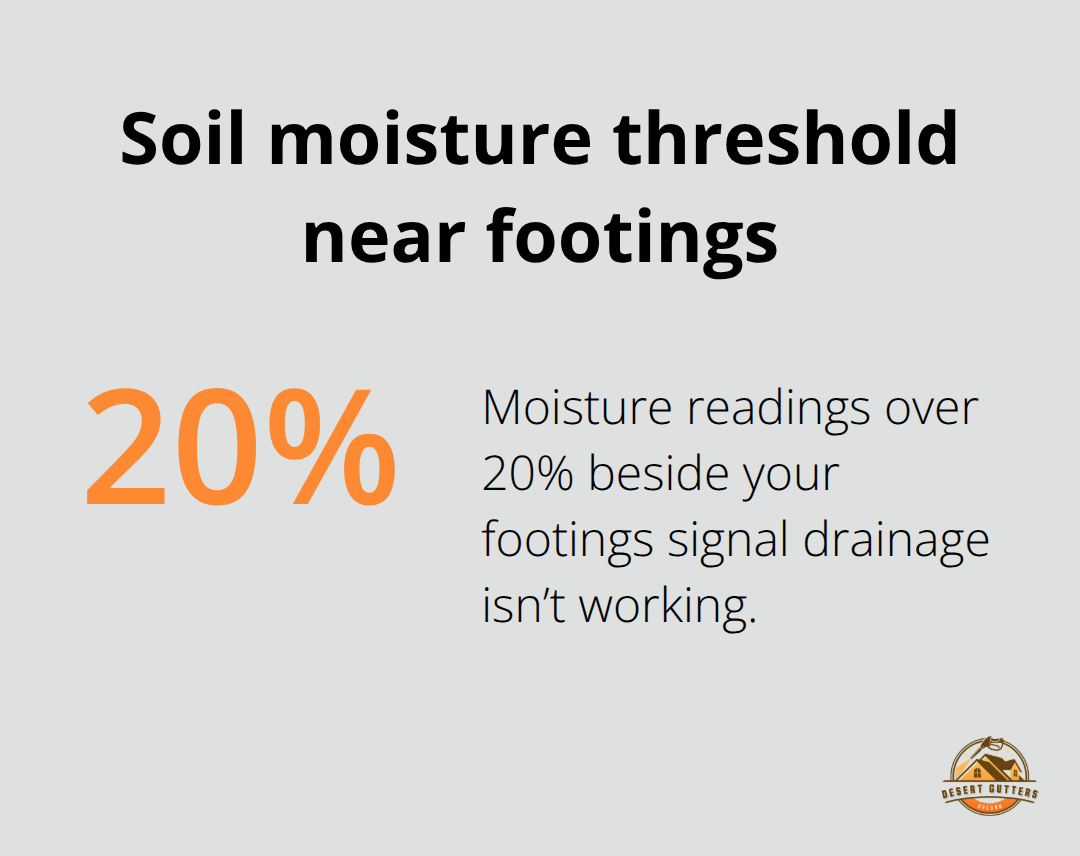
Ground-penetrating radar and moisture meters show exactly how saturated soil is around your foundation. If moisture readings exceed 20 percent in the soil adjacent to your footings, your drainage system isn’t working hard enough. These tools give you hard data on whether your current setup matches your home’s actual water management needs, especially during heavy downpours.
Professional inspection identifies whether your gutter configuration and downspout placement adequately handle the water volume your roof collects.
Grade Your Landscape Away From the Foundation
Grading matters just as much as gutters, and most homeowners miss this entirely. Soil should slope away from your foundation at least 1 inch per foot for at least 6 feet outward-that’s a steep grade, not a gentle slope. If your landscape slopes toward your foundation or stays flat, water collects and saturates the soil exactly where you don’t want it. Remove landscaping that traps water against your foundation, and avoid planting large trees or shrubs within 10 to 15 feet of your foundation since roots destabilize soil and moisture cycles become erratic.
Control Moisture Year-Round With Strategic Systems
Control moisture levels year-round by maintaining consistent watering during dry spells rather than alternating between bone-dry and soaking wet conditions, which causes clay soil to expand and contract violently. In freeze-thaw climates, this cycling is relentless-moisture expands when frozen and contracts when thawed, creating internal stress on concrete and foundation walls. A sump pump in your basement or crawlspace collects and removes groundwater before it reaches your foundation. If you live in an area with high water tables or persistent dampness, this becomes non-negotiable. Inspect your sump pump monthly to confirm it operates and check that the discharge line extends at least 10 feet away from your foundation, not dumping water back toward it.
Three Systems Working Together Prevent Most Cracks
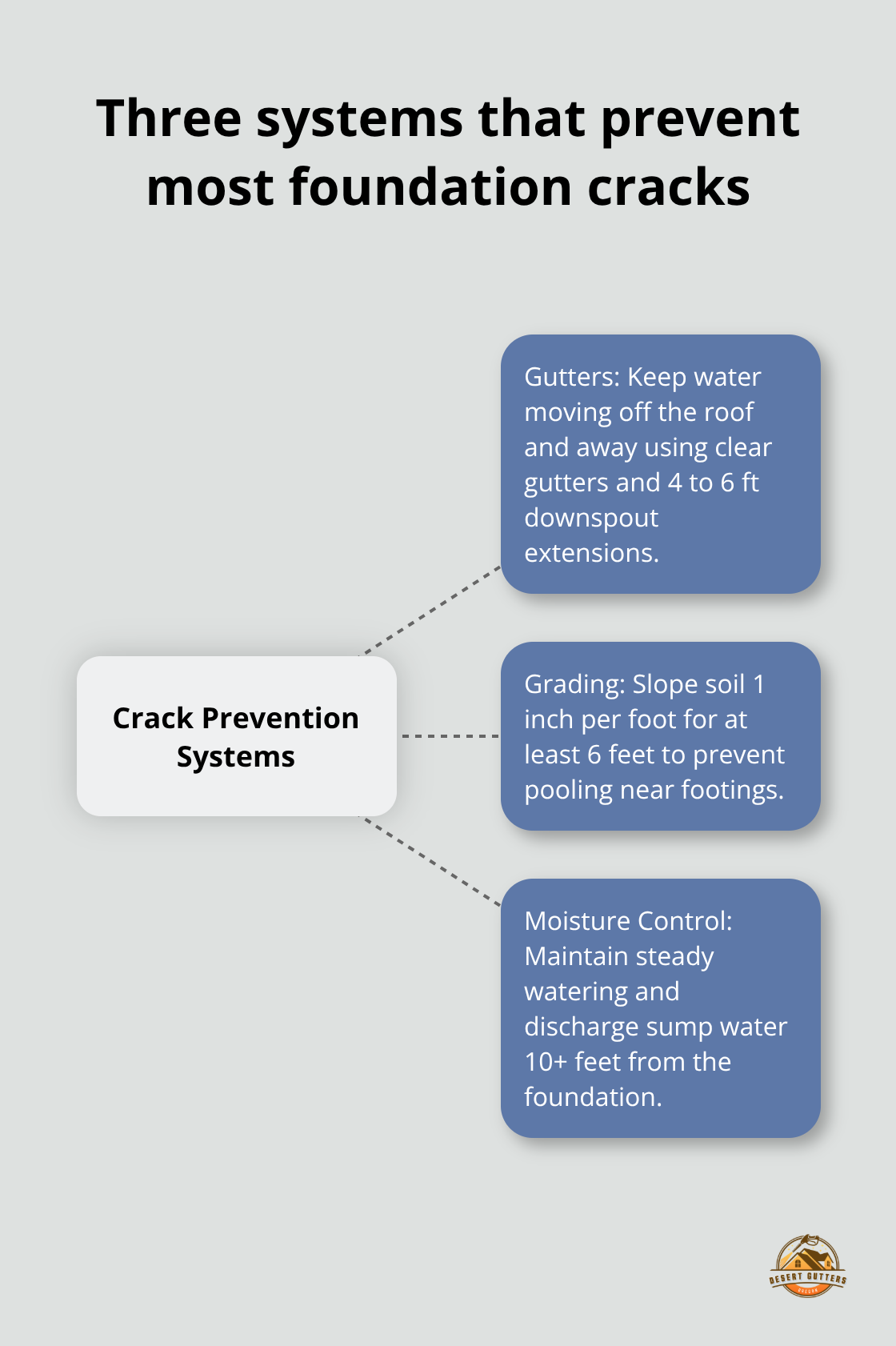
Gutters, grading, and moisture control work together to keep water away from your foundation and prevent the soil saturation that causes most cracks. When all three systems function properly, you eliminate the primary driver of foundation damage. The next step involves monitoring these systems regularly and catching problems early, before water saturation triggers the settling and cracking that demands expensive professional repairs.
Long-Term Monitoring and Professional Action
Inspect Your Foundation After Heavy Rain and Seasonal Changes
Seasonal inspections catch foundation problems while they remain manageable, and timing matters more than most homeowners realize. After heavy rains, during spring snowmelt, and before winter freeze cycles, walk your foundation’s perimeter and look for new cracks, widening of existing cracks, or moisture stains on basement walls. Cracks wider than 1/4 inch, horizontal patterns, or stair-step formations in brick demand immediate professional evaluation-these aren’t cosmetic issues. Water stains, efflorescence (white mineral deposits), or musty odors signal moisture intrusion that’s already damaging your foundation’s load-bearing capacity.
Watch for Movement and Water Intrusion Signs
If you notice sticking doors or windows, uneven floors, or visible wall movement, call a structural engineer immediately. A moisture meter costs under $50 and reveals whether soil saturation levels exceed safe thresholds around your footings. Check your sump pump monthly by pouring water into the basin and confirming it activates and discharges properly; a failed sump pump transforms minor moisture issues into basement flooding within hours of heavy rain.
Act Fast When Problems Appear
Most foundation damage accelerates when homeowners delay repairs by even a few months-small cracks allow water infiltration that expands frozen soil and deepens settlement. Professional foundation inspections run $300 to $1,000, with an average of $435 to $600, and provide detailed measurements of crack width, depth, and movement patterns using specialized equipment like crack gauges and laser levels.
Understand Repair Costs and Options
Minor repairs cost hundreds of dollars; major underpinning repairs exceed $10,000 and require extensive excavation and structural engineering. Epoxy or polyurethane injection seals small non-structural cracks for $400 to $1,000 per section, while carbon fiber reinforcement adds stability for bowing walls at $1,000 to $3,000 per wall.
Partner With Local Specialists for Your Climate
Regional specialists understand how local soil conditions, precipitation patterns, and freeze-thaw cycles affect your specific foundation. Central Oregon homes face relentless pine-needle accumulation that clogs gutters and drives water toward foundations, making local expertise invaluable. Desert Gutters handles gutter cleaning and repair with understanding of high-desert water management challenges, keeping gutters clear so water reaches downspouts and travels away from your footings. Geotechnical professionals assess soil composition and recommend tailored prevention strategies rather than generic solutions-soil stabilization techniques, French drains, or modified grading depend entirely on what’s happening beneath your home. Get three detailed quotes specifying materials, scope, warranty coverage, and total cost before committing to repairs; this comparison reveals market rates and protects you from overpriced or incomplete work. Reputable foundation repair companies offer free estimates and often provide warranties on work performed, giving you recourse if problems persist.
Final Thoughts
Your foundation crack prevention plan works when you act on three core actions: keep water away from your foundation through clean gutters and proper grading, monitor soil moisture levels year-round, and catch problems early through seasonal inspections. These steps eliminate the primary drivers of foundation damage before cracks widen and allow water infiltration that leads to basement flooding, mold growth, and structural compromise. Proactive maintenance costs far less than reactive repairs-a professional foundation inspection runs $300 to $1,000 and identifies problems while they remain manageable.
Start by scheduling a professional foundation inspection to establish a baseline for your home’s current condition. Then focus on the systems you control: gutters, grading, and moisture management. At Desert Gutters, we understand how high-desert conditions (pine-needle buildup, sudden downpours, and freeze-thaw cycles) threaten your foundation, and professional gutter cleaning and repair keeps water flowing away from your footings instead of pooling against them.
Partner with local specialists who understand your climate and soil conditions rather than applying generic solutions. Get three detailed quotes specifying materials, scope, warranty coverage, and total cost before committing to major repairs. Your home’s structural integrity and long-term value depend on the foundation crack prevention measures you implement today.